
JURY
The awarding of the fellowships and the prize is decided by an independent jury of five renowned Hungarian and international professionals. The work of the jury is supported by a secretary, who has no right to vote. The award judging process is completed through a series of online and in-person private sessions conducted in English. The submissions are not anonymized throughout the judging procedure. For each entry, the materials are assessed by two juries: when submitting the entry, the first jury chooses the three fellows, and in the next year, another jury selects the grand prize winner out of the three fellows. Thus, each jury selects three fellows from the entries submitted in the given year, as well as a grand prize winner out of the three fellows of the previous year.
The members of the Capa Grand Prize Hungary jury in 2021:

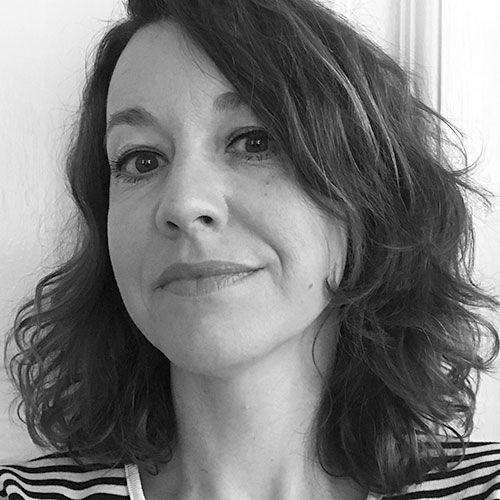
Photo: self-portrait
Claudia Küssel
independent curator, art historian
Claudia Küssel (Amsterdam, 1975) graduated from the University of Leiden with a degree in art history. Until 2017, she lived in the Netherlands and worked among others, in the Fotomuseum Den Haag, the Nederlands Fotomuseum, the Stedelijk Museum Amsterdam and Foam. Then she moved to Budapest and worked as curator of the Mai Manó House in 2018-2019.
She curated several solo exhibitions (i.e., Noémie Goudal, Péter Puklus, Larry Clark, Sara Cwynar or Erik Kessels) and group shows (i.e., Under Construction, New Positions in American Photography or The Geometry of Imagination).
Since 2019, she works as an independent curator. In 2020, for example, she curated a Thomaz Farkas exhibition called The Rhythm of Light at the Robert Capa Contemporary Photography Center.
In the summer of 2021, she organized exhibitions commissioned by the Embassy of the Netherlands in Hungary in two public spaces in Budapest: Hans Eijkelboom’s exhibition titled Photo Notes from 1992 up till now on Madách Imre Square, and a group art exhibition called The Garden of Delight at 25 tram stops on tram line 47-49.
Her main area of research is contemporary photography, with a particular focus on the role of the medium of photobooks.
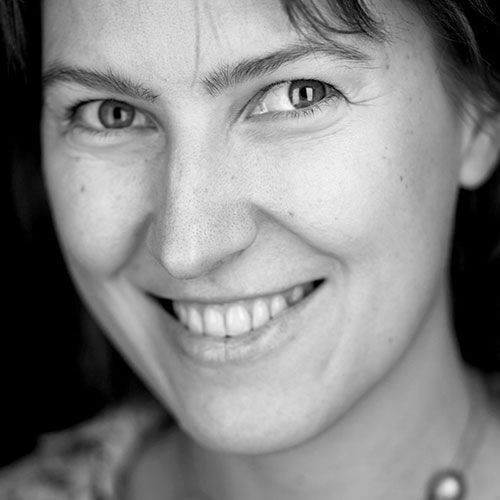
Kateryna Radchenko (Odesa, 1984) earned a master’s degree in Philosophy and Journalism at Odesa National University, Ukraine. She founded international festival Odesa Photo Days in 2015 and serves as director ever since. Radchenko curated exhibitions in Ukraine, South Korea, Sweden, Georgia, France, and Latvia. She is the author of articles published in several international magazines and online platforms, such as Fotograf, Magenta, EIKON, and FOAM Magazine. She published several books: Revolution Art. Art as alternative media, Images Tells Stories (in collaboration with Finnish museum of photography), Alternative art guide. Odesa. As a portfolio reviewer, she participated in different photo festivals, in particular, Riga Photo Month, Lodz Photo Festival, Suwon Photo Festival, Photo Wien and Landskrona Photo Festival. Participated in fellowship and residence programs at Klaipeda Photo Residency (Klaipeda, Lithuania), Villa Arson (Nice, France), Gaude Polonia (Warsaw, Poland), and the Museum of Photographic Arts (San Diego, USA).

Kateryna Radchenko
curator, photographer, photography researcher, founding director of Odesa Photo Days festival (Ukraine)

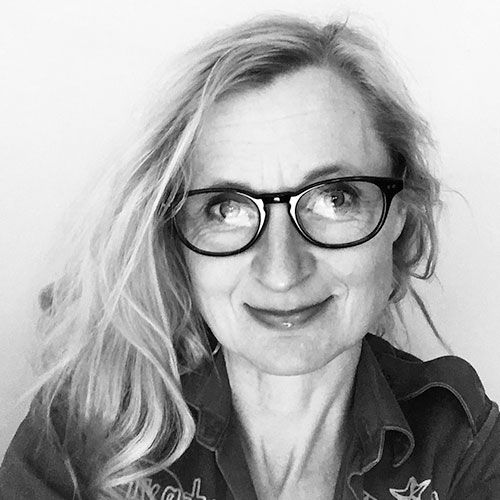
Anna-Kaisa Rastenberger
chief curator of The Finnish Museum of Photography, professor (Finland)
Anna-Kaisa Rastenberger, PhD, works as a Chief Curator at The Finnish Museum of Photography. She is also Professor of Exhibition Studies at the Academy of Fine Arts, University of the Arts Helsinki, where she’s responsible for the MA-program for curatorial studies. She is the artistic director and co-founder of The Festival of Political Photography, Helsinki, too. Rastenberger has extensive experience in exhibition projects, curating practices, and the exhibition scene of the contemporary photographic arts. She has published widely about contemporary photography. Her special interests are exhibition as critical practice, feminist curation and running.
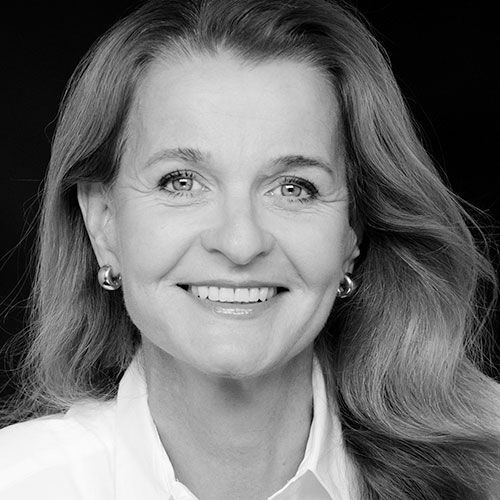
Karin Rehn-Kaufmann (Freiburg, 1957) studied German philology and philosophy at the University of Freiburg. She holds a diploma from the Eurythmische Hochschule in Stuttgart, where she was subsequently employed as a lecturer from 1982 to 1986. Furthermore, she graduated in Event Management from the Fernuniversität (Open University) Hagen and studied Mediation in Salzburg.
After ACM Projektentwicklung GmbH, Salzburg, bought into Leica Camera AG in 2005, Rehn-Kaufmann’s long-standing passion for photography led to the opening of the Leica Gallery in Salzburg in 2008. She started with 5 Leica Galleries. Today she is the art director & chief representative of Leica Galleries International and holds management responsibility for the 25 Leica Galleries around the world. She has successfully curated numerous prestigious exhibitions worldwide including, for instance, the Chinaflug project, an exhibition of spectacular aerial photography from the 1930s that was presented at the Chinese Embassy in Berlin, Photo Shanghai among other venues. She was also responsible for the Leica Gallery exhibition concepts at Photokina in 2012, 2014 and 2016, as well as the ‘10×10’ exhibition on the occasion of the 100year jubilee of Leica photography, and ‘50 best for Leica’ – an exclusive collection of the most famous photographs taken by the prominent US Magnum photographer Elliot Erwitt. Since 2019 she is on top responsible for the Ernst Leitz Photo Museum in Wetzlar.
Karin Rehn-Kaufmann has been a member of the jury of the Leica Oskar Barnack Award since 2008, and has played a significant role in the organisation and further development of the prestigious photography competition. For the 40. celebration of the wward in 2020, she very successfully changed the system from a free submission to a nominated system.

Karin Rehn-Kaufmann
art director and chief representative of Leica Galleries International, organiser of the Leica Oskar Barnack Award (Austria)

Gergely Szatmári DLA
associate professor at MATE Rippl-Rónai Art Institute, head of the MA program, president of the jury
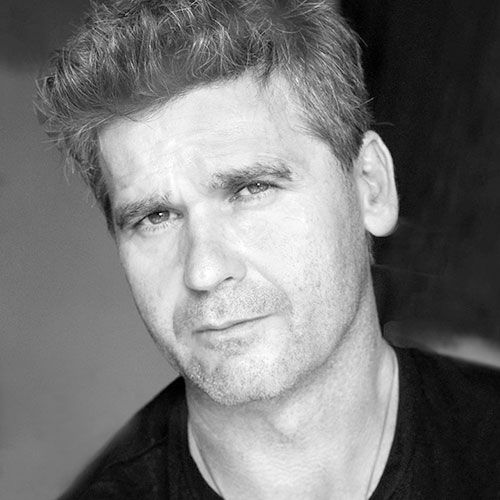
Gergely Szatmári (Salgótarján, 1966), a former assistant professor at MOME, is now an associate professor at MATE, and professional coordinator of the Institute’s photography MA program. Over the past two decades he has implemented several photography projects, which he has published in books and other publications. His works are characterized by thematic, project-based, visual interpretation and an intense interest in understanding human behaviour, presenting changes in the built environment, and functioning of different social groups. His photos are featured in solo and group art exhibitions in various countries around the world. He received recognition in several international competitions, and in 2021 he was awarded the Rudolf Balogh Prize. Since 2015, he is a board member of the József Pécsi photography grant.
István Virágvölgyi studied freehand drawing, desktop publishing and photography and earned a master’s degree from library and information studies at Eötvös Loránd University (Budapest, Hungary). He worked at the leading Hungarian news portal Origo first as photo editor and then as head of photography between 2007 and 2011 after which he joined MTI Hungarian News Agency as head of the photo desk. He also lectures about documentary photography and photo editing at the Budapest Metropolitan University. Since 2014 he works at the Robert Capa Contemporary Photography Center (Budapest, Hungary), he is the secretary of the Robert Capa Photography Grand Prize Hungary . .
István Virágvölgyi
curator, secretary of the Robert Capa Photography Grand Prize Hungary
