FELLOWSHIP-WINNERS AND SHORTLISTED ARTISTS IN 2017
The first jury of the Capa Grand Prize Hungary 2018 has awarded fellowships to Dániel Kovalovszky, Adél Koleszár and Máté Bartha for their entries titled “Scenes of an Infernal Play”, “Wounds of violence”, and “First Contact (Working Title)”, respectively on October 19, 2017. It is the third year the fellowships are awarded, each including a grant of HUF 5+200,000 (EUR 2,300, USD 2,700). The jury has also shortlisted 3 artists, whose entries have been selected for the final phase of the competition.
The Robert Capa Photography Grand Prize Hungary was founded in October 2014 by the Capa Center in order to recognize the work of artists who produce an outstanding achievement in the field of Hungarian photography. The awards are decided in two stages by juries of Hungarian and international professionals. In a year’s time the three fellows will report to next year’s jury regarding the progress of their projects. Thus, in October 2018, one of them will receive the grand prize, which includes an award of HUF 3 million (EUR 10,000, USD 12,000).
FELLOWSHIPS 2017
AN INFERNAL PLAY
Kovalovszky Dániel

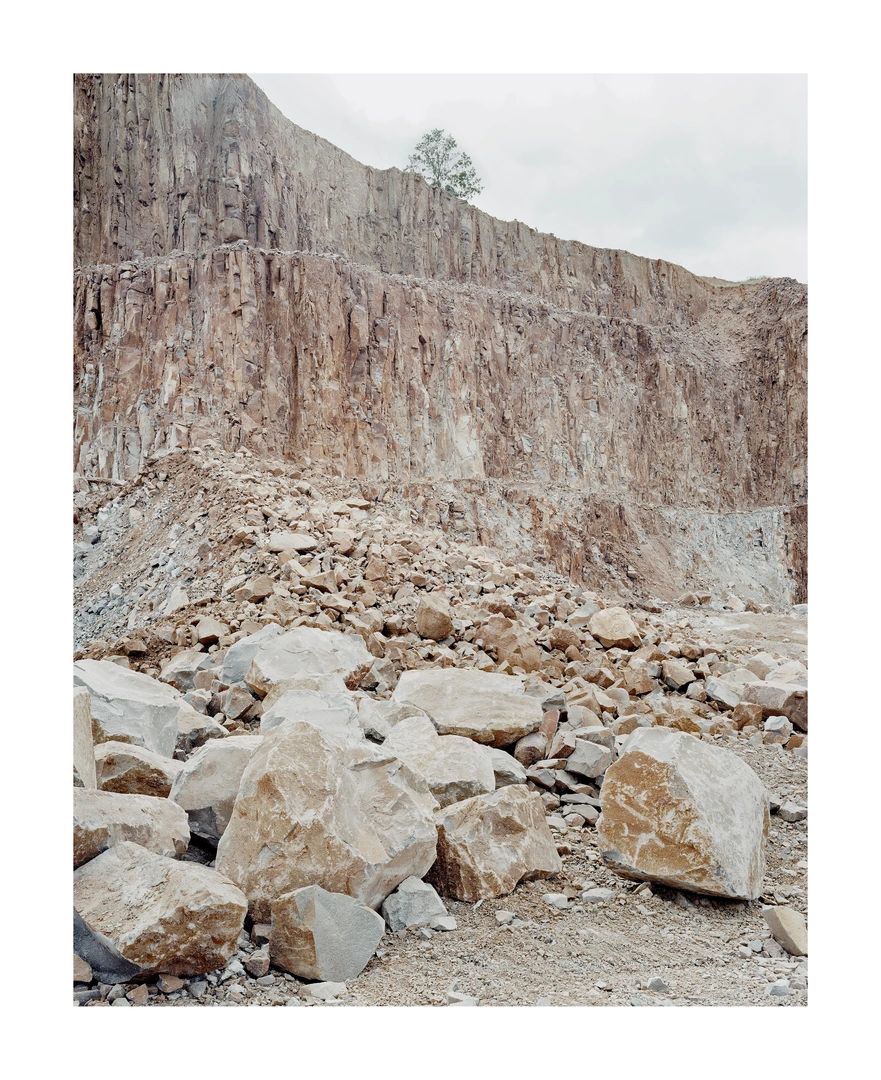
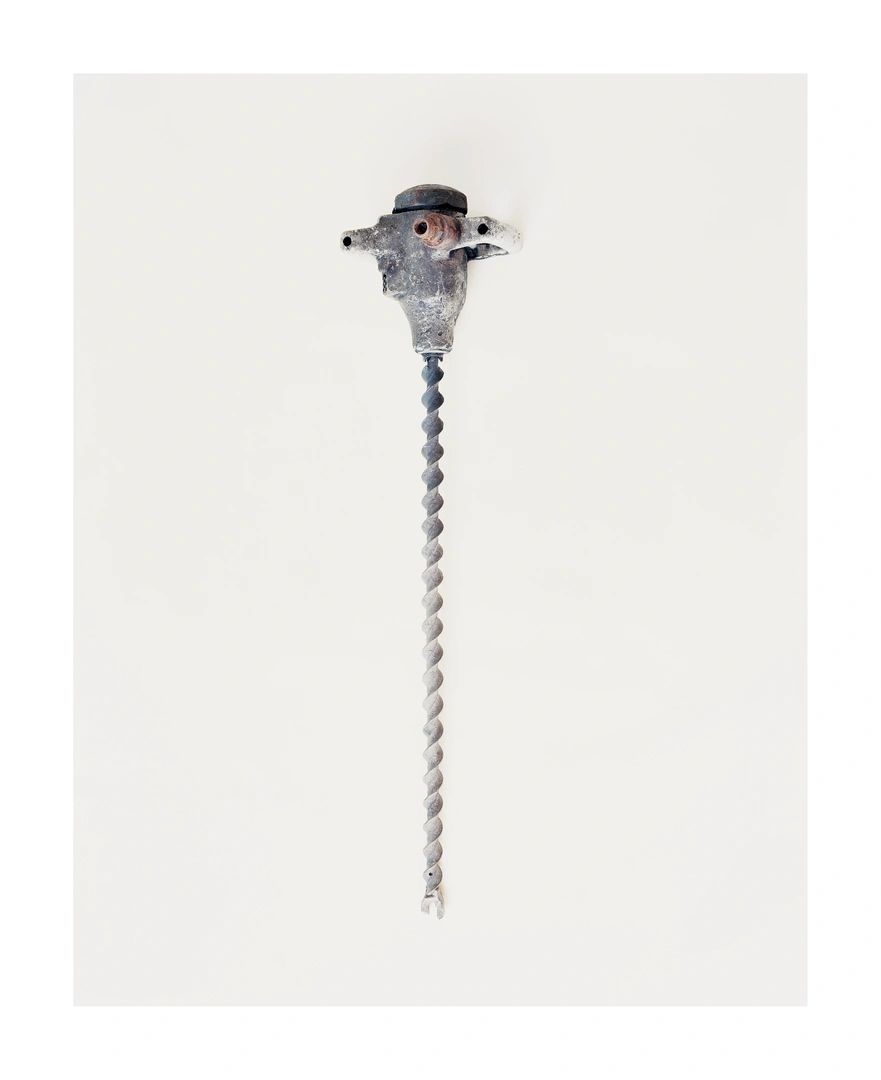
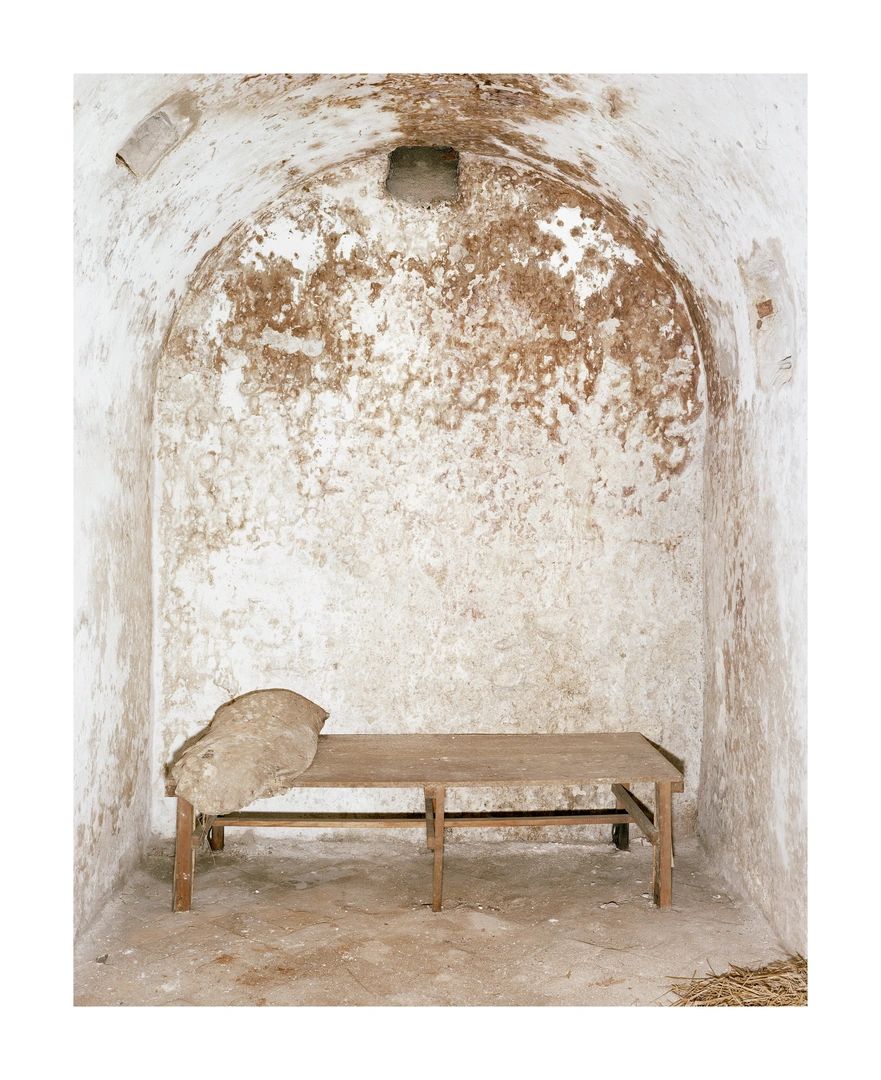
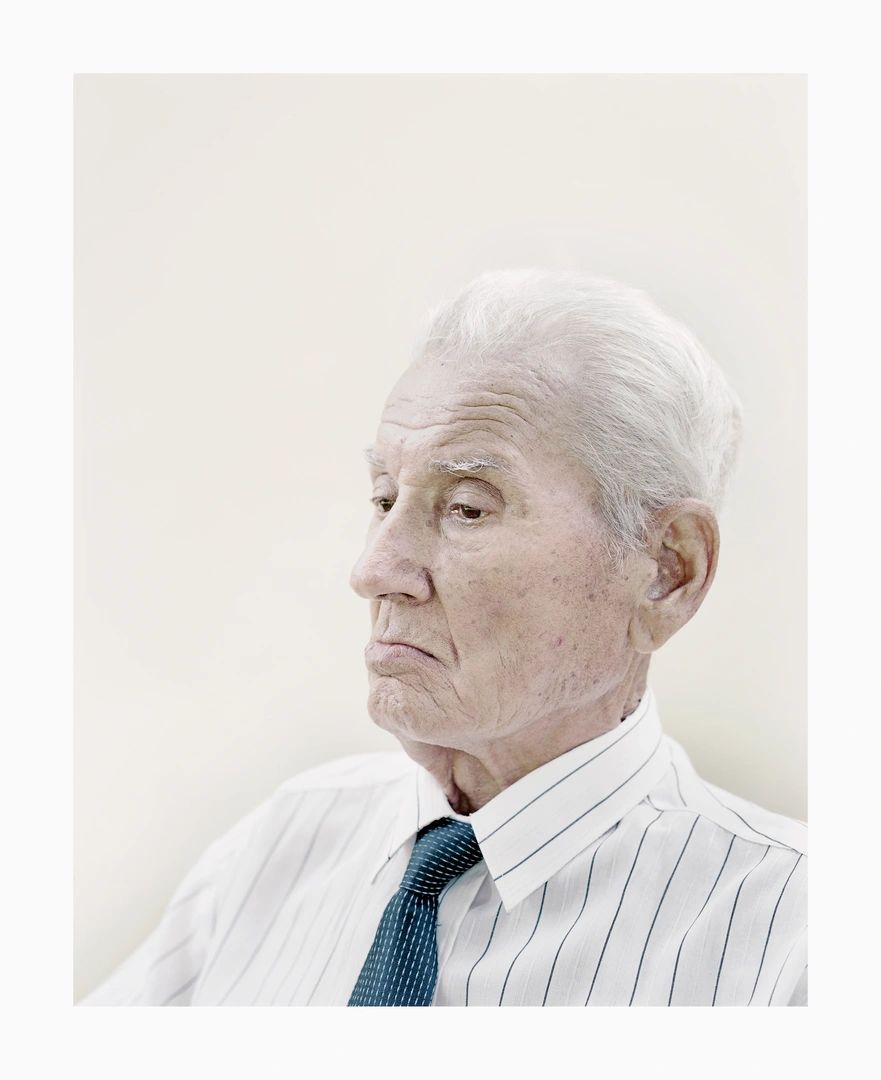
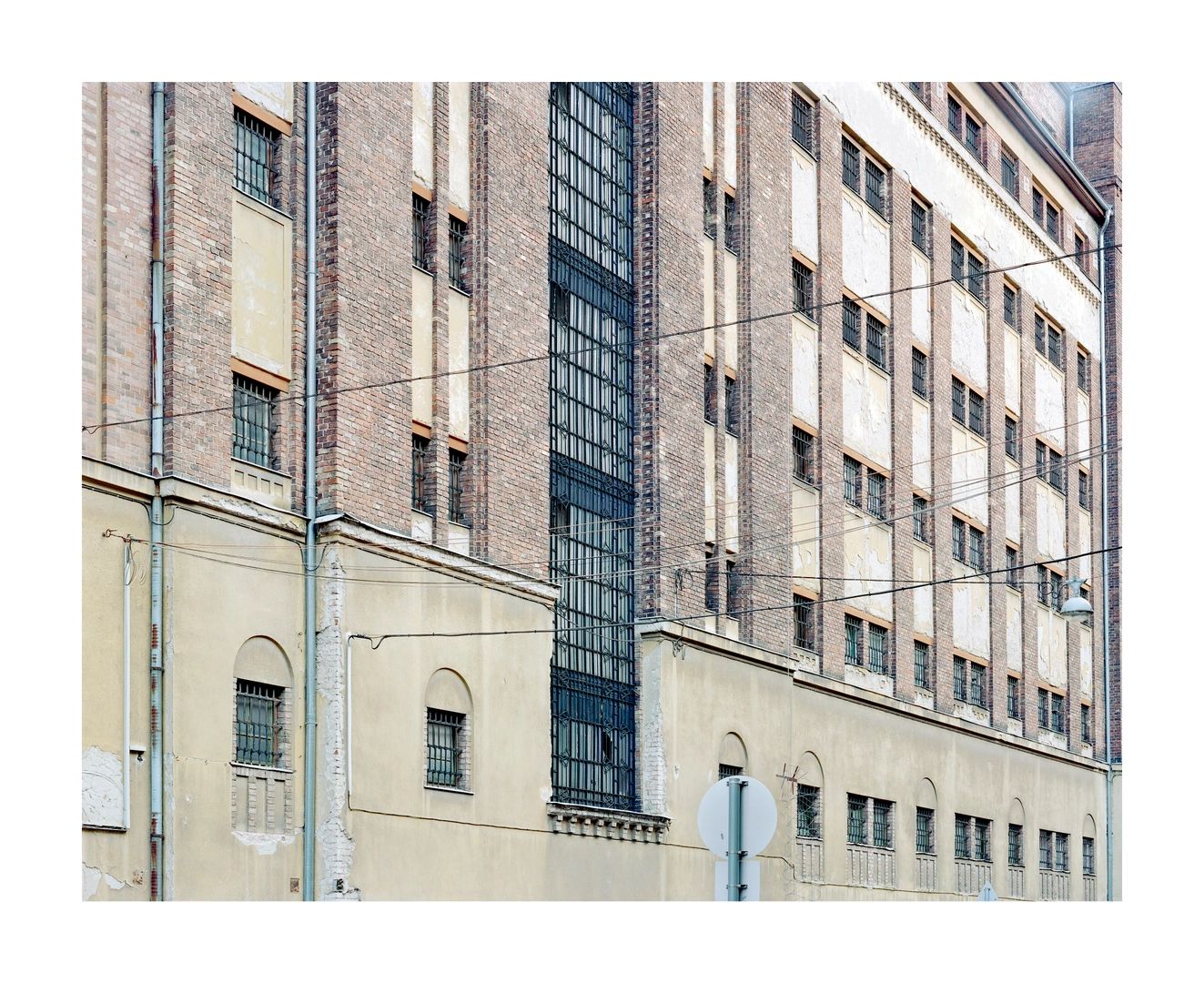
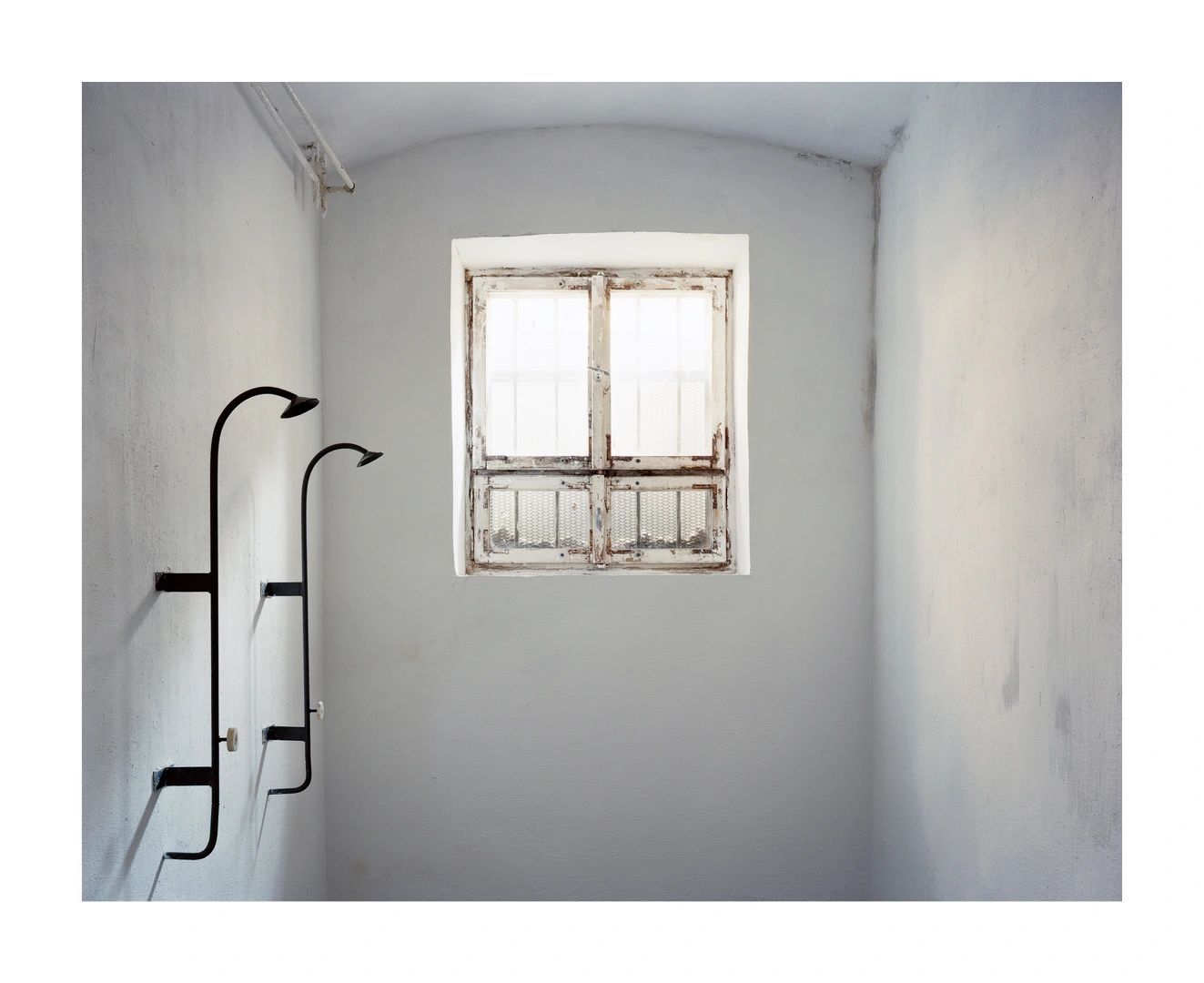
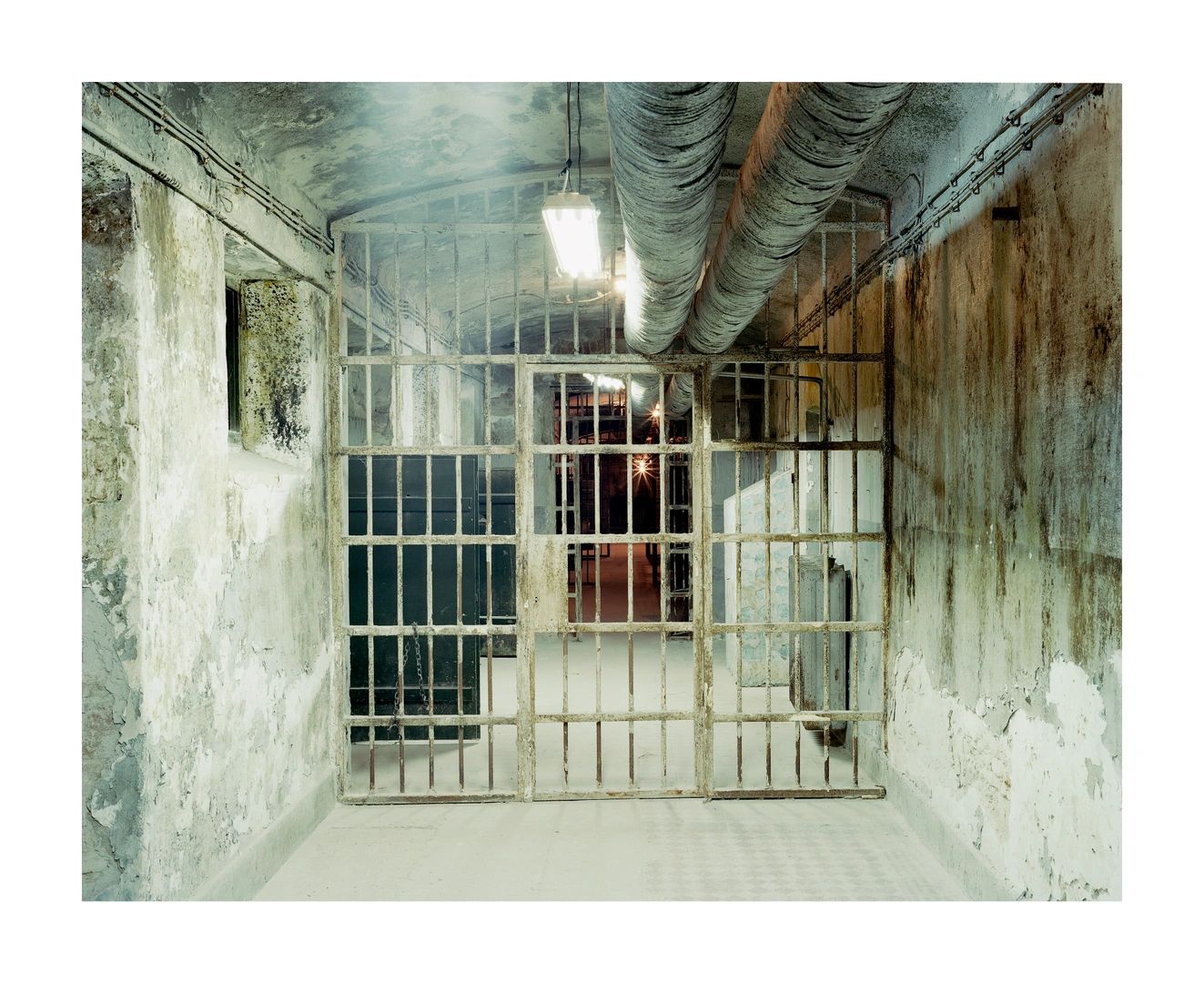
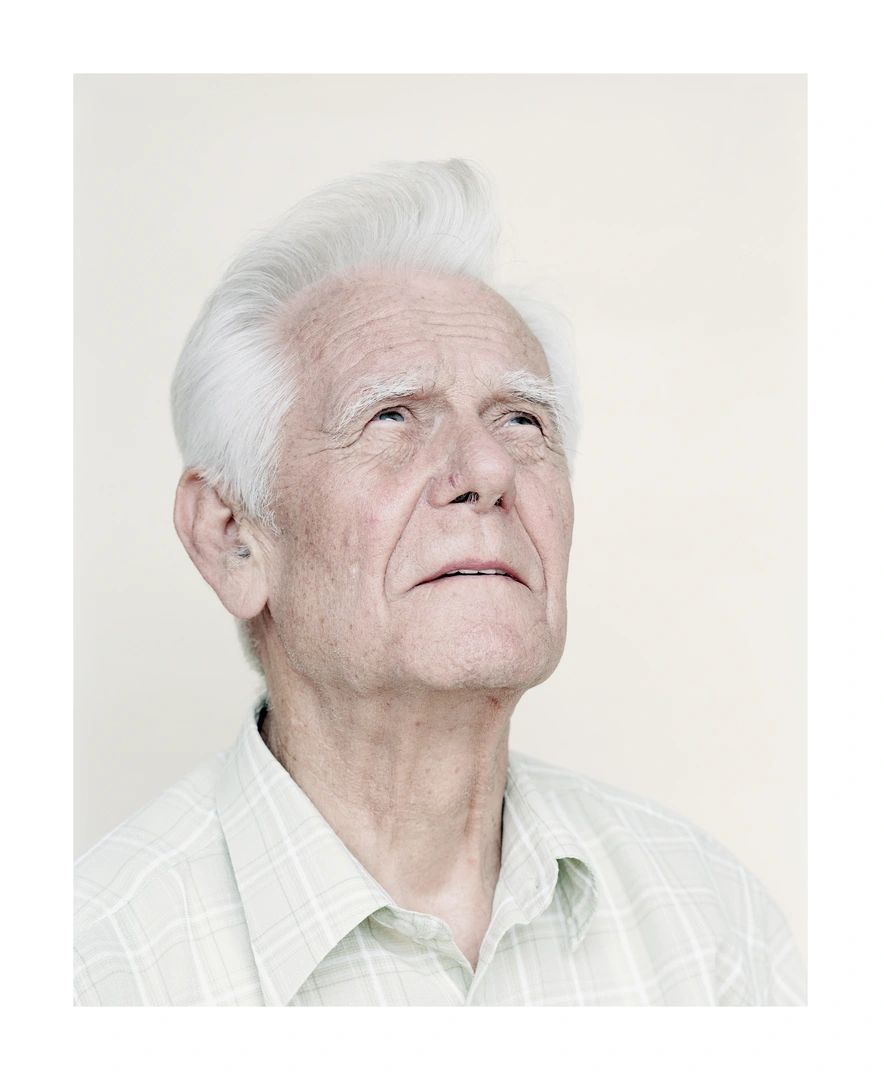
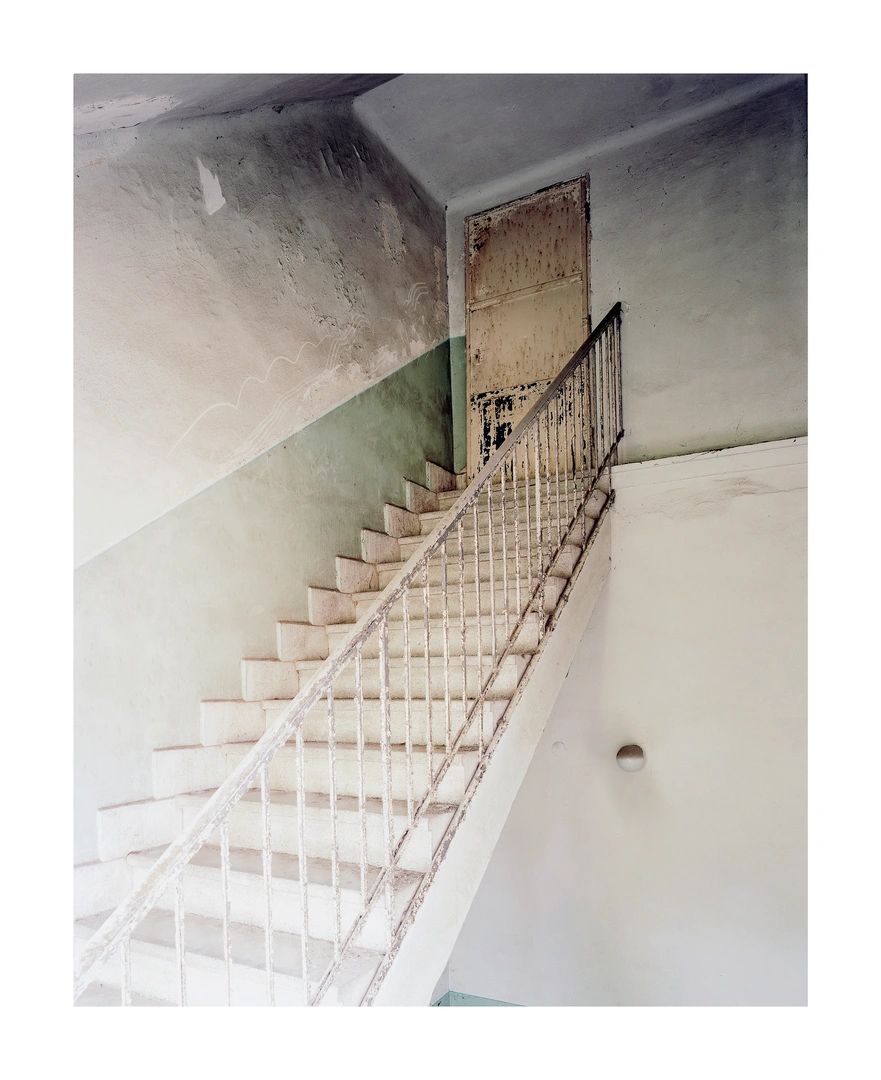
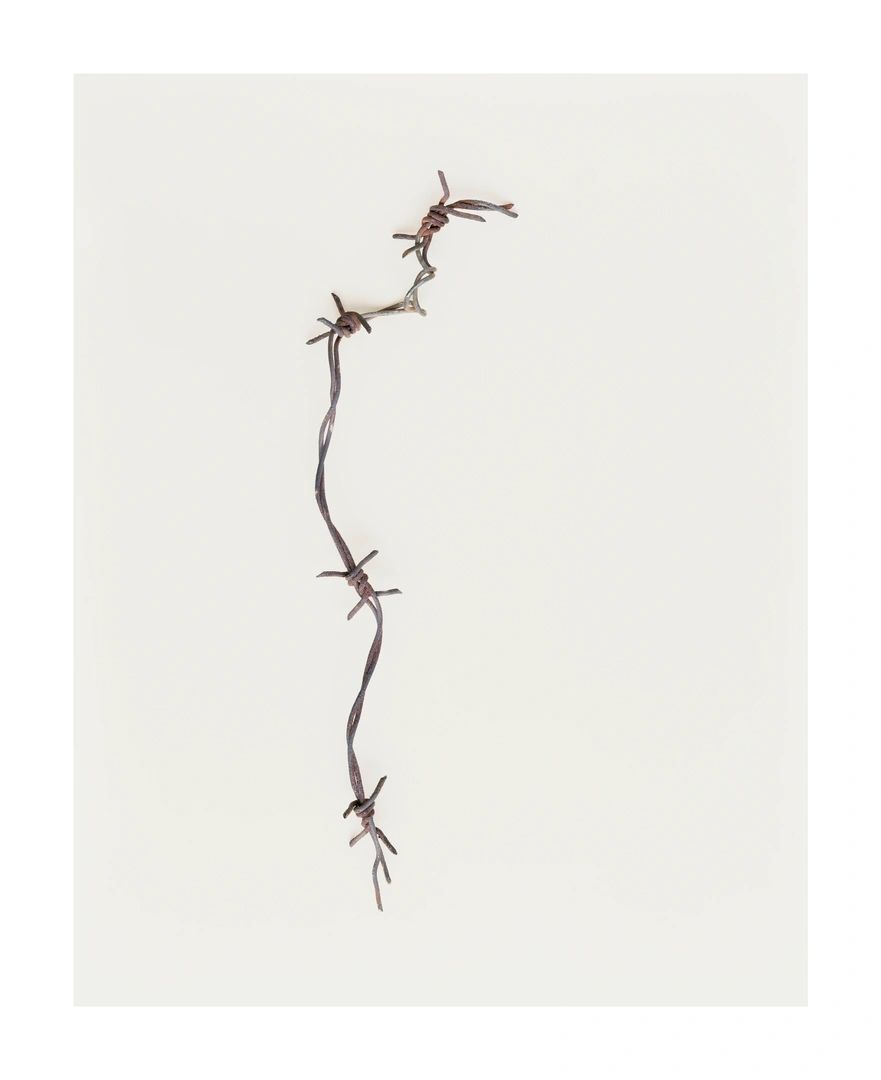
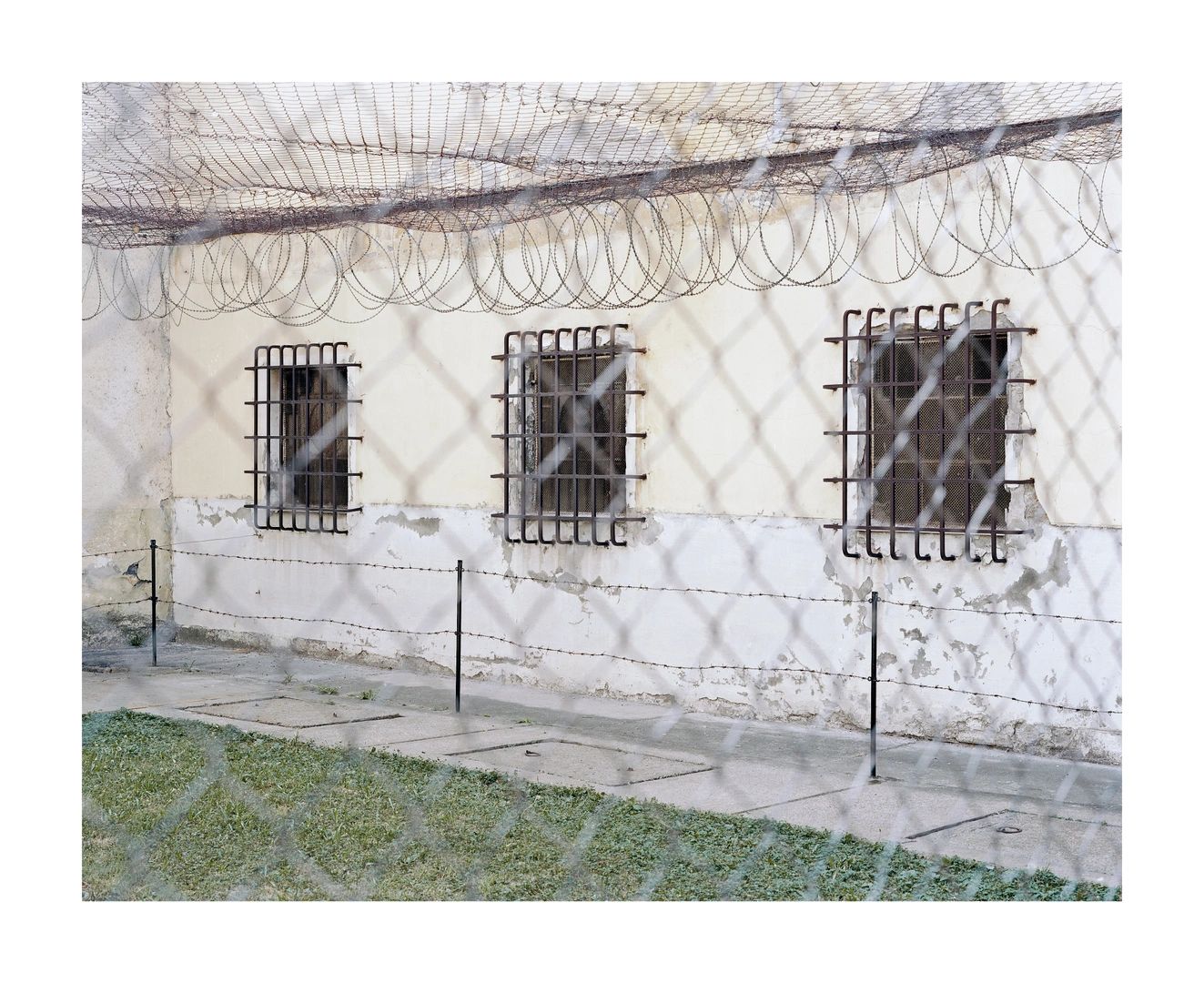
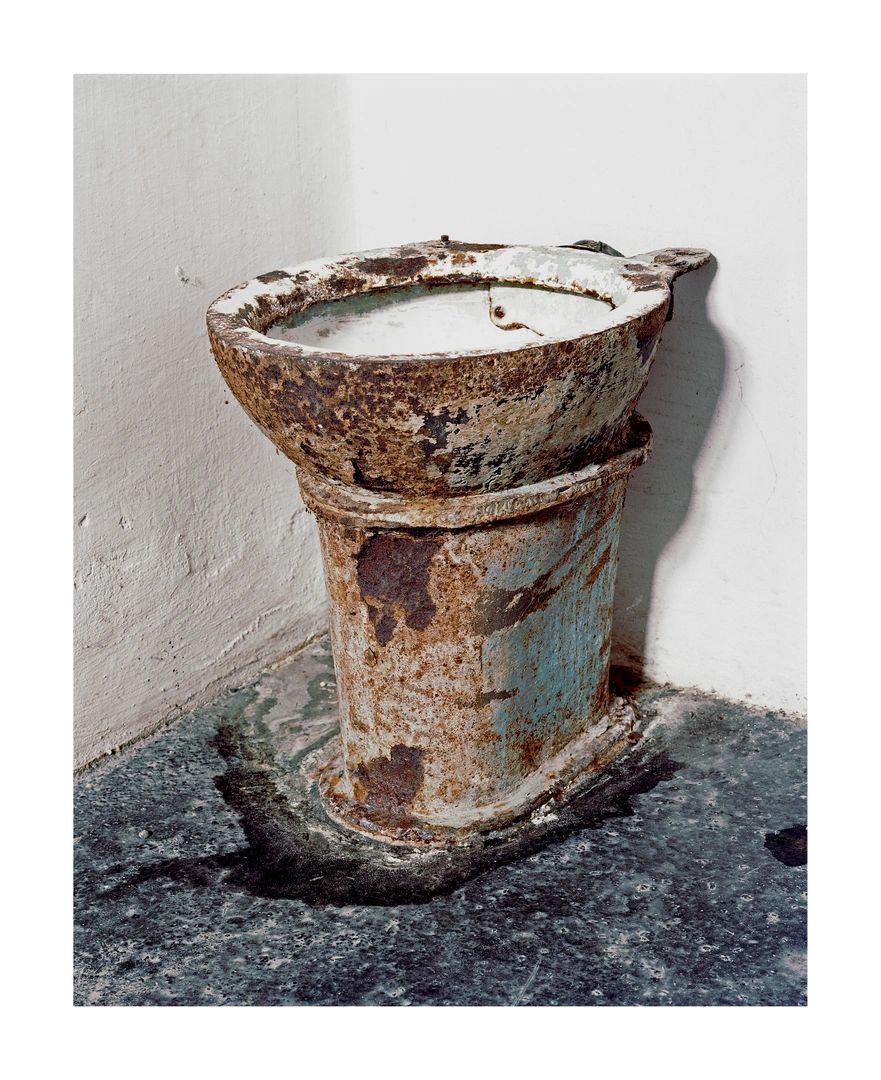
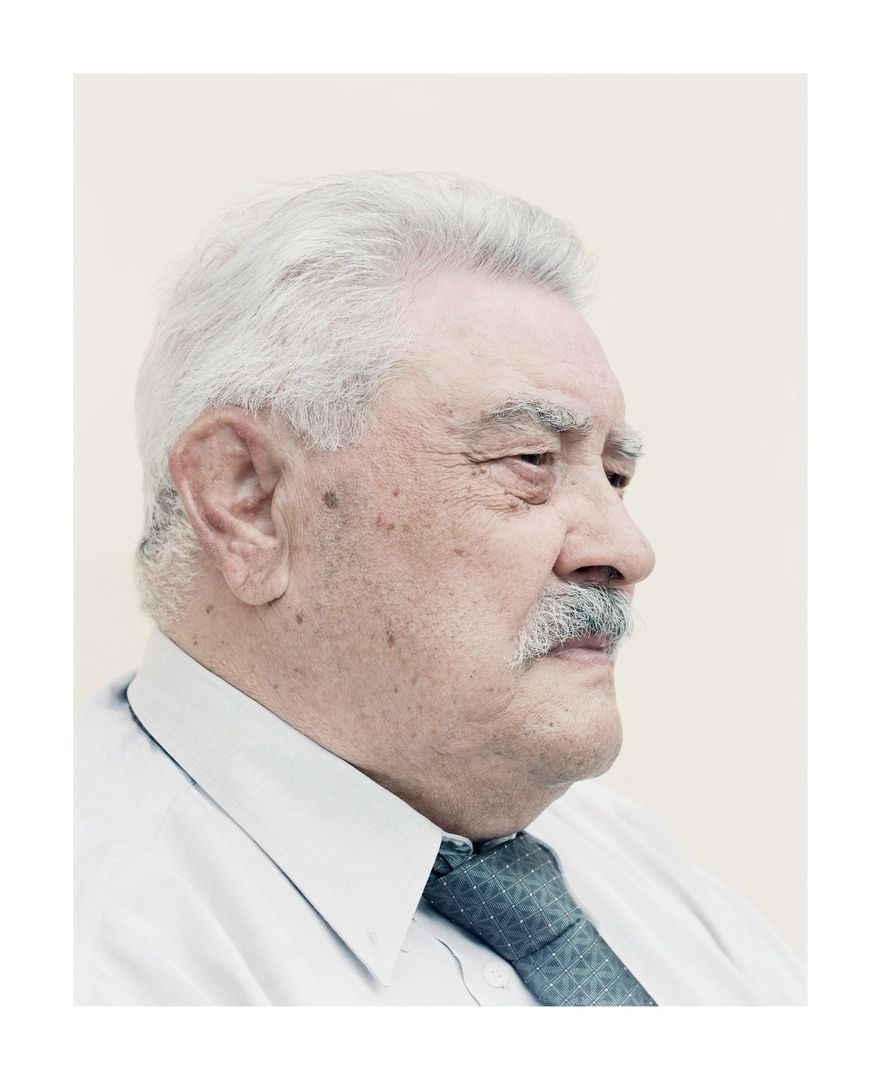
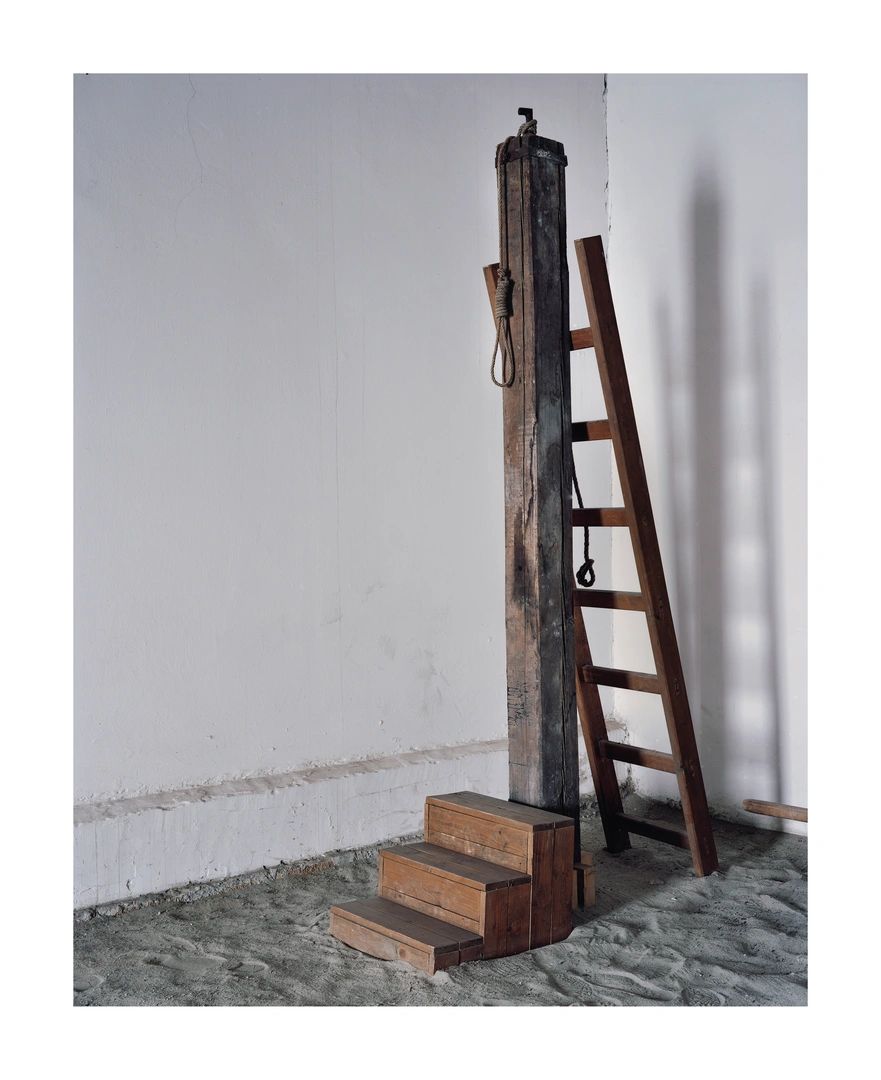
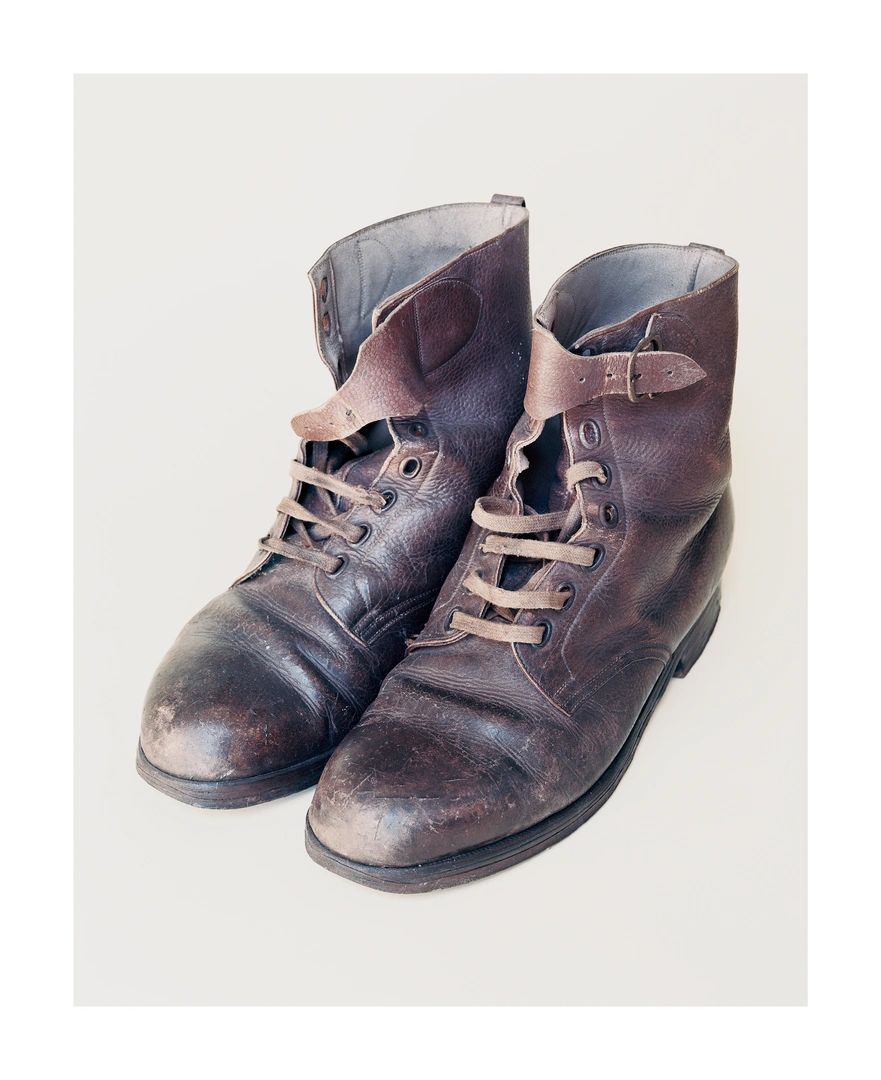
After WW2 mankind believed that having learned from the bitter experience of living in the autocratic political systems of the past they will shape a more humane world in the future. The history of Hungary, similarly to other Eastern European countries, turned in a different direction. Mátyás Rákosi, the leader of the Hungarian Communist Party, following the Soviet example, introduced a new Stalinist dictatorship in which human rights were severely violated. As a result of show trials, several hundred thousands of political convicts were sent to forced labour camps, were imprisoned and hundreds were executed based on fictional charges. Most of these trials were held with the exclusion of the public. In most cases the charges consisted in supplying data to western powers and secretly organizing a revolt against the people’s power. In order to be able to imprison such a large number of people, numerous new prisons, detention and forced labour camps were created. The captives of these prisons knew of lots of incidents happening in these places which never became public. Having found the memoirs of the political convicts a very dreadful and unknown world opened up for me and made me realize how little and superficial my knowledge is about this historical era. I decided to start a visual collection to shed light on a segment of what was happening during these obscure years that is unknown to many but still significant: the world of prisons before and after the 1956 revolution. These scenes will be holding the remembrance of the physical and mental suffering of thousands for a long time. The years survived there cannot be fully represented by photographs, yet I will try to bring forward some of the memories of the prisoners evoking the characteristics of the era. Naturally while visiting these places I am also overwhelmed by a strangling feeling thinking how I would have reacted to the horrors and the imprisonment. Defining physical and mental freedom was already an important aspect in my previous work, even if in a completely different context. Now I am trying to explore the limits of tolerance of the human mind and the automatization of the survival instinct through the tools of photography. In 2016 and 2017 I worked on mapping and documenting these prisons, the results of which created an interesting basis for my project, however each photography session had to be followed up by two or three further visits, therefore I feel that the series would require at least one more year of concentrated research. The functions of the different places in their present state are rather varied. Part of them operate as museums or memorial places, while others still function as state prisons. At the same time, a significant number of these prisons disappeared for good or having lost their historical significance now they stand in ruins waiting for a new life. I would like to enrich my photo series in the future with portraits and personal stories of some of those elderly people who were imprisoned in the places I documented. I aim at finding portrait subjects who live privately, hidden from publicity, carrying this heavy historical burden for which they no time left in their lives to process. I opened another chapter in addition to the portraits and venues in which I would chronologically organize the objects and relics of the prison camps of the Rákosi era. There is a time pressure for my work as there are fewer and fewer former prisoners who are still alive, and the places themselves also continuously disappear or change their function. I plan to create a series of ca. 60 photographs, each of which would become a component of a symbol system created with a documentary vision. I intend to create a visual harmony already during the creation of the series, both in the use of the tones and the distances. I consider strict selection and the dismissal of unnecessary elements important. The shabby and sterile colors of the photographs help separate the theme from its reality in the present and reproduce the mood of the period. As far as I know, up to this date nobody has created an over-arching, thematic photo archive on this chapter of the history of Hungary. Unfortunately not only photographically, but neither from social or emotional perspective has the past been processed. However much we regard this period closed down, present Hungarian society still unconsciously carries and transmits the burdens and negative reflexes of this era. Fully facing the past has not happened to this date, therefore, the needed purgation cannot take place. The most important reasons for this are that those who suffered from the political system did not receive sufficient moral and material compensation, and those politically responsible for these criminal acts were not asked to account for their deeds after the transition. I hope my work will also become historically meaningful at one point and can show something to the future generations who are born into a free world and know very little about what this generation had to live through. Moreover, we must not forget that an even more closed and aggressive dictatorship exists in the 21st century which holds the North Korean society under total mental and physical terror treading upon their basic human rights. The award of the grant would help me with elaborating my project further which requires thorough research and much traveling across Hungary. In addition, it would help me close my half-ready project which could become complete if it was published in the form of a photo book. The book would be the final form of presenting my work alongside the opportunity to present the photos at an exhibition as part of the award. I would make the exhibition installation more complex and easier to understand for the viewer by combining printed photographs of three different sizes, and text and interview excerpts.
Daniel Kovalovszky ( b.1979 ) lives in Budapest, Hungary. After graduating from high school he studied portrait photography and photojournalism in Budapest, and has been working as a photographer since 2001. Between 2001 and 2010 he made several documentary photography essays, mostly about aging in Hungary. Over the last few years he has become deeply interested in landscape and portrait photography, working on long-term and conceptual projects. www.kovalovszky.com kovalovszky@gmail.com +36203116823 Solo shows 2013 : Green Silence, The Hungarian House of Photography, Budapest,HUN 2012 : Green Silence, Month of Photography, Hungarian Cultural Institute, Bratislava, SVK 2010 : Memory Factory, Lumen Gallery, Budapest, HUN 2009 : Memory Factory, The Hungarian House of Photography, Budapest, HUN 2007 : Shooting Stars, Raiffeisen Bank Gallery, Budapest, HUN Group shows ( selected ) 2017 : The Way They See. An Overview of Hungarian Photography, National Museum, Warsaw, Poland 2016 : Hungary Through Subjective Lenses, Parvis de l'Hôtel de Ville, Paris, FRA 2016 : Pecsi Jozsef Photography Grant 1991-2016, Robert Capa Contemporary Photography Center, Budapest, HUN 2016 : One Day in Budapest, The Hungarian House of Photography, Budapest, HUN 2016 : Biosphere, Art Zone, Sziget Festival Budapest, HUN 2016 : Pictures and Pixels, National Salon, Kunsthalle, Budapest, HUN 2016 : 13 MIRRORS - Contemporary Hungarian Photography, Prospekto Gallery, Vilnius, Lithuania 2015 : Water, Milano Expo, Hungarian Pavilion, selected by the Hungarian House of Photography, IT 2014 : Art Market Budapest Fair, International Contemporary Art Fair, Millenaris Convention Center, HUN 2013 : Hungarian Art Photography in the New Millennium, Hungarian National Gallery, HUN 2012 : Budapest Positive, The Hungarian House of Photography, Budapest, HUN 2012 : Budapest Positive, National Museum of Tirana, ALB 2012 : Art Market Budapest Fair, International Contemporary Art Fair, Millenaris Convention Center, HUN 2012 : Other Worlds, The Art Gallery at Flannels, Leeds, UK 2011 : Foto8 Summershow 2011, Host Gallery, London, UK 2010 : Present Continuous I-IV, Gallery of Contemporary Art Celje, SLO 2009 : Present Continuous I-IV, Central European House of Photography, Bratislava, SVK 2008 : Present Continuous I-IV, The Hungarian House of Photography, Budapest, HUN 2006 : Present Continuous I-IV, Month of Photography Krakow, POL Publications ( selected ) 04/2017 : iGNANT, text by Nina Blace, Berlin, Germany 03/2017 : Don't Take Pictures, Issue 8, edited by Kat Kiernan, USA 02/2017 : la Repubblica, Robinson, edited by Giulia Tico, Italy 12/2015 : Don't Take Pictures, Photo of the Day, edited by Kat Kiernan,USA 11/2015 : Lenscratch Fine Art Photography Daily, edited by Aline Smithson, USA 07/2015 : Forward Thinking Museum, JGS Photography Contest 2015 / Runners-Up, USA 05/2015 : Lenscratch Fine Art Photography Daily, edited by Aline Smithson, USA 04/2015 : Aint-Bad Magazine, edited by Kory Kingsley, USA 04/2015 : F-Stop Photography Magazine, Featured Artist, curated by Christy Karpinski, USA 11/2014 : Feature Shoot, text by Kat Kiernan, USA 08/2014 : Global Yodel - Travel through a local lens, edited by Jesse Weinberg and Helen Travis, USA 07/2014 : PDN Online, Photo of the day, edited by Amy Wolff, New York, USA 05/2014 : PERDIZ Magazine / Issue 4 - Nice Things, edited by Marta Puigdemasa, Barcelona, Spain 04/2014 : F-Stop Photography Magazine, edited by Christy Karpinski, USA 03/2014 : Phaidon Online, edited by Mat Smith, London UK 03/2014 : Creative Review, text by Antonia Wilson, London, UK 02/2014 : Dodho Magazine, edited by Máximo Panés, Barcelona, Spain 02/2014 : Journal du Design, Montpellier, France 01/2014 : IL Post, text by Giulia Ticozzi, Milan, Italy 01/2014 : Feature Shoot, text by Jenna Garreth, USA 05/2013 : Hungarian Art Photography in the New Millenium book, Budapest, Hungary 05/2012 : The Independent online, Other Worlds, London, United Kingdom 10/2011 : FOTOTAZO Photography and Microgrants, USA 09/2008 : Round Table, The International Photography Festival Federation Summit book, Beijing, China 09/2006 : Present Continous book, The Hungarian House of Photography, Budapest, Hungary Awards and honors ( selected ) 2016 : Scholarship of Hungarian National Cultural Fund 2014 : Scholarship of Hungarian National Cultural Fund 2012 : Scholarship of Hungarian National Cultural Fund 2008 : Junior Prima Award, HUN 2008 : Photography Grant of Budapest, HUN 2006 - 2008 : Jozsef Pecsi Photography Scholarship 2008 : 65th Pictures of the Year Competition(POYi), 3th place, Portrait Story, USA 2006 : 63th Pictures of the Year Competition(POYi), 2th place, Feature Picture Story, USA 2003 : Scholarship of Hungarian National Cultural Fund
Short summary: In my project I started investigating the fragility of human freedom and democracy while visiting the historically important scenes of the Hungarian communist dictatorship in their present state. I am visiting the darkest corners of this to-this-date politically divisive and socially not sufficiently addressed era, that is the world of prisons in Rákosi’s time and the early Kádár period. I have identified the timeline to be examined from the opening of the first labour camps in 1945 to 1963, the “great” amnesty. I think that it is not a minor responsibility to approach this sensitive theme with the tools of any creative artist because this is one of the most debated and complex periods in the history of Hungary, therefore several independent historians help me with the authentic presentation of the details during the work.
WOUNDS OF VIOLENCE
Koleszár Adél

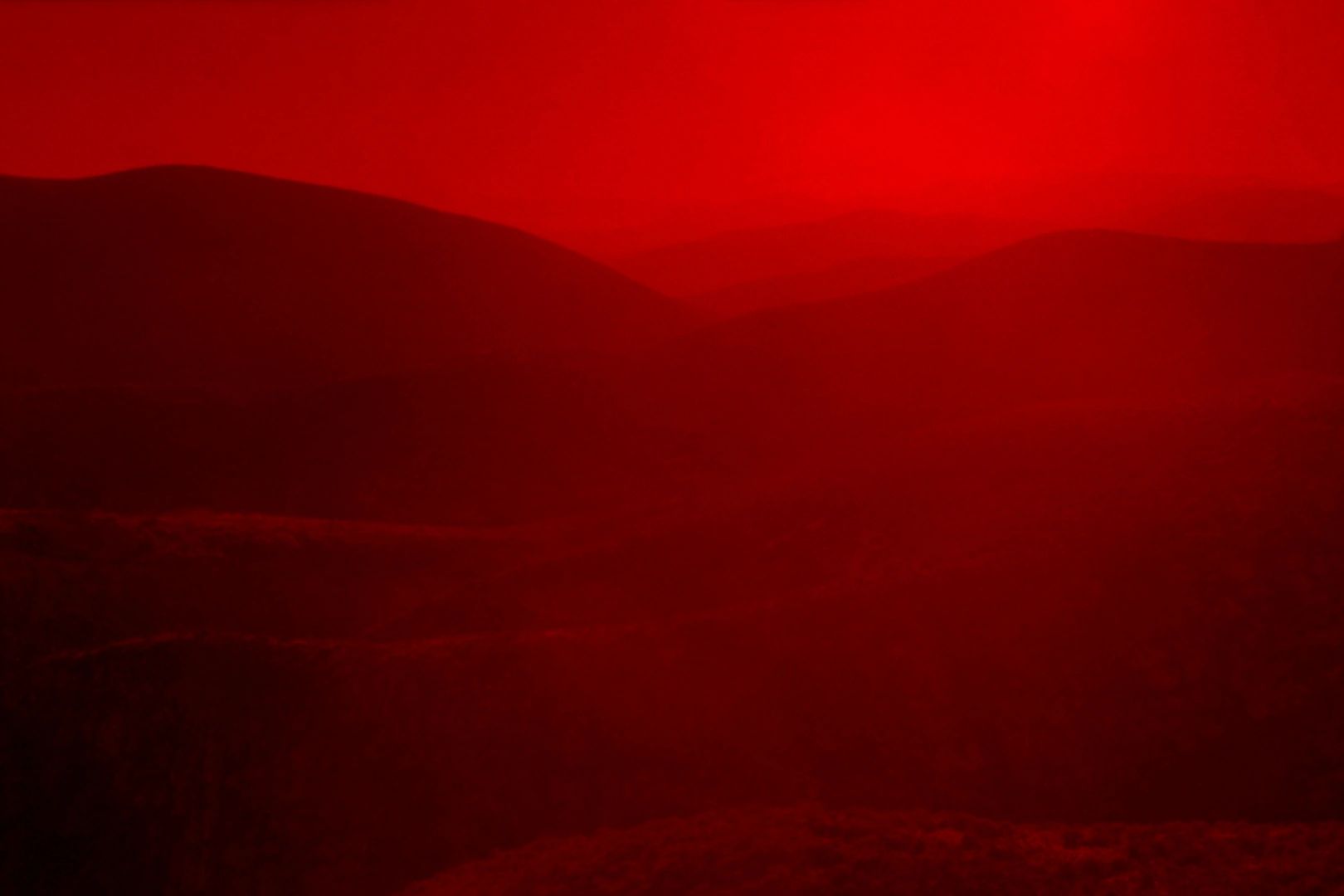
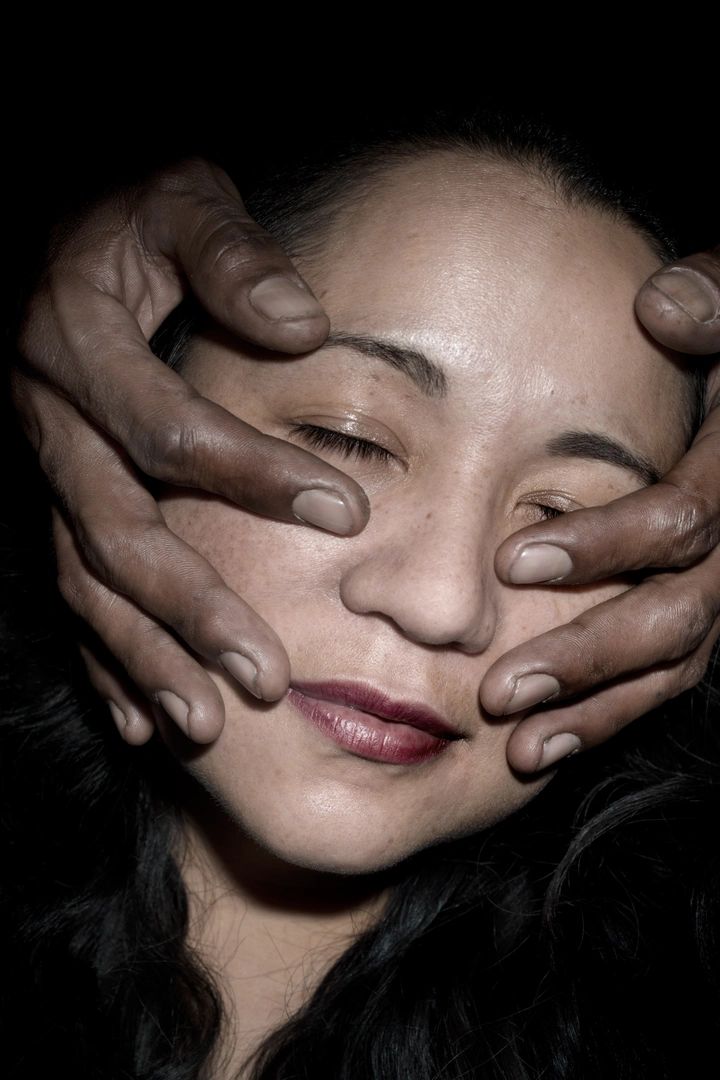
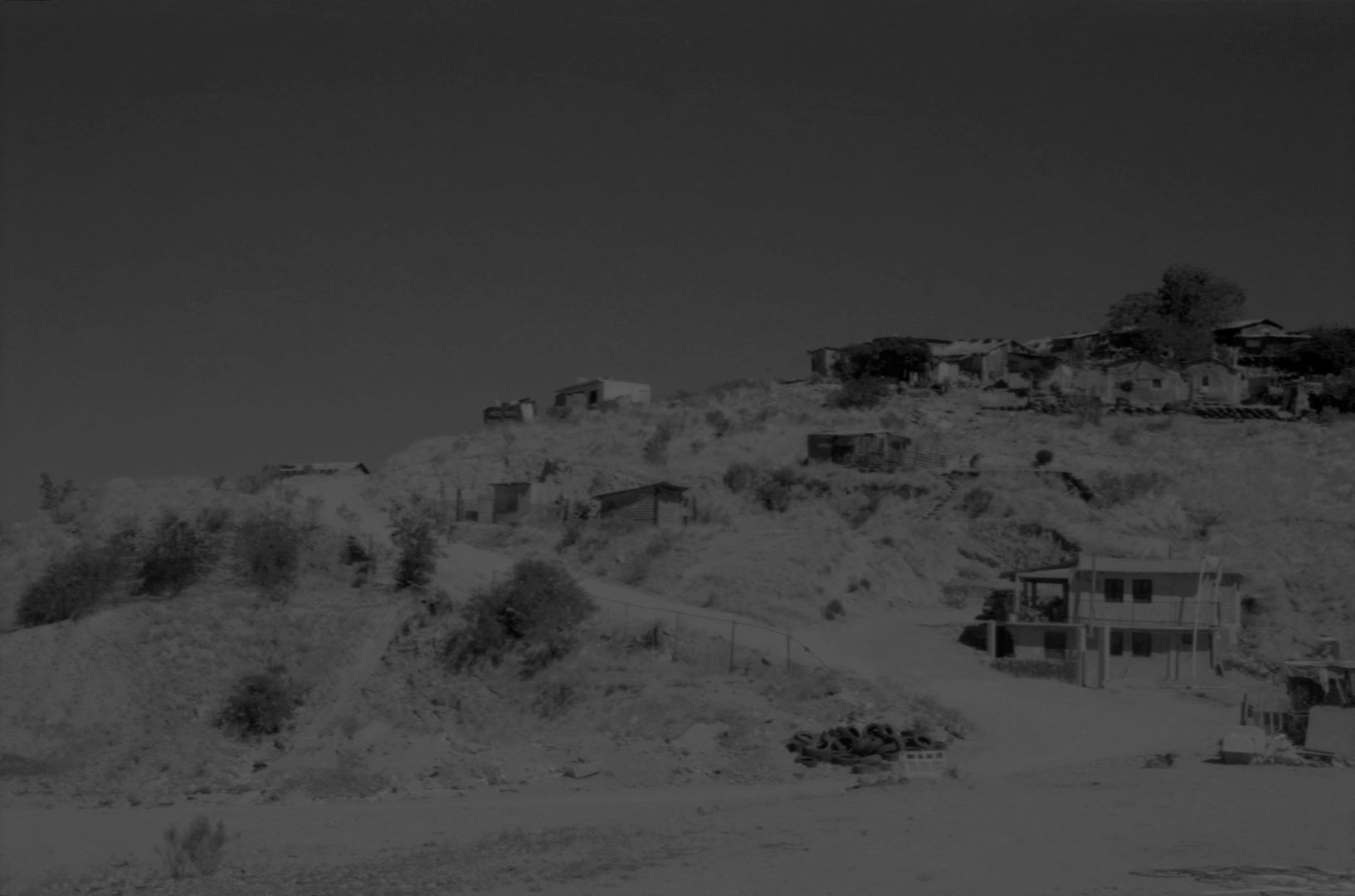
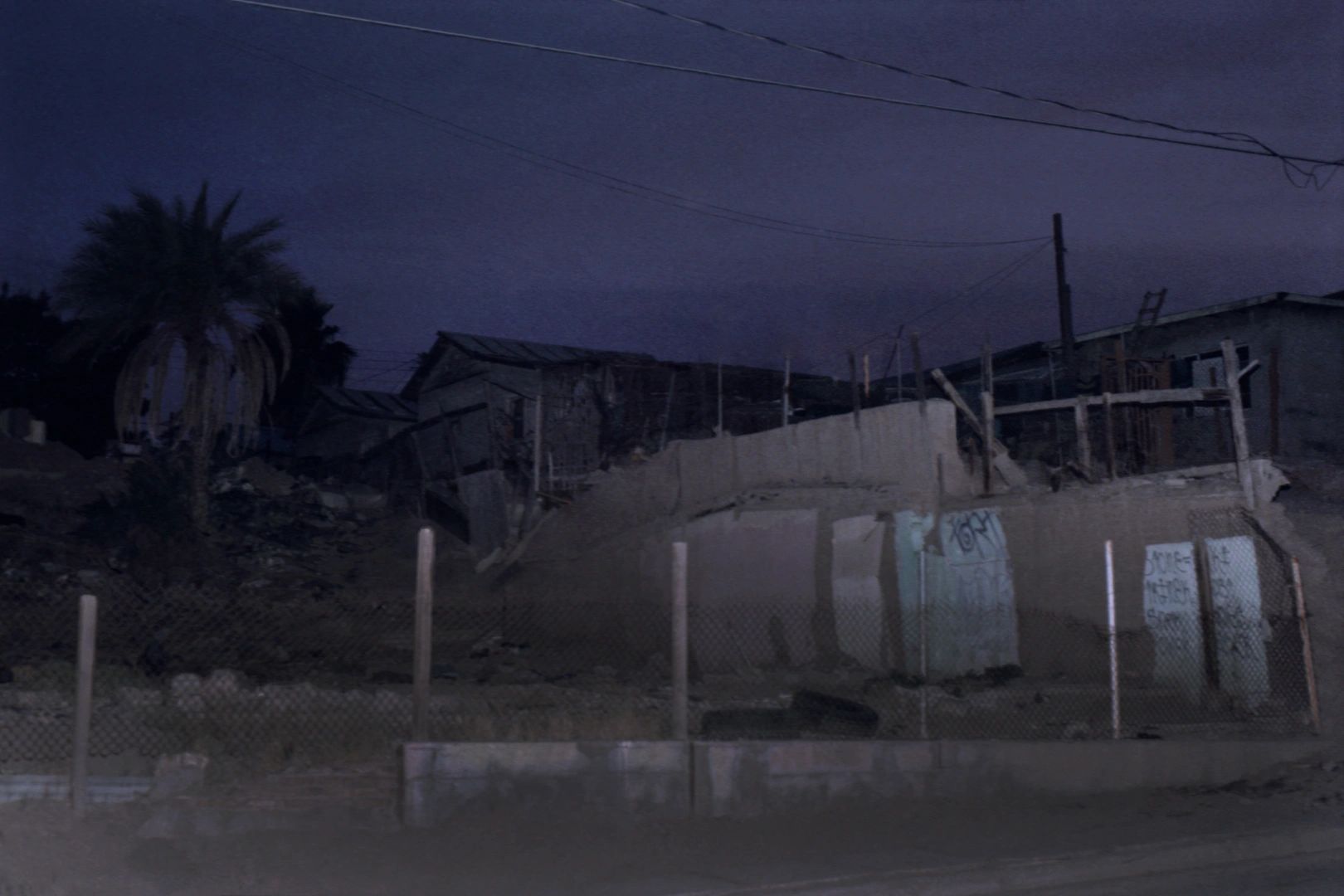
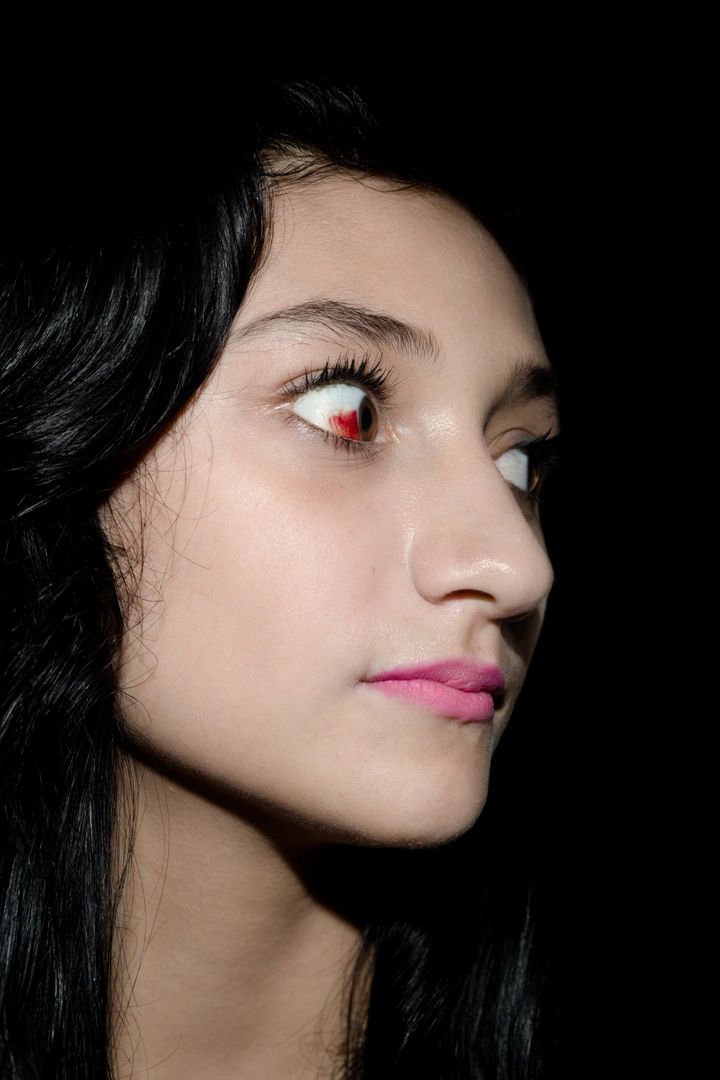
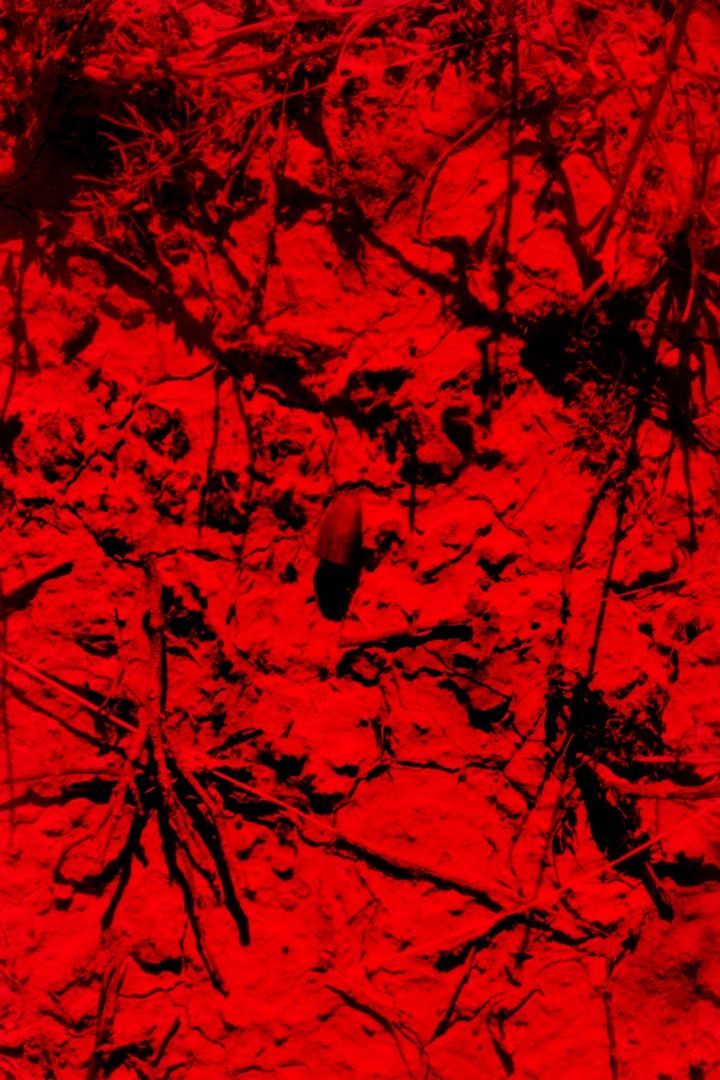
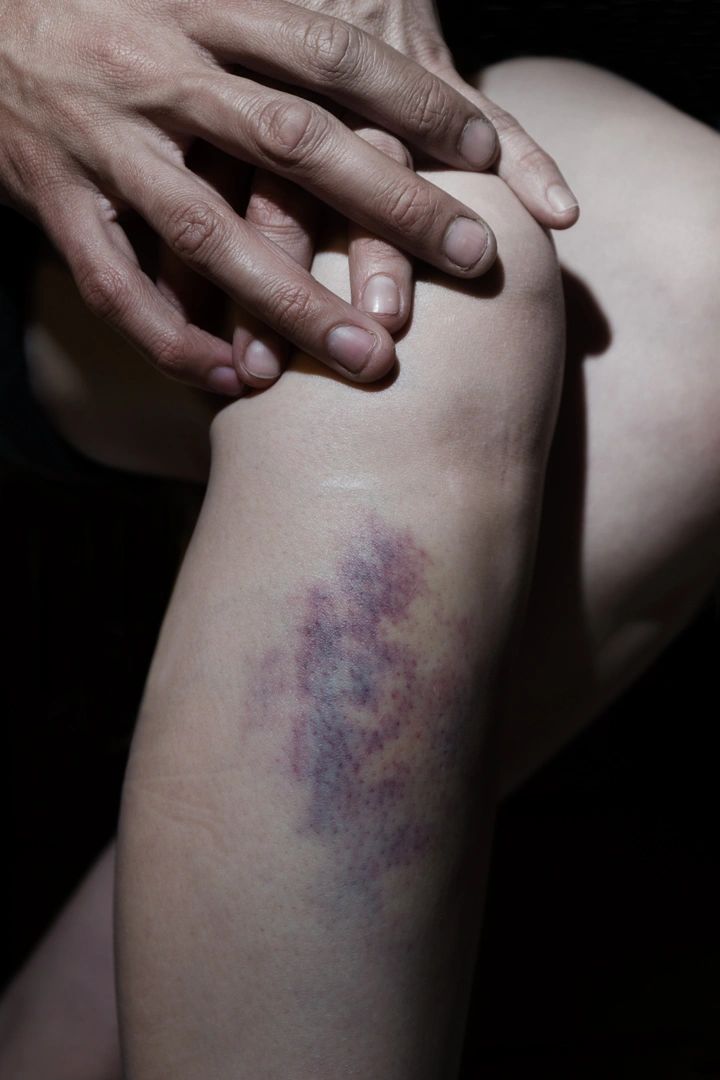
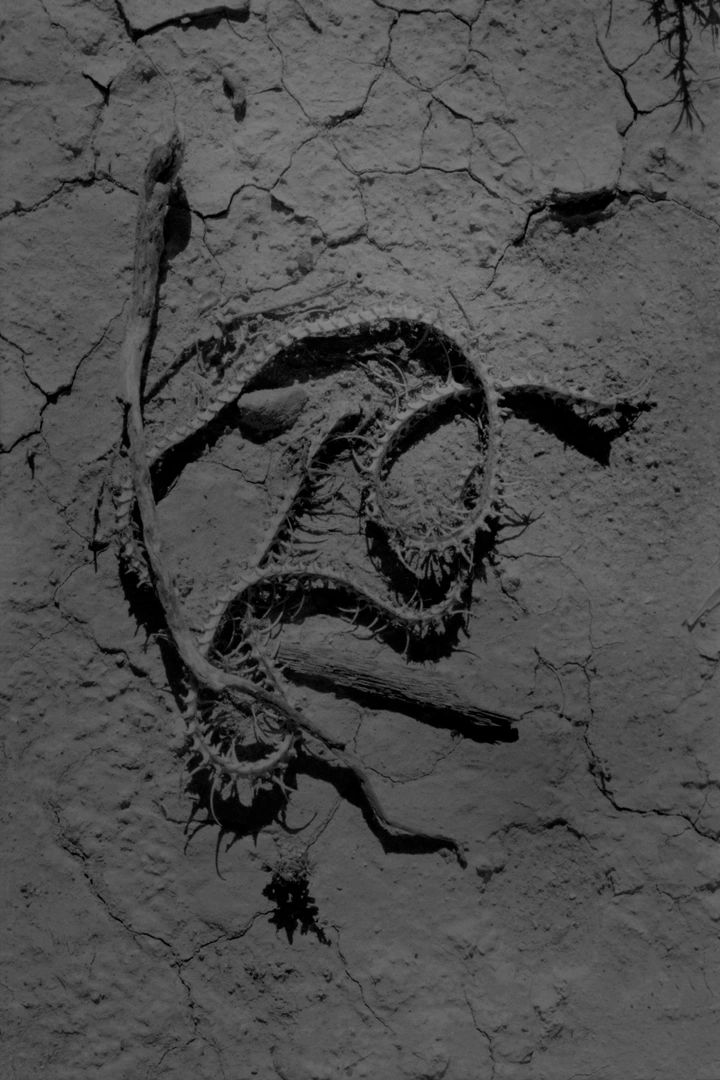
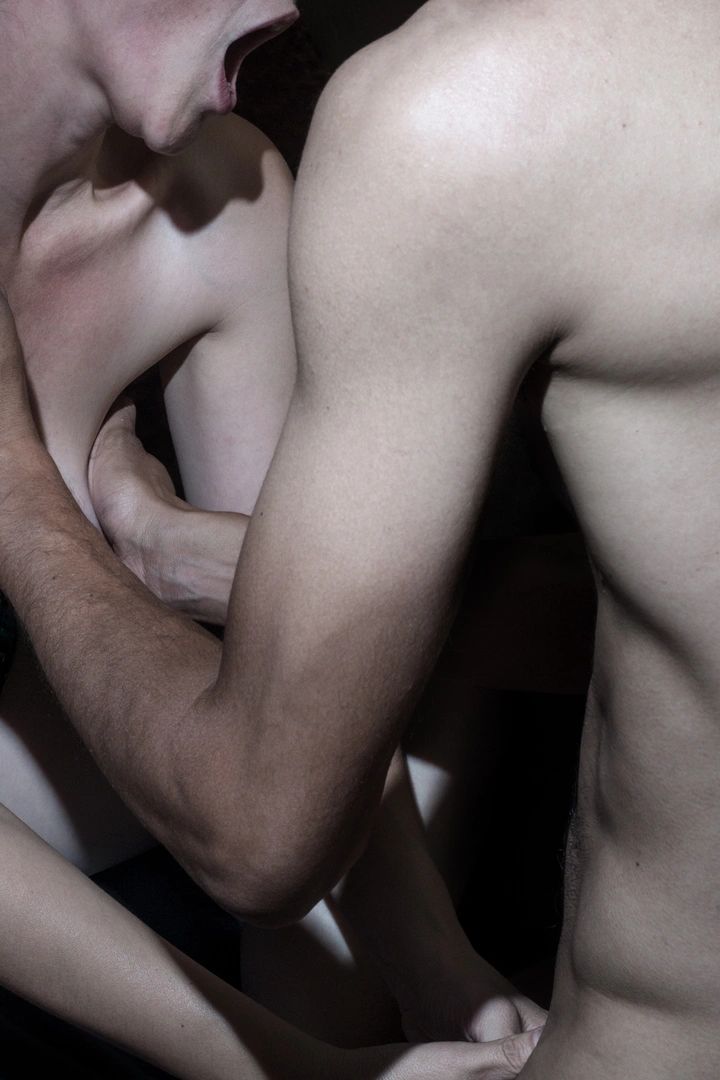
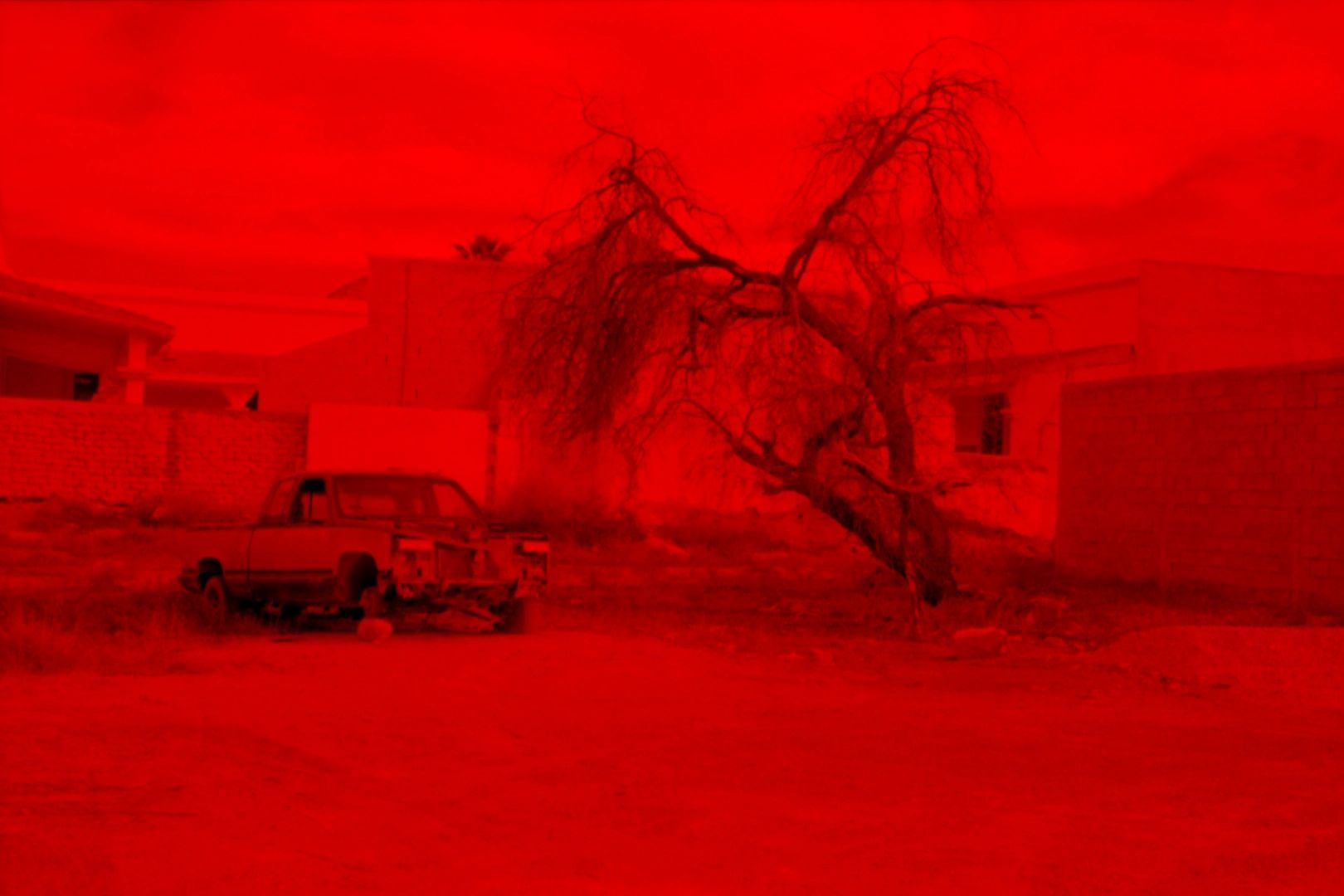
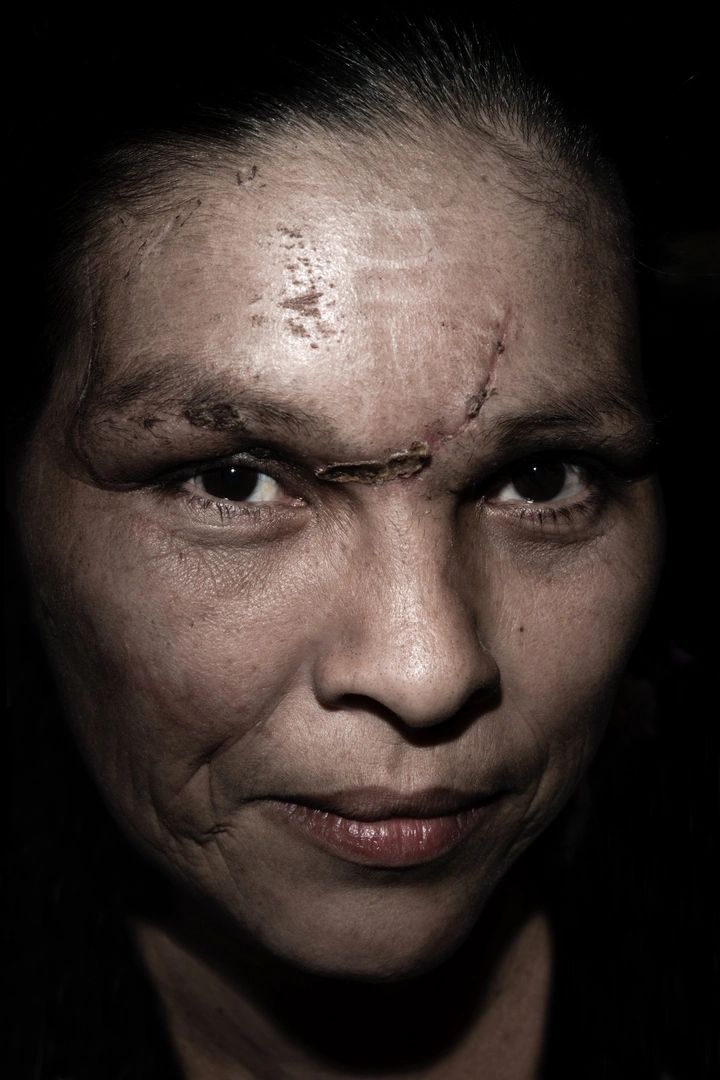
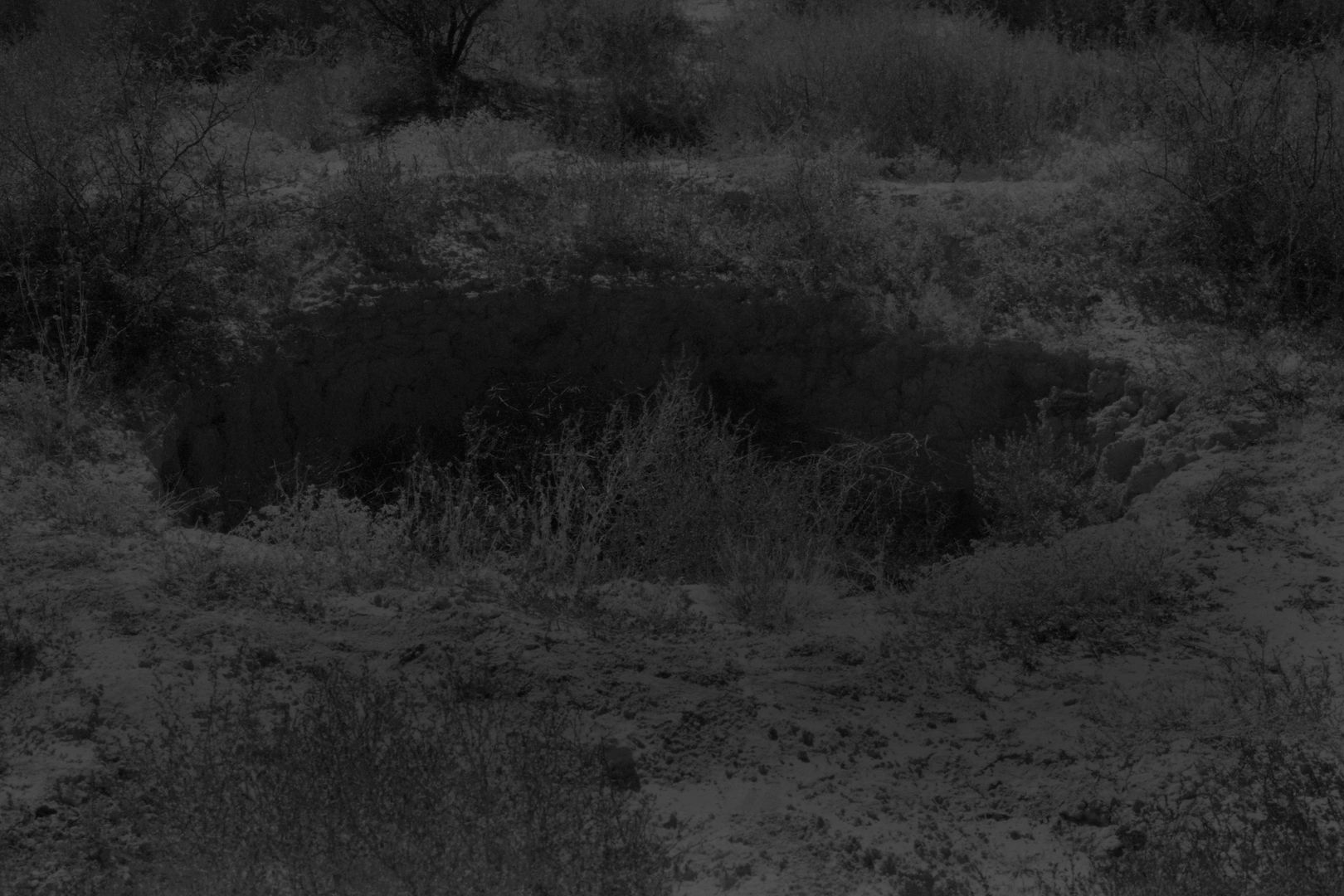
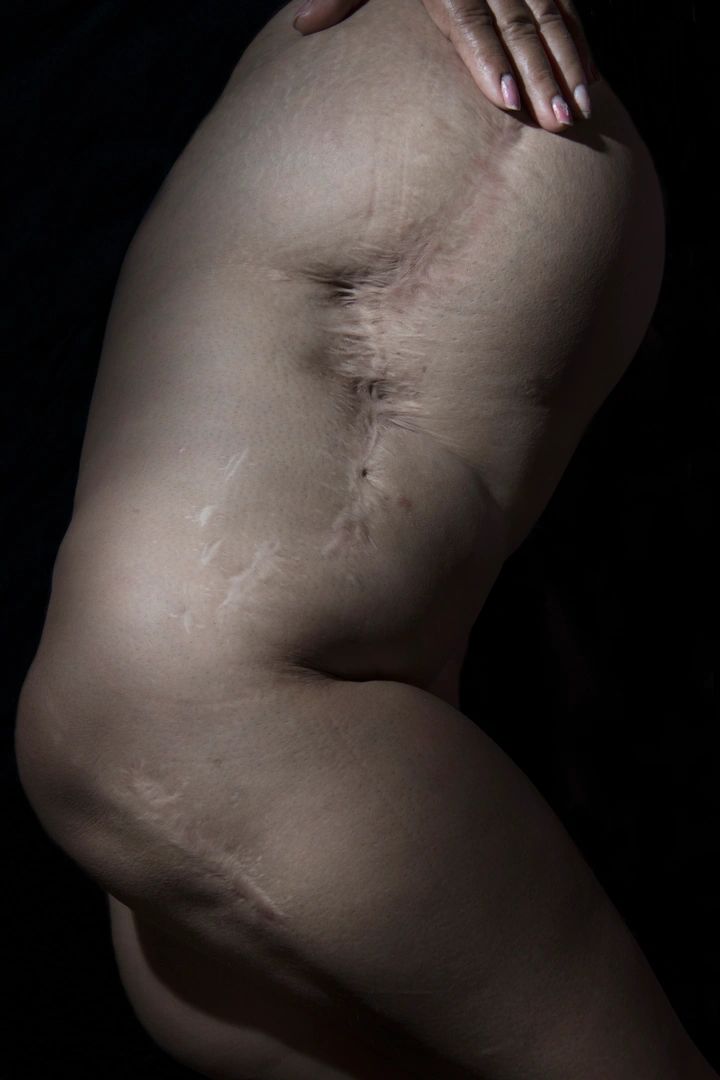
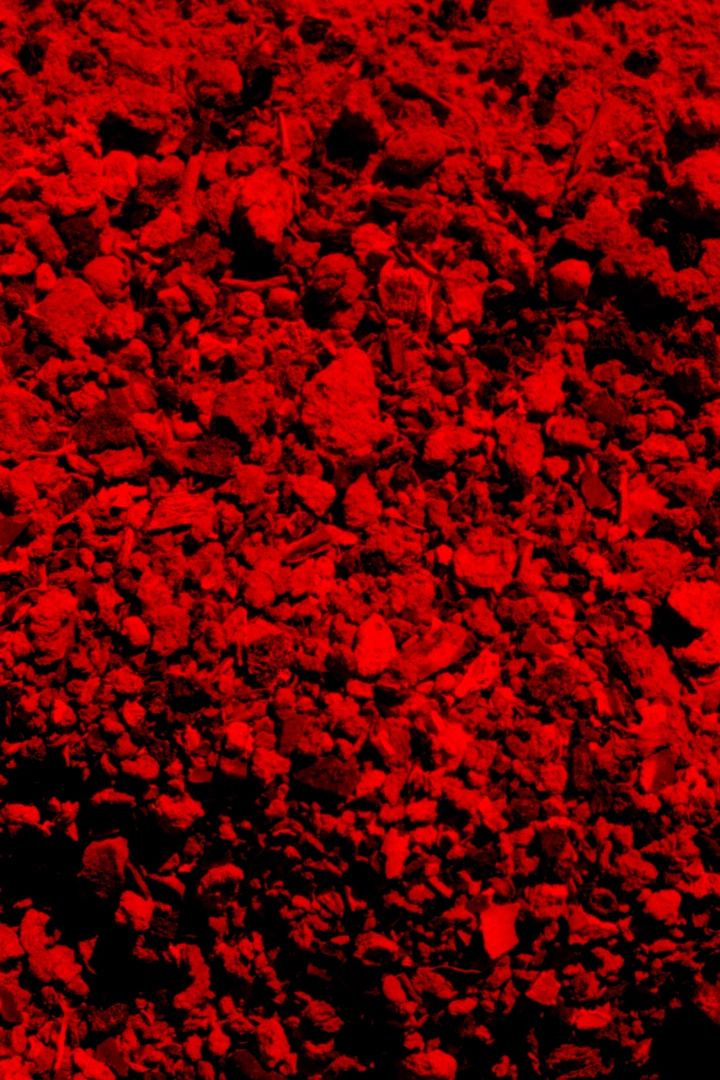
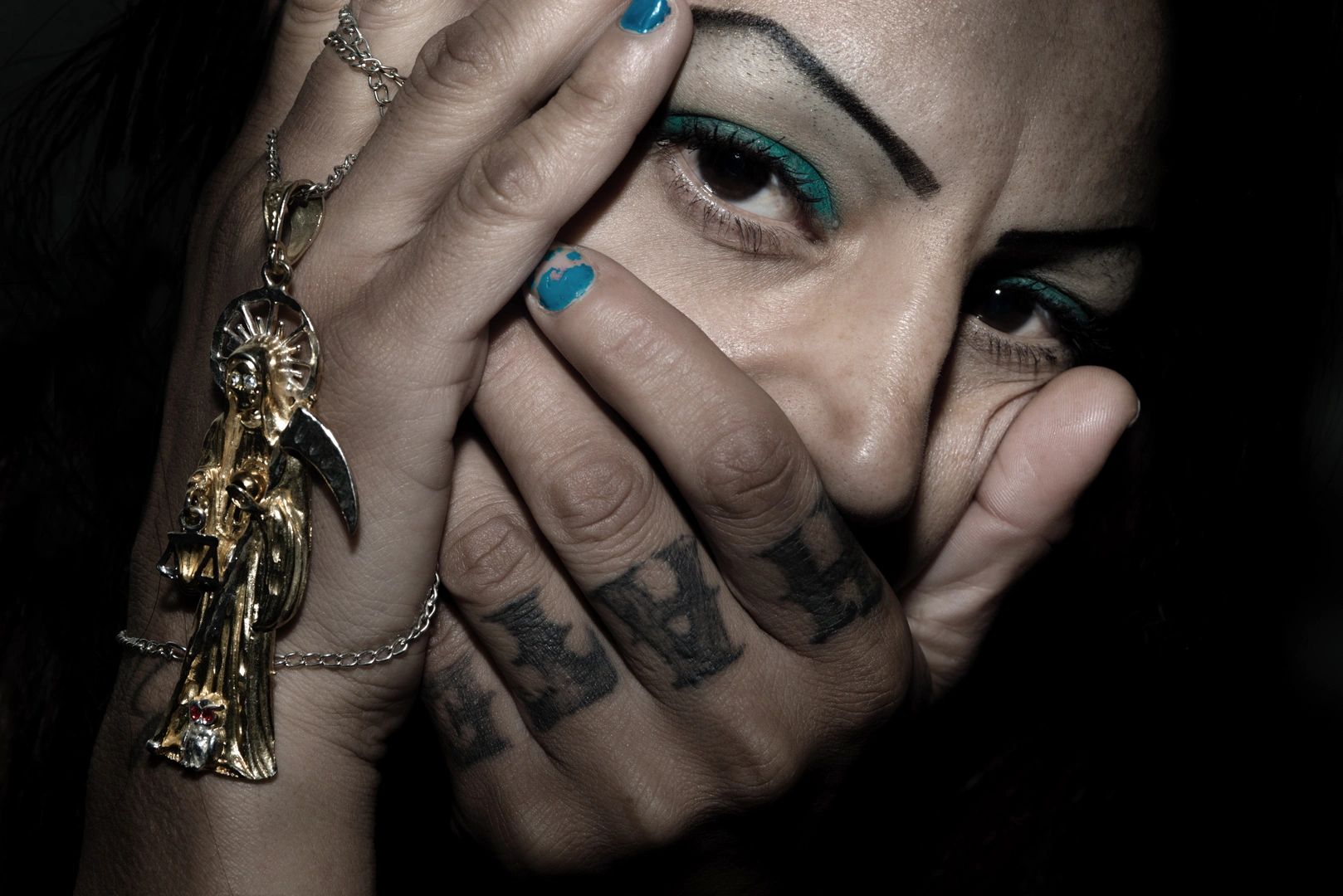
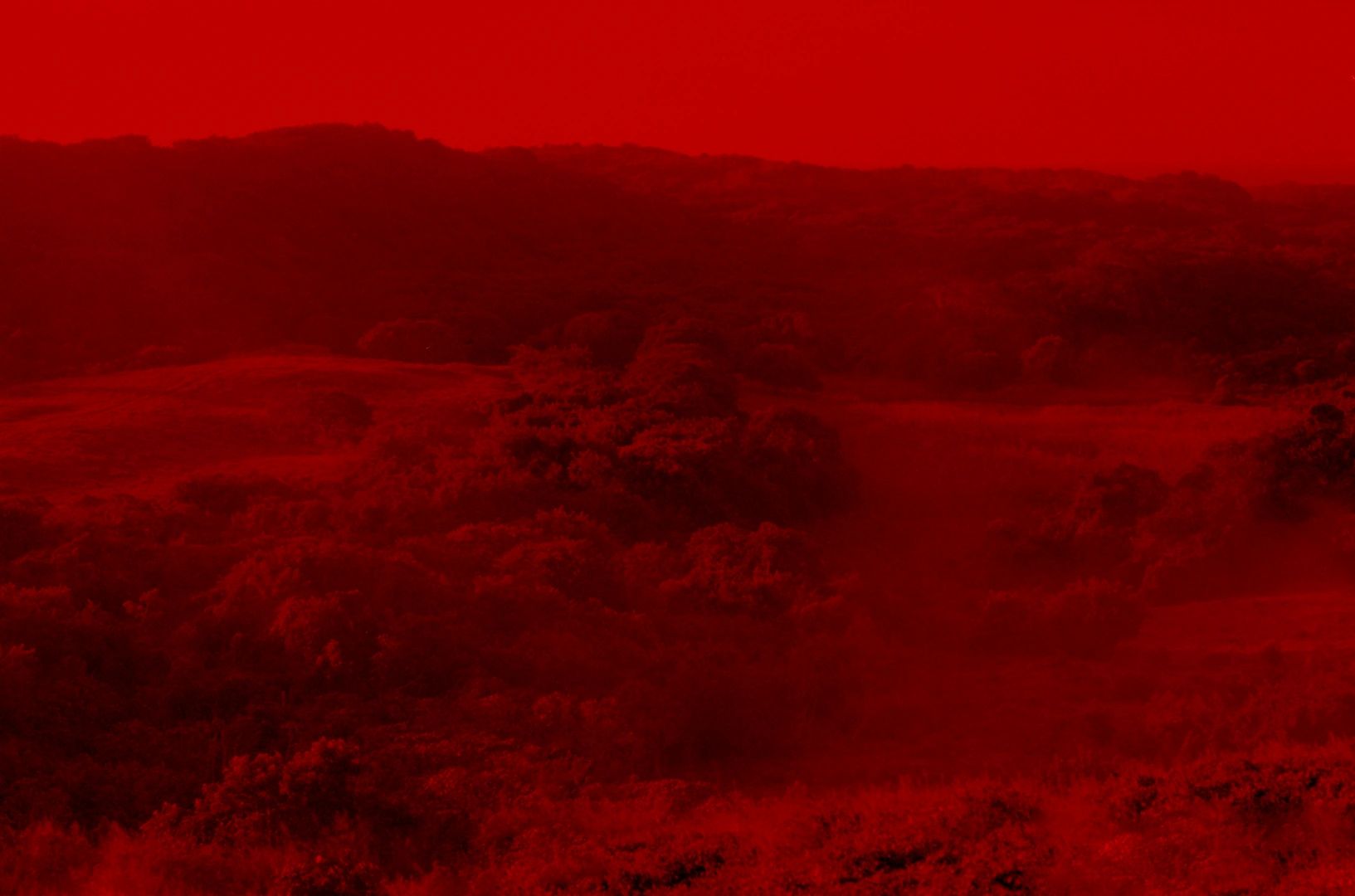
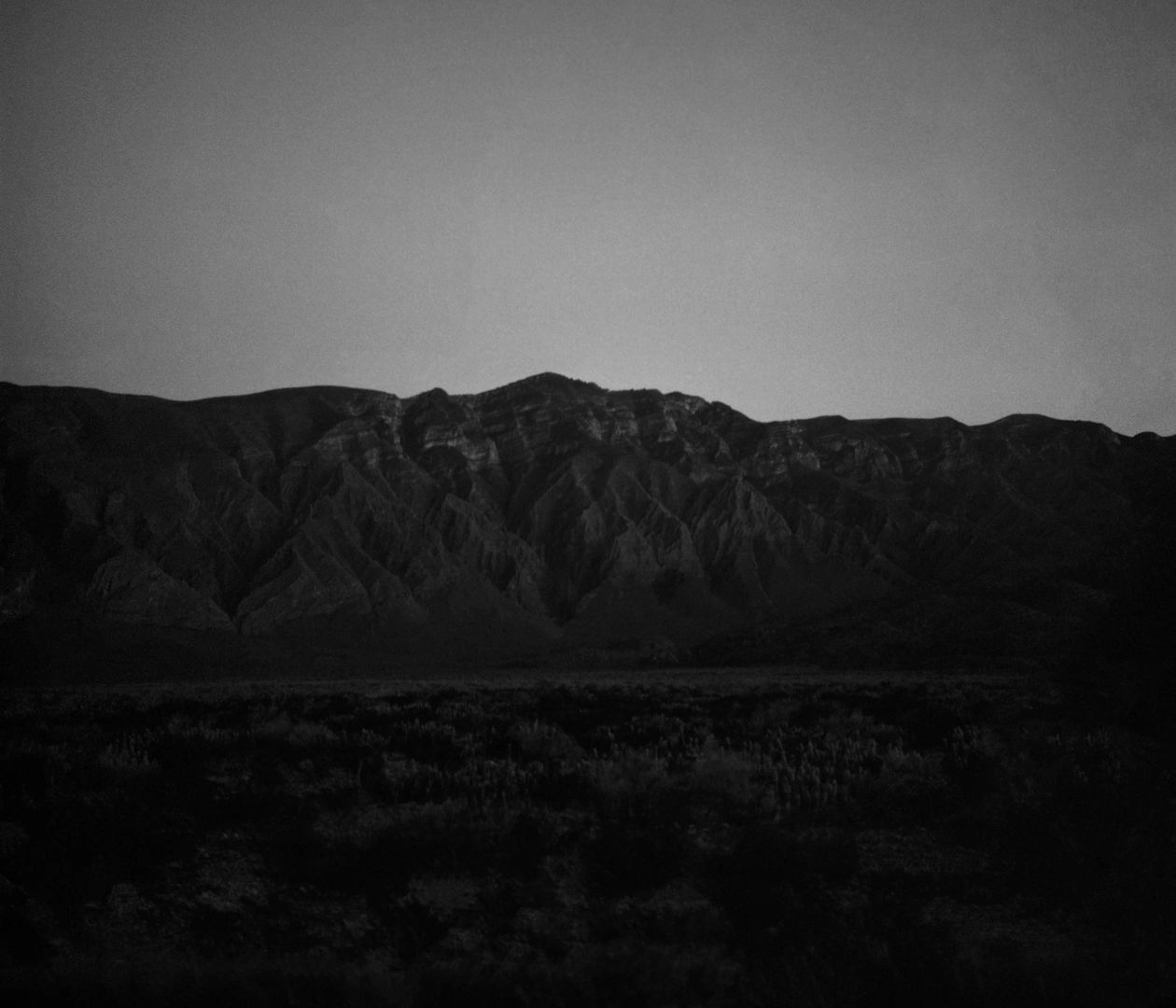
WOUNDS OF VIOLENCE AND HOW TO HEAL THEM The work for the Capa-Prize aims to continue the work what within the „Wounds of violence” series has been started: investigating women fates paralleled with Mexican contemporary mass graves through focusing on one specific case, the lives of women of the group searching for the remains at the sites of mass graves found in Veracruz, Mexico between 2016-2017. CONTENT The story of these mass graves in Veracruz is not only noteworthy because they are the largest ones in Mexico -most likely in all Latin-America as well- discovered so far, but also because this search group composed of 180 women, working independently to identify remains by digging up the graves, is wholly funded by the money they themselves make selling food and used clothes. This body of work not only seeks to represent the extreme violence and cruelty that surrounds the life of Mexican women today, and to show these effects on social groups and individuals who are subjected to this violence without any institutional help. Instead, aims focusing on how these women are trying to heal themselves as self-organized groups searching for justice, what is the solution they are trying to find to fight against violence. Their communal work helps ease their pain and heal their psychological wounds, and helps them survive the knowledge that the search for the remains of their loved ones will most likely be a never-ending process due to the lack of a functional justice system. The series focuses on the work these women are doing in their search for their lost relatives and places their personal stories, thoughts within the geographic space of the landscapes of mass graves. REALIZATION I am planning to use the same thematic and visual structure of my earlier work but adding new content and visual elements. This series aims to be a portrait of women, to visualize the sites and the living environments around the graves, to document the work going on around the graves, as well as to record interviews focusing on the emotional struggles they have. The idea of a never-ending search is underscored by the view of nearly infinite landscapes of Mexico. Although my pictures present places where horrible events have occurred, my aim is to experiment with a more metaphorical way of visualizing violence. The level of cruelty that has occurred there is impossible to convey through the medium of photography, so instead my aim is to create an ominous atmosphere, a sense of conflict, tension and violence, to refer to the events that have occurred at these sites, to stimulate an emotional response in the viewers that leave room for them to be able to enter into the reality of a world where extreme violence has become a daily norm. I will utilize different image-making processes: 35mm color film, with a red filter manually overlaid on the pictures to create a color that symbolizes blood and tensionwith, and after some photographs converted to greyscale to create a monochromatic depiction of the landscapes. Medium format photographs also form part of the series, capturing almost infinite natural landscapes where the graves have been found, and here the image manipulation is the result of weather circumstances (distance, fog, etc) or the time of the day (dawn, night) and variations of exposure times. The portraits and the women’s activities will be documented by using external flash and positioning the figures in order to use emotion-evoking-effects of unnatural light and the direction of situations. INSTALLATION By producing an installation my goal is to create an experience which mimics a remote reality and places the viewer into a far away world, achieved by exhibiting a mix of audio interviews and very large scale prints of landscapes and portraits. For the medium format landscapes I plan to utilize extremely large scale prints to imitate realistic dimensions, resulting in an experience that will transport the viewer to these particular locations. The portraits will be printed in large dimensions as well, to bring out the most intimate details of the faces the women. Depending on the size of the space, I would like to install up to five women's portraits and their stories to the exhibition space. The interviews record their accounts of their losses, their ongoing search, and their feelings. I've been experimenting with sound installations reacting to movements in recent months, which I would like to incorporate in this installation as well, provided that physical conditions allow. The viewers will enter the installation space alone, thus becoming a part of an intimate, lonely search process, and only as they approach the portraits does the audio of the women’s narratives begin. SCHEDULE During the one year period I would frequently visit the members of the group in Veracruz. I think I possibly could spend 1-2 weeks on the site in every two months, which could mean a total of 5 to 10 weeks of field work. I'm in contact with the members of the group, and it is a great help that one of them, who lives in the residential area which lies next to the graves. She works on the sites every day, where I accompany her, gaining the trust of her, the other members, locals, and much more understanding of how the system works. Currently, a new site is being explored, where work is likely to begin next year. I would plan to produce all the visual and audio material by August 2018, and I would spend the remaining two months processing, producing and installing.
"The main focus of my work in the past years has been human violence: how its constant reception can structure the society and the self. My aim is to document individual destinies and topics from an intimate closeness in order to witness, capture the essence of the world where my subjects live in. I visualize what I experience with using photographic tools such as lighting, staging, to create pictures which are able to strongly involve the viewer emotionally into the topics I'm working with." Adél Koleszár (1986) is originally from Hungary, where she graduated with a Masters in Fine Art Photography at the Moholy-Nagy University of Fine and Applied Arts, after receiving a BA degree in Social Sciences in Budapest. In the past years she has been working and living in Mexico, where she works with the aim of completing her visual research on human violence. In 2013 she arrived to the country thanks to a Mexican Governmental Artist Residency Program, in 2014 her project on contemporary religions in Mexico was selected as finalist by Magnum Photos & Ideastap Photography Award, in 2015 she was the winner of the Budapest Portfolio Prize, in 2016-17 receiver of the Pécsi József Scholarship which supports the work of young Hungarian photographers. Between march and may of 2016 she taught locals in several cities along the US/Mexican border as part of a self initiated, open and free to everyone workshop project, Vision del Norte, with the aim to teach the participants how to use the visual language of photography to express their thoughts about the reality they are living in, and share it with a wider public in a form of a book which compiled the vision of each participants. The same year she was the solo exhibitor of the Discovery Show section of the Fotofestiwal Lodz, and her book „New Routes of Faith” was shortlisted on the Unseen Photography Dummy Award. Her work was exhibited and published widely in her country and internationally, amongst in Berlin, Mexico City, New York, Arles, Vienna, and featured on Foam Spotlight, Vice Mexico, Fotografia Magazine, Der Grief. Currently she keeps working on new projects, as well as continues the investigation on the alternative religious forms in Mexico. EDUCATION 2011-2013 Moholy-Nagy University of Art and Design, Photography MA, Budapest, Hungary 2012-2013 Universidade Lusófona de Humanidades e Tecnologias, Faculty of Photography, Lisbon, Portugal 2008-2011 Eötvös Lóránd University, Social sciences BSC, Budapest, Hungary 2001-2006 Secondary School of Fine and Applied Arts, Applied photography, Budapest, Hungary AWARDS / SCHOLARSHIPS 2017 Women in Photography (WIPNYC) Grant & Mentor Program, Shortlist 2016/2017 Pécsi József Photography Scholarship, Budapest, Hungary 2016 Unseen Photobook Dummy Award, Shortlist, Amsterdam, Netherlands 2016 PHOTOGRVPHY GRANT, Nominee 2015 Budapest Portfolio Review, Winner Portfolio Prize, Robert Capa Contemporary Photography Center, Budapest, Hungary 2014 Magnum Foundation & Ideastap Photography Award, Production Grant & Finalist, London, United Kingdom 2013-2014 Artist Residency, Mexican Governmental Scholarship Program, Mexico City, Mexico 2007 I. Dunaújváros Photo Biennale, Special Prize, Dunaújváros, Hungary 2007 CCM International Photo Contest, II. prize, Cuenca, Spain 2007 MTV Antenna Competition, I. prize, Budapest, Hungary RECENT SELECTED EXHIBITIONS / ACTIVITIES 2017 The way we see - Overlook of Hungarian Photography, National Museum of Varsaw, Varsaw, Poland 2017 Vitamin-A, Centro de La Imagen – Biblioteca Vasconselos, Group Exhibition, Mexico City, Mexico 2017 MIA Photo Fair, Milano, Italy 2016 C/O Berlin, EMOP Berlin Opening Days, Berlin, Germany 2016 Faith and Violence, Solo Exhibition as part of the Photomonth of Bratislava, Open Gallery, Bratislava, Slovakia 2016 Art Market Budapest, Solo Exhibition Booth showcased by Robert Capa Contemporary Photography Center, Budapest, Hungary 2016 ECHOES: City, Society, Conflict & Self in Hungarian Photography, Alma Gallery, New York, USA 2016 Fotofestiwal Lodz, Solo Exhibition as the year's Discovery, Lodz, Poland 2016 Vienna Photo Book Fair, Vienna, Austria 2016 Vision del Norte, Self initiated photography workshop program for locals, held on the nothern border cities of Mexico 2015 "New routes of Faith", Solo Exhibition, Supermarket Gallery, Budapest, Hungary 2015 Arles Photobook Festival, Arles, France 2015 Vienna Photo Book Fair, Vienna, Austria 2015 Hip Hip Zine, Belgrad, Serbia 2015 Ideastap & Magnum Photo Award, Exhibition of the finalists, London, United Kingdom 2014, Supermarket Gallery, Opening Exhibition, Budapest, Hungary 2014 Latarka Gallery, Japanese - Hungarian documentary photography, Budapest, Hungary 2013 Human Dignity via MOME, Ludwig Museum of Contemporary Art, Budapest, Hungary 2014, Supermarket Gallery, Opening Exhibition, Budapest, Hungary 2014 Latarka Gallery, Japanese - Hungarian documentary photography, Budapest, Hungary 2013 Human Dignity via MOME, Ludwig Museum of Contemporary Art, Budapest, Hungary PUBLICATIONS Foam Spotlight Der Grief Fotografia Magazine Vice Mexico Landscape Stories DOC! Photo Magazine La Hydra Mexico Artportal Index.hu PROFESSIONAL MEMBERSHIP 2007 Studio of Young Photographers, Hungary
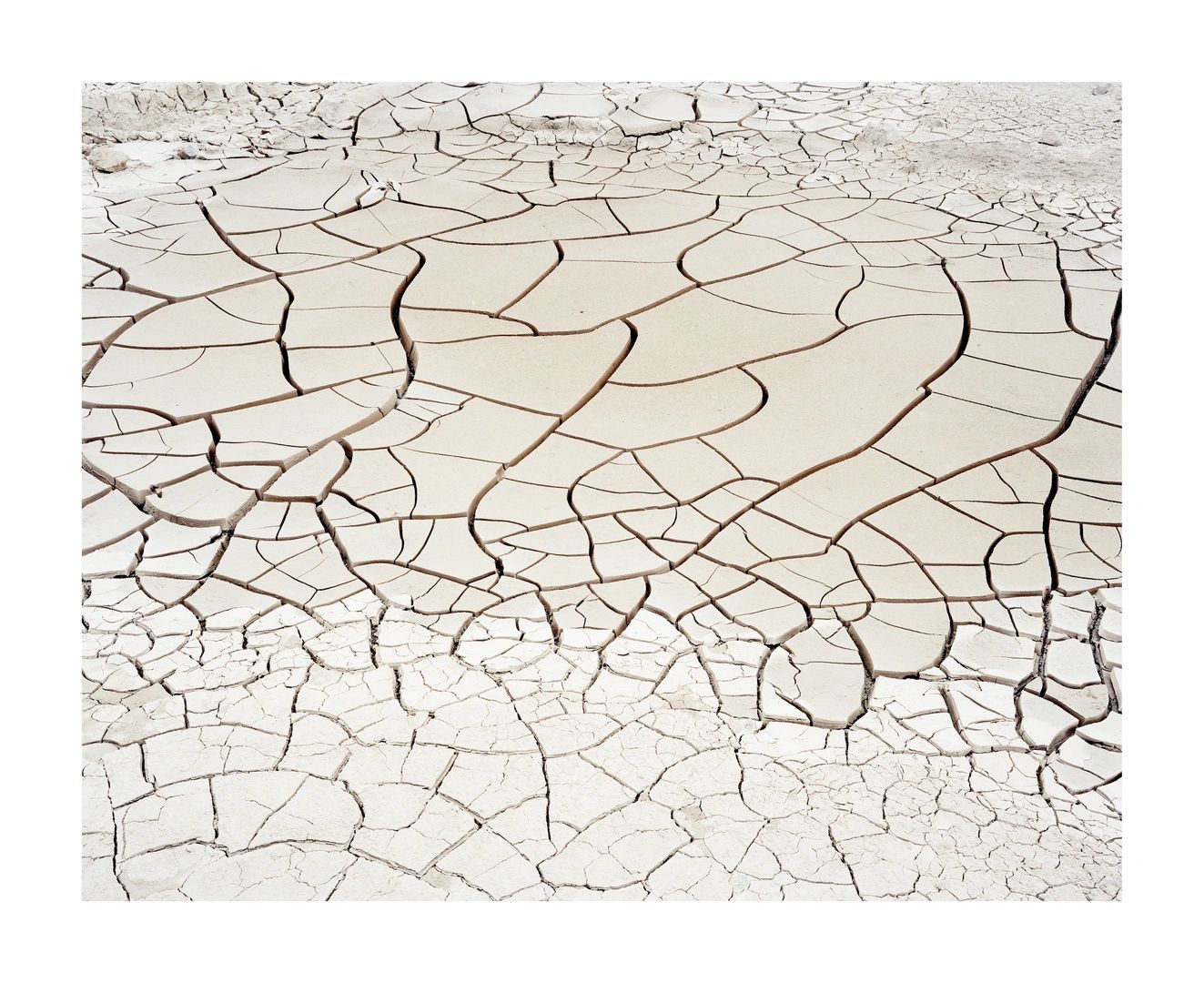
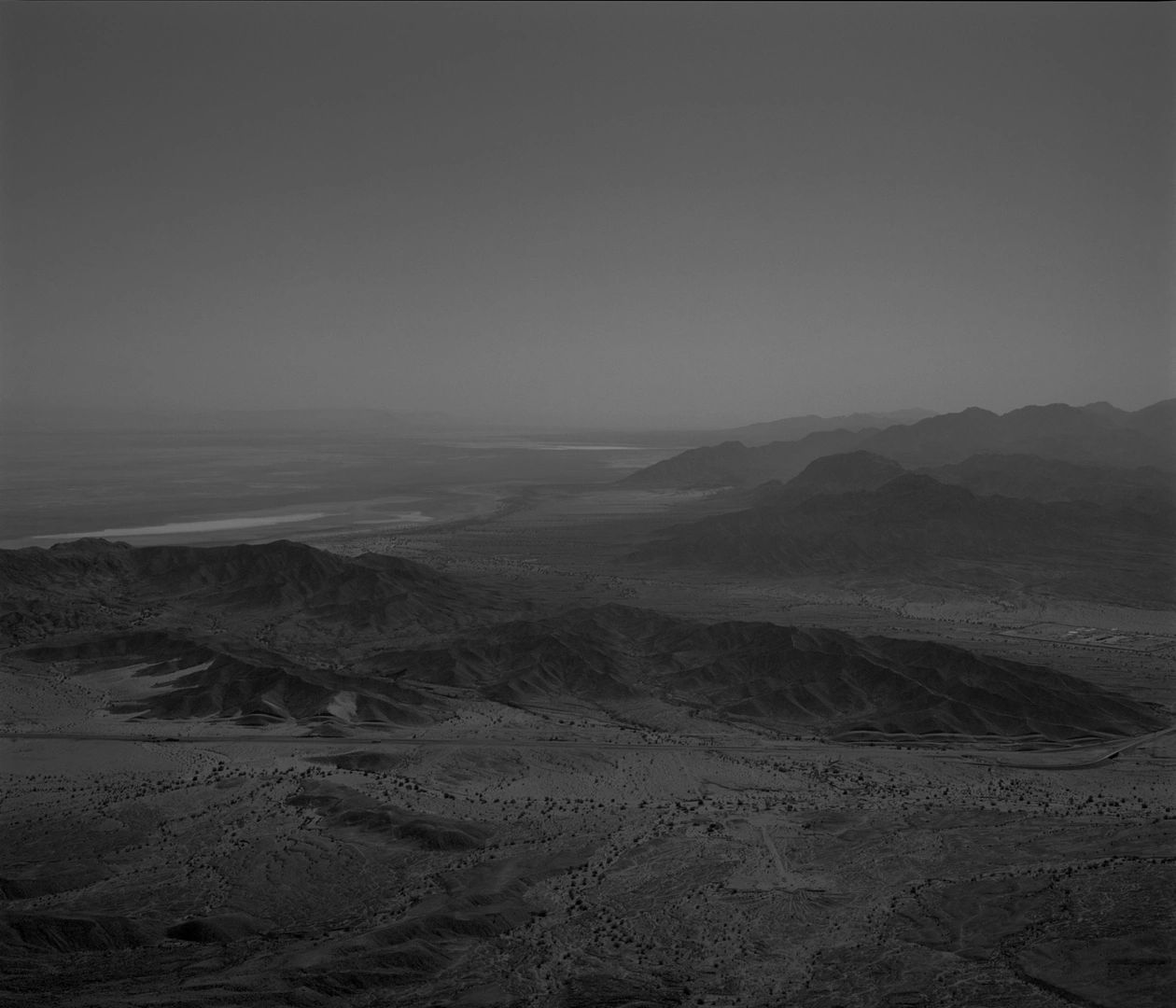
The series deals with geographical sites of Mexico where illegal, contemporary mass graves have been discovered, contrasting the local landscape that has been violated by these graves with the mental, physical consequences that this extreme violence has on women in the area. The photos portray women who have been subjected to these conditions, so searching for relief in alternative religions, drugs or the abuse have left visible marks on their bodies. The fact that I am a woman, living and working in a country dominated by institutions of male power, has made me even more sensitive towards the fate of the local women who are exposed not only to institutional violence of the local government, narcos and criminals, but also gender violence and repression from their own families and lovers. Just as the sites of mass graves in Mexico have suffered a significant violation of the physical geography, so too the bodies of the women in these areas have suffered physical and mental abuse as well.
FIRST CONTACT (WORKING TITLE)
Bartha Máté

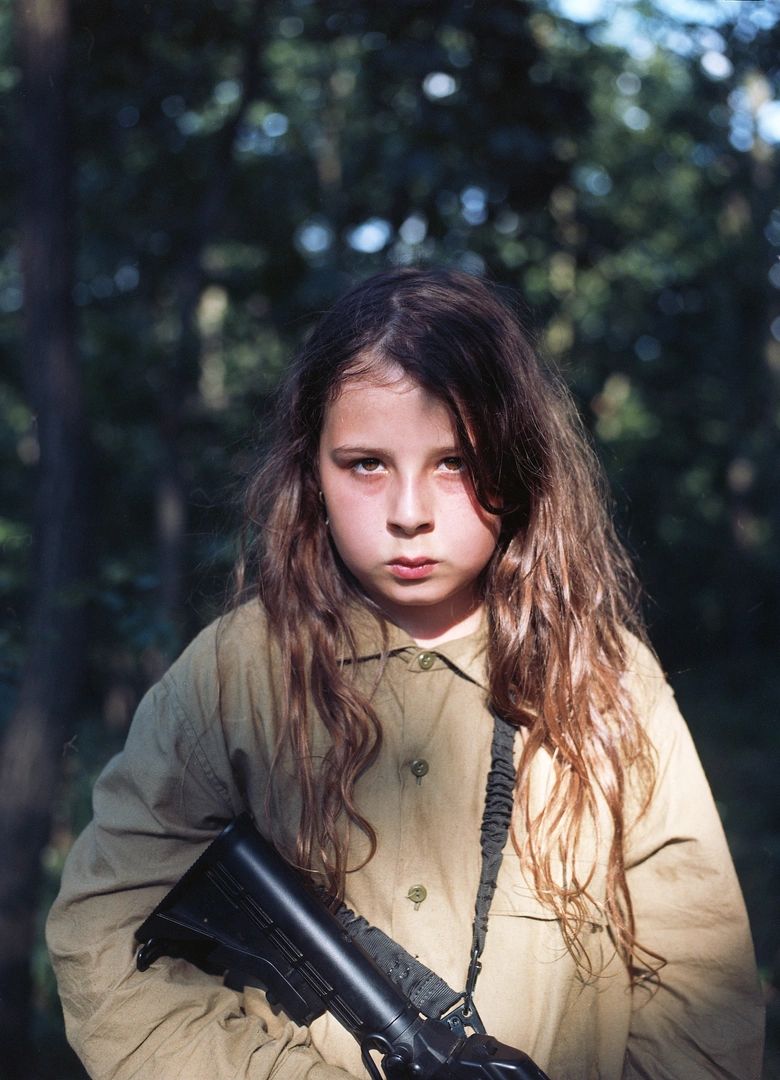
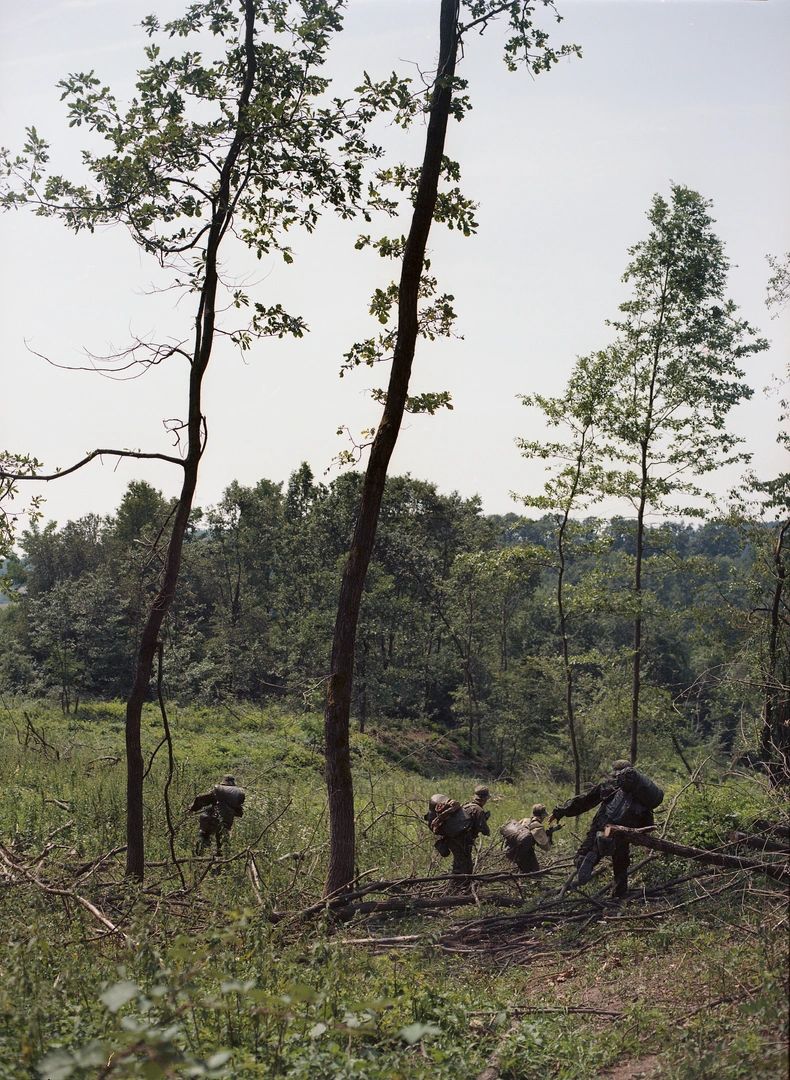
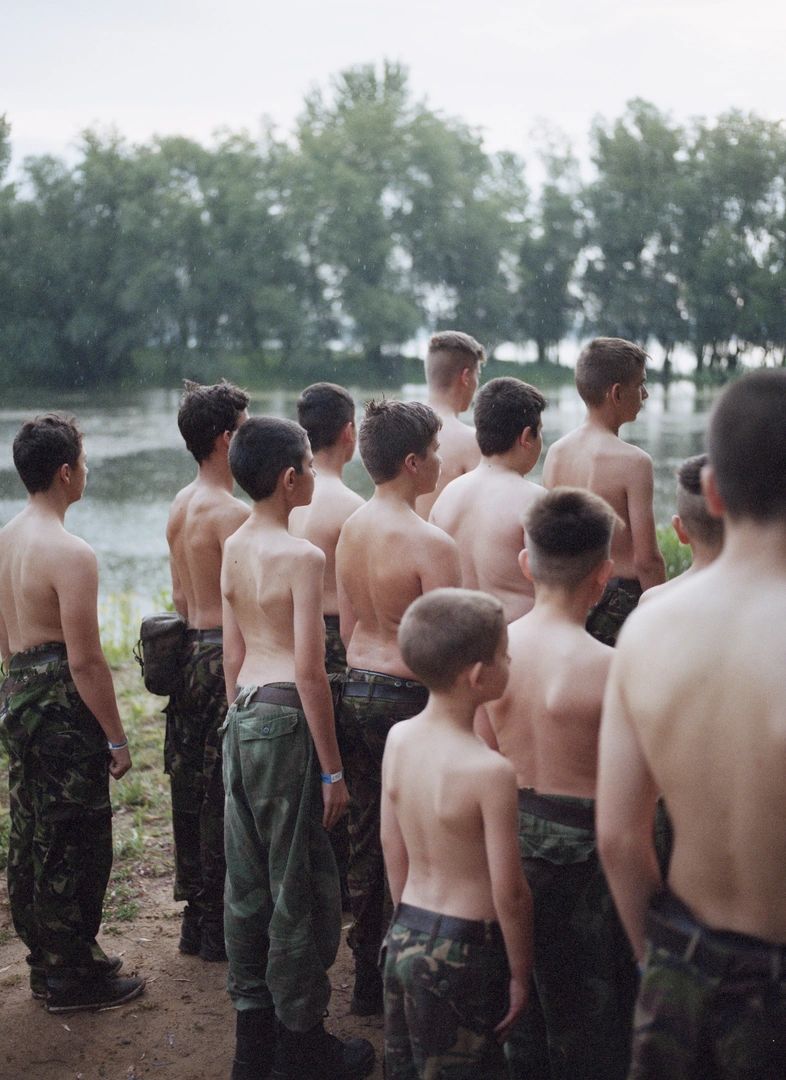
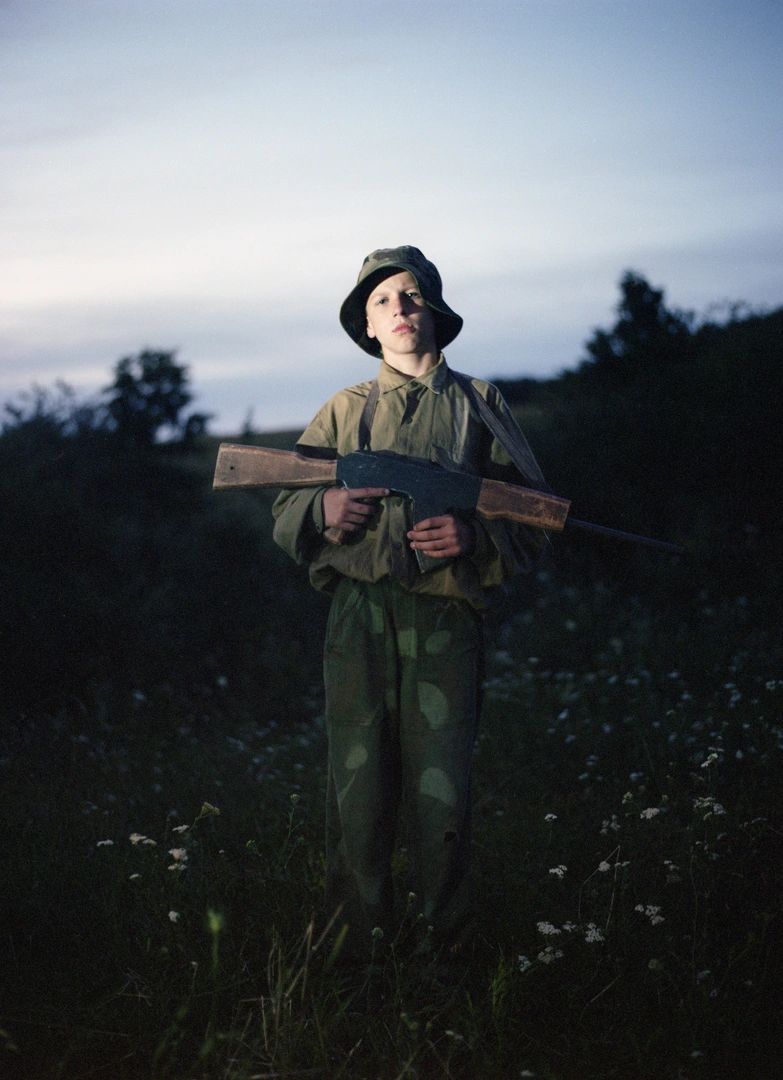
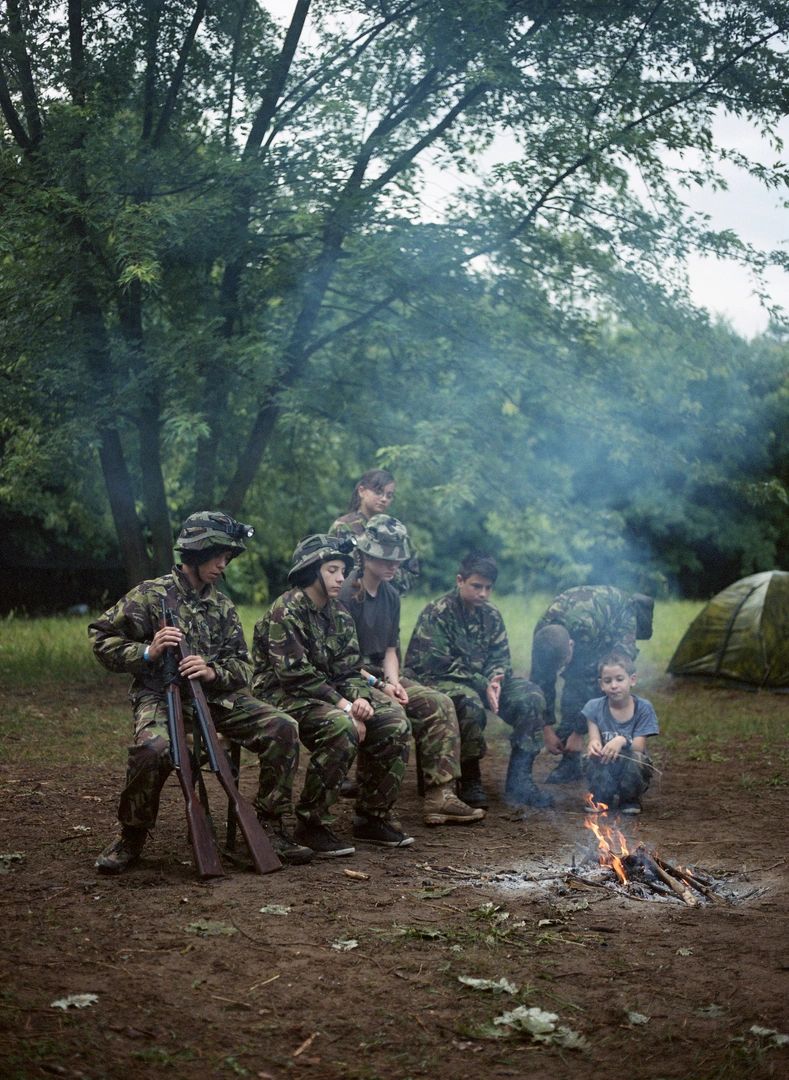
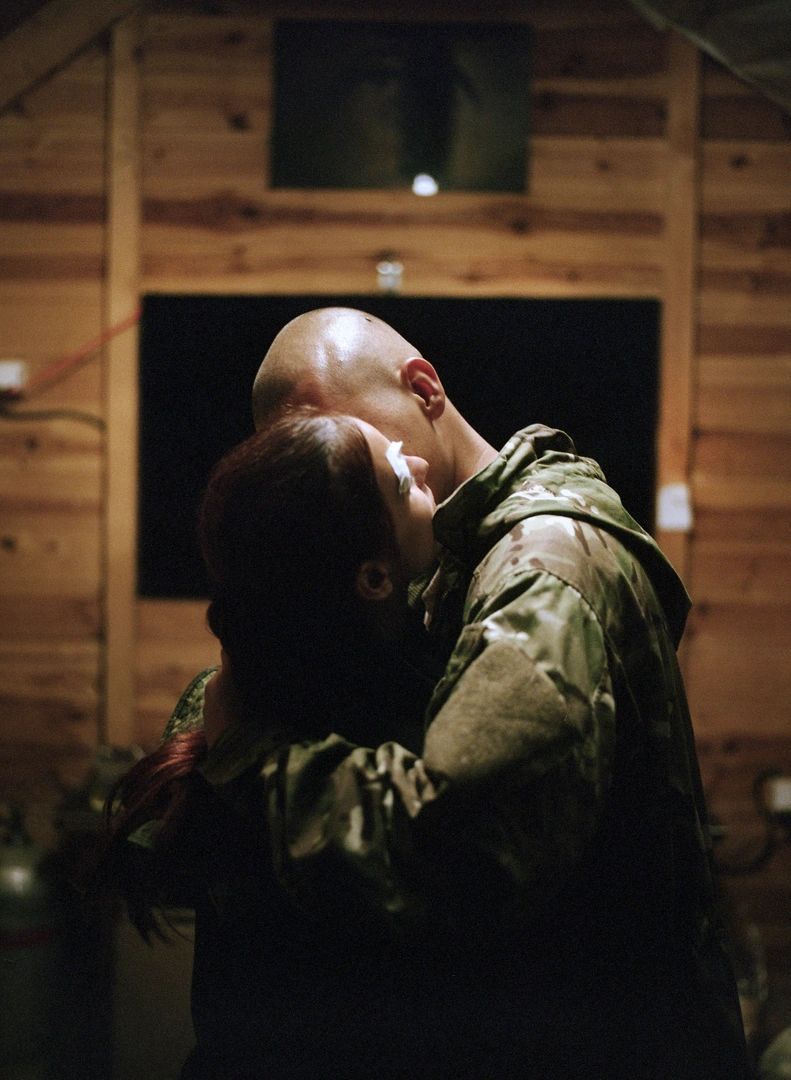
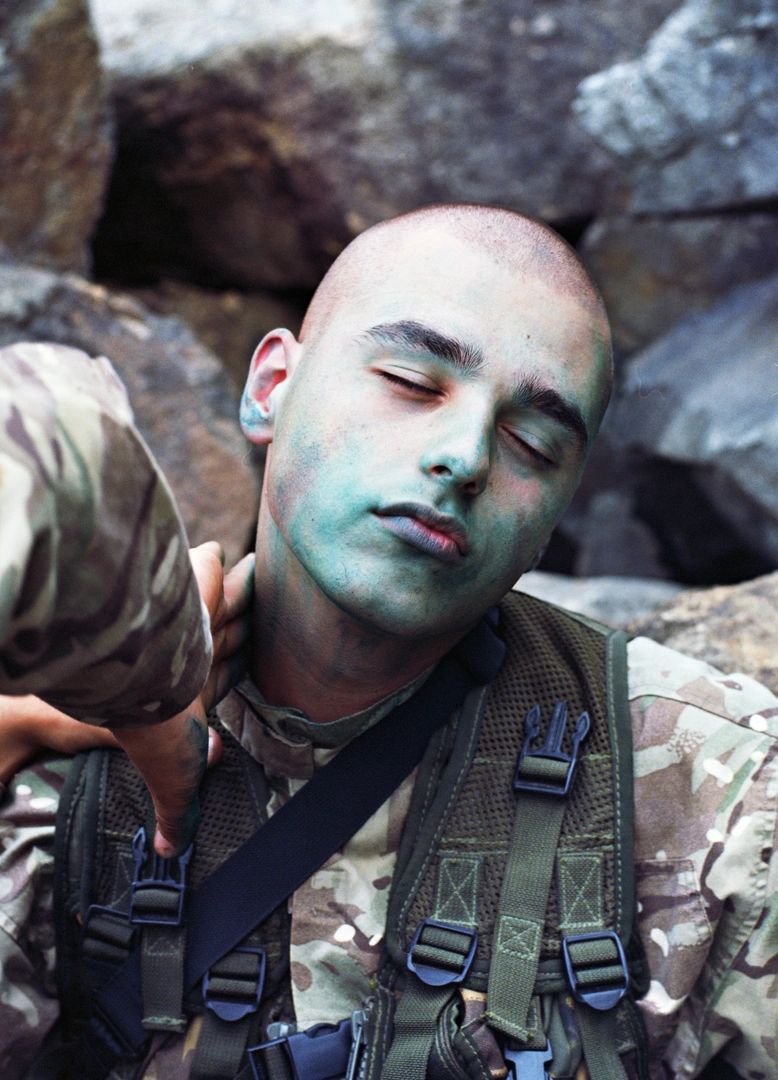
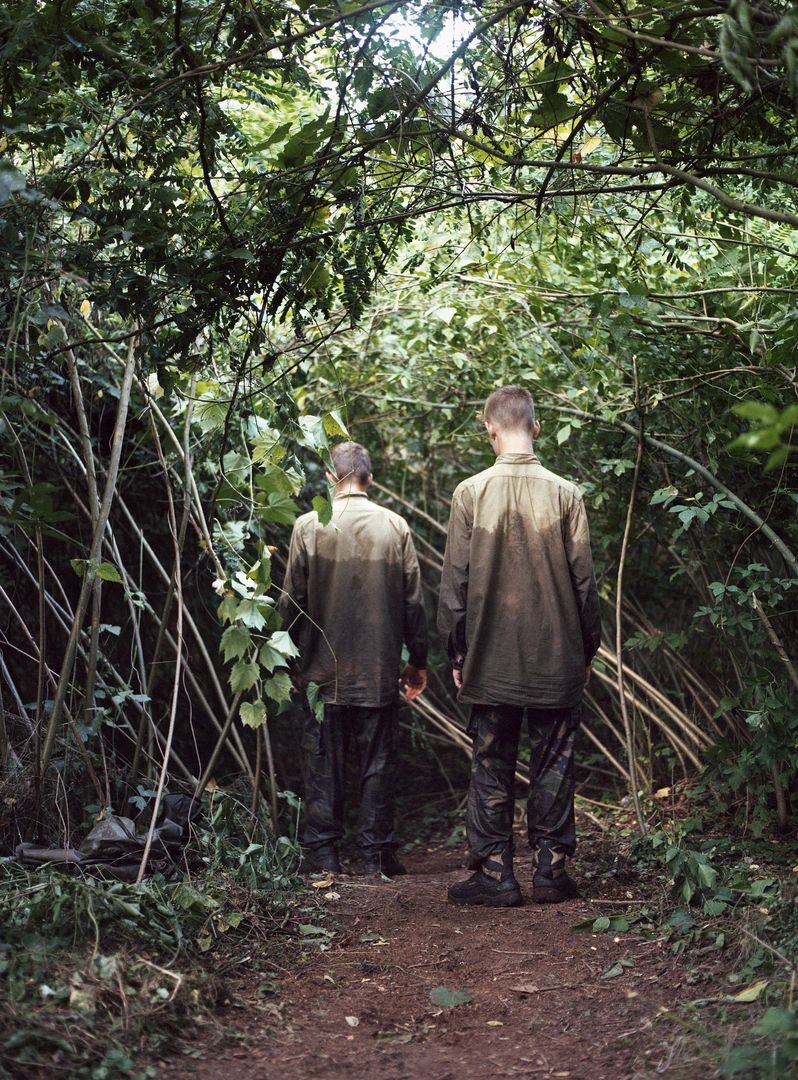
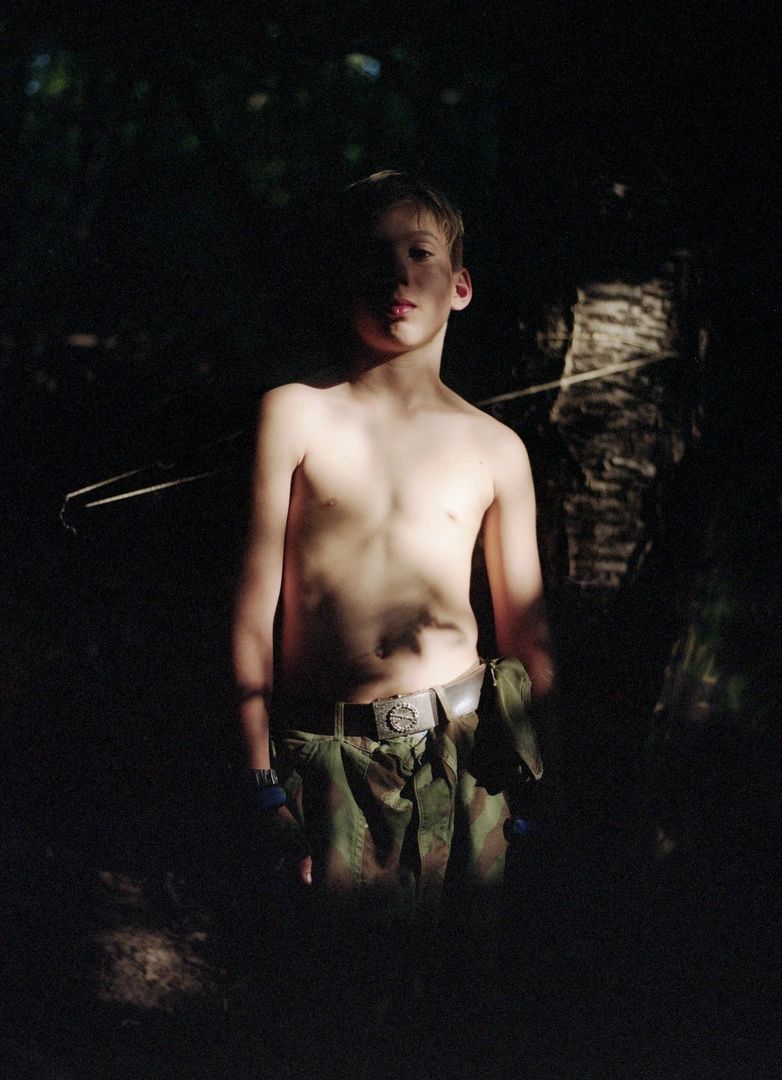
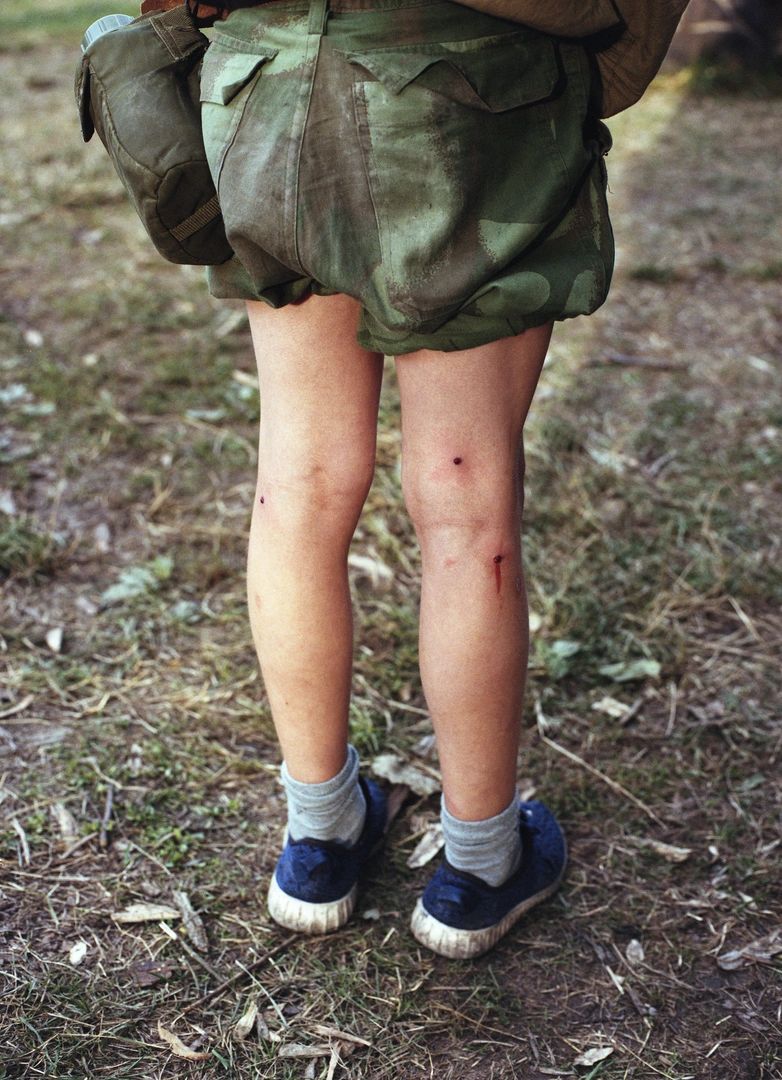
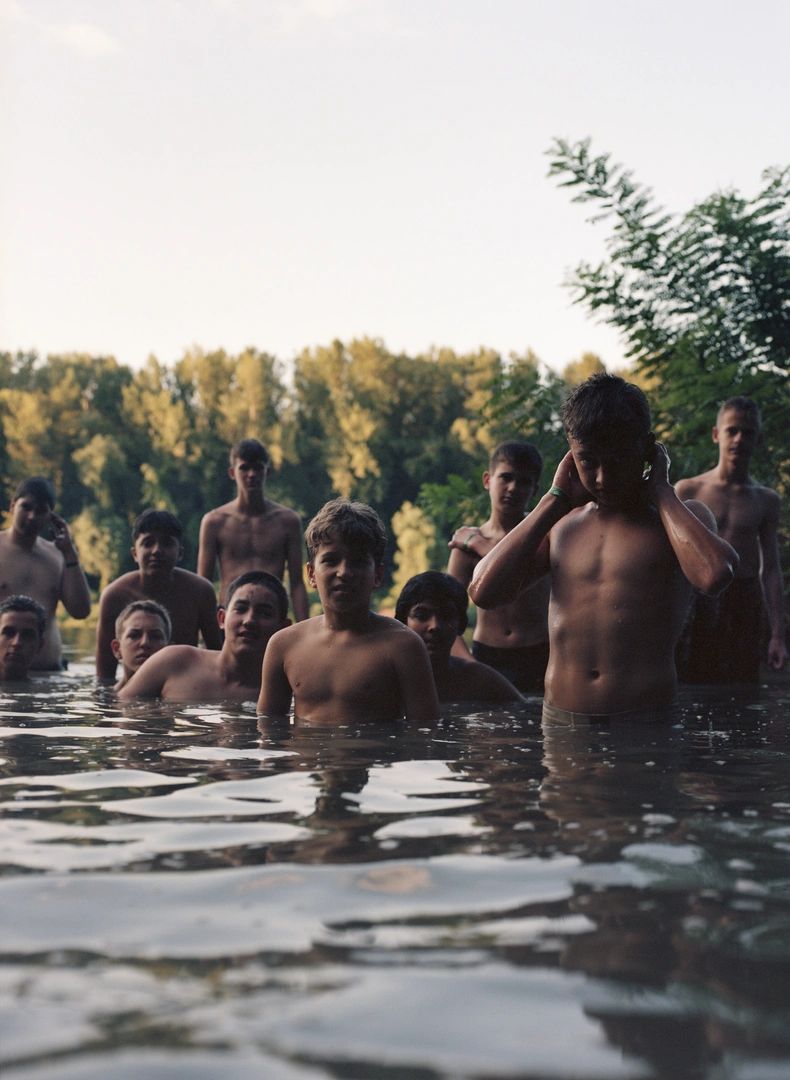
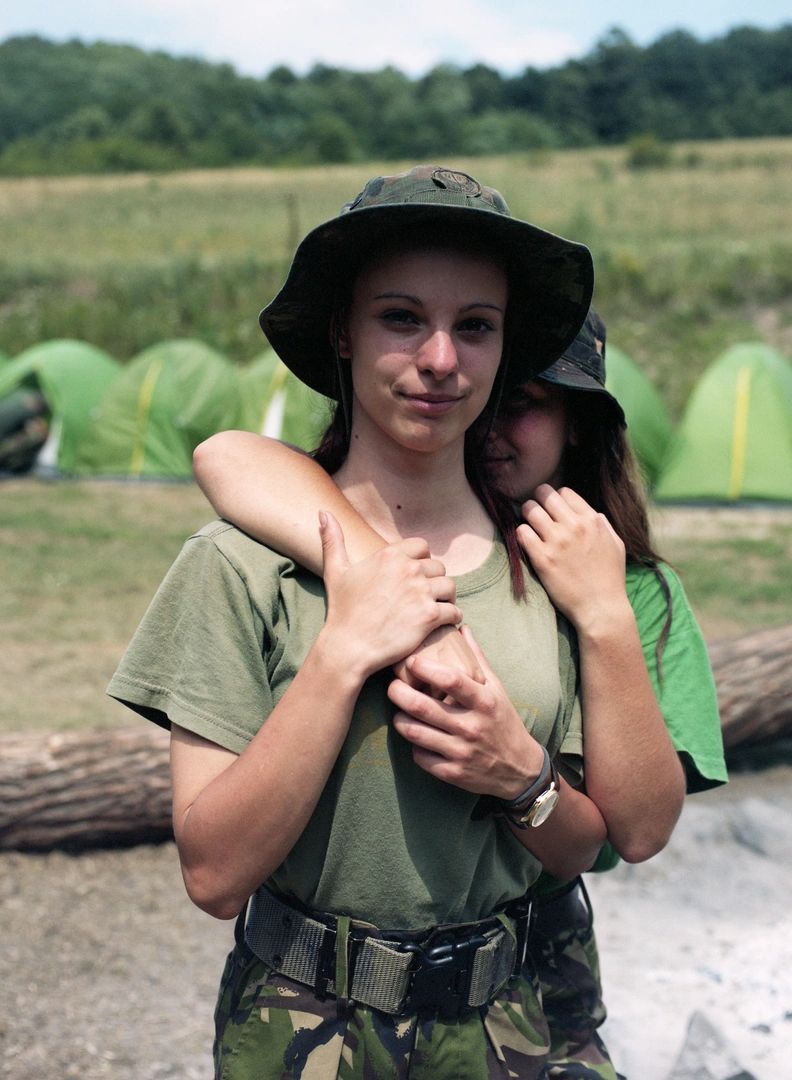
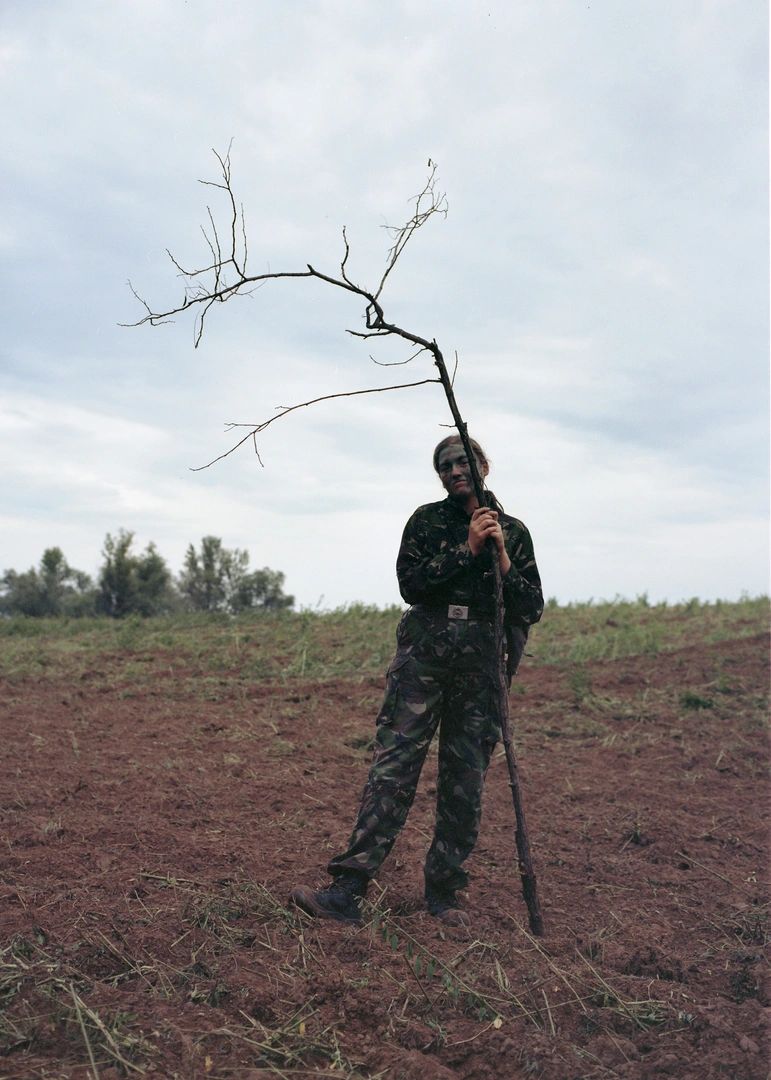
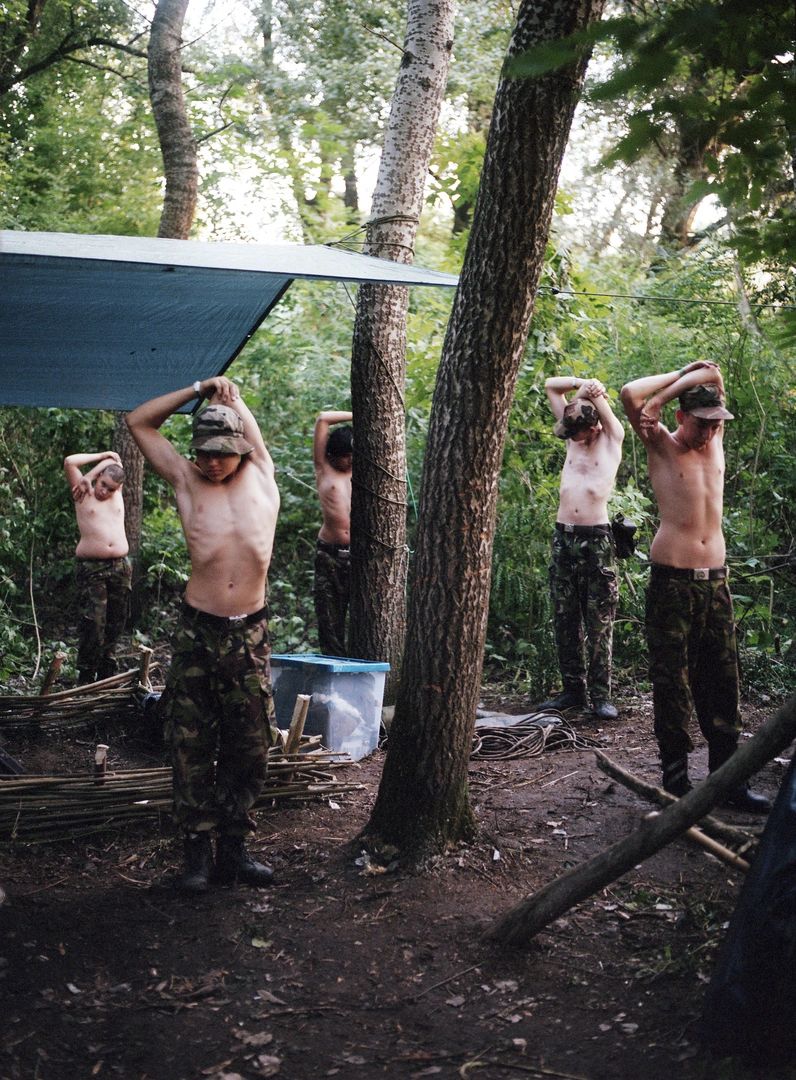
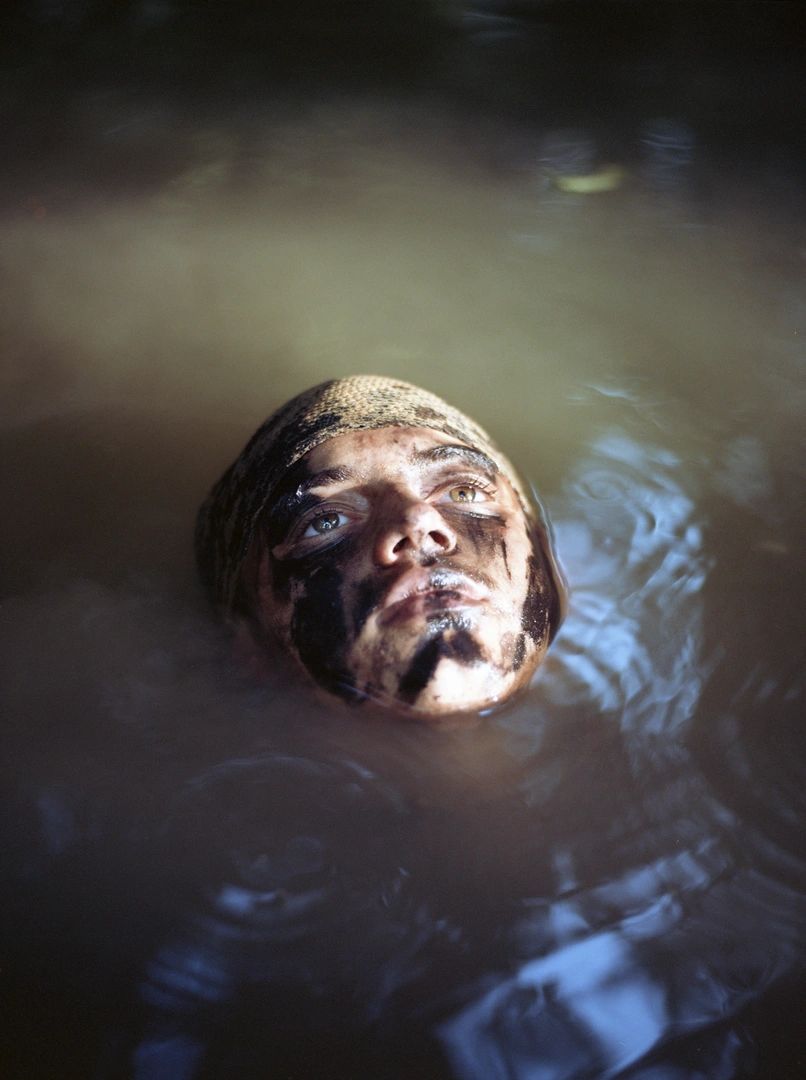
These camps take place in 3 locations, two one-week long courses each. They mostly resemble the structure of Scouting. While everything is under professional (adult) control, the leaders of activities are teens themselves, who once started as ordinary campers. They primarily focus on teaching methods of survival in a wild environment such as forests, hills, or the “jungle” of Tiszafüred. The kids learn to build a shelter, gather food, and guard the fire all night long taking turns. Gymnastics after the early morning wake up call, having meals together, a cleaning-service team for each day, and punishment – measured in push-ups – for anything out of order. They learn about military tactics, practice formations, learn to handle the different machine-rifle-replicas, grenades, and camouflage-devices. Then they are divided into squads, who will compete against each other, simulating a war situation, with the airsoft weapons. This mission lasts for two days, and completely facultative, but usually runs with full number. They advance into wild nature, trying to locate each other’s bases. They attack, retreat, take and free hostages. At the end of the camp, their parents receive their kids exhausted, amazed, and with an experience they never had before. We see tired, but proud faces on the edge of adulthood. They’re holding a rifle, or each other’s hand. The uniforms seem sometimes oversized. Are they the national army of tomorrow, or is it just a game? Is this game different from when other kids play cops and robbers? A lot of parents send their kids to the summer camps to give them the discipline they think they weren’t capable of. Other kids are fascinated by the military since an early age. And there are those who fell in love with it in these camps, and started coming back. There is someone who never bathed in a river before, and hates it. For the others, it’s the adventure of their lifetime. They believe that this time spent together in nature, with quite a few hardships, is the most important social and communal element, that is fading out from today’s world. They let me into their world with honesty, and knowing that everything that they believe in may be divisive for the audience of a photo series about them. For this reason, I find it a highly complex task to focus the topic on universal ideas such as childhood, weapons, providence, patriotism, life, death. The series at the moment tries to formulate a simple sentence: somewhere in Hungary, kids teach kids warfare. The judgement of the ideas of war and military differ from culture to culture, and is affected by the actual political environment. For this reason, I tried to use very simple and clean visual solutions. The series consists mostly of portraits, environmental portraits, group photos and simple situations shot on 6x4.5 medium format colour negative. Shyness and adult-like seriousness try to compete with each other on these sometimes heroic, sometimes intimate portraits. The images of children in full uniform carry dense layers interpretation, which is greatly modified by the editing of such a series. The visages, postures, gestures, environments may resemble memories from movies, or images of historical events. My aim is to be fully aware of these factors, being able to create a material that, instead of widening the gap between opposing interpretations, creates discourse between them. In the following year, I would like to make the current simplificating attitude more complex and deep, by adding images that enrich or fine-tune the above mentioned interpretations, or give a different context to them. 1. I’d like to spend the next summer in these camps as well, moving from using static compositions to more dynamic, spontaneous ones. This could mean an occasional shift from using 6x4.5 negatives. 2. I want to focus more on nature, which is the basic environment of the military camps. It became more important for me, than the military aesthetic. If I want to observe these camps as phenomena, I cannot avoid formulating visual statements on the relation between man and nature. 3. I’m greatly interested in the lives of my subjects outside the camps. I wouldn’t move the focus away from them, but scenes of everyday life in their homes, on the street, in school etc may give a wider and different context, a chance of comparison to the issue. My aim is to partly move the imagery away from the green-camouflage visual world. 4. The activity of the organization Honvédsuli is not limited to these camps. They provide education and trainings throughout the year. Their young officers attend wreathings and ceremonies, or organize memorial-walks, for example to commemorate the fallen Hungarian soldiers at the battle of Don. Visiting these occasions may provide an interesting insight into the meeting of the militaristic, and the outside, civilian world. With this series I try to focus on topics that are important both actually and universally. I try to raise questions on some values of our changing world and society, but at the same time talk about the experience of particular children, moments of growing up. My motivation is to do this in the most precise, sensitive, and ethical way.
Máté BARTHA (1987) http://www.barthamate.com barthamate@gmail.com +36 30 525 63 27 MA degree in Visual Communication, Photography Studies 2016-2018 Unversity of Drama and Film (SZFE) Budapest, Directing Documentary Film MA 2006-2011 Moholy-Nagy University of Art and Design (MOME), Budapest, Visual Communnication, Photography MA Work 2016- Freelancing in photography and film 2015-2016 VS.hu, video director, cameraman, editor 2014-2015 ORIGO.hu, video director, cameraman, editor 2012-2014 Northfoto picture agency, content editor Memberships 2013- Studio of Young Artists' Association (FKSE), Hungary 2007- Studio of Young Photographers, (FFS) Hungary Awards, scholarships 2014 - Fieldwork in New York, FFS, Hungarian Initiatives Foundation 2014 - Participant of PLAT(T)FORM 2014, Winterthur, Switzerland 2013-2014 - Pécsi József Scholarship, first year 2013 - Fotóporta portfolio review, 3rd place 2012 - Fotóporta portfolio review, special mention 2012 - Artist in resicence in Ulm, Germany, Visual Kontakt Selected filmography Champion – documentary, 19’30’’ – director - 2017 Boat trip – documentary, 10’ – director – 2017 Closer to Communities - documentary, 29’39’’ – director – 2017 25 Years of Autonomy - documentary, 22’37’’ – director – 2016 Selected exhibitions 2016 - "Pécsi 25" Group exhibition, Capa Contemporary Photography Center - "Merging Realities" Szatyor Art Space, Budapest, Hungary - "Swing", group exhibition, Platán Gallery, Budapest, Hungary 2015 - "Disappearing Rural Villages", multimedia exhibition, Telep Gallery, Off Biennale, Budapest, Hungary - "Budapest Balaton", group exhibition, Hungarian Institute of Istambul, Turkey 2014 - "Home Away", Hungarians in New York, group exhibition, Capa Contemporary Photography Center, Budapest, Hungary - "Kiváló a hangulat" group exhibition, Casati Art Corner, Budapest, Hungary - "derkó.pécsi.2014" group exhibition, Kunsthalle, Budapest, Hungary - "Enter/ing", group exhibition, FKSE Gallery, Budapest, Hungary 2013 - "Indíték Tématéka" group exhibition, Labor, Budapest, Hungary 2012 - "680 km", Kunstraum Visual Kontakt, Ulm, Germany - "Relevant" group exhibition, Roham bár, Budapest, Hungary 2011 - "FormElles" group exhibition, Hungarian Institute of Paris, France - "Keresetlen Csúf" group exhibition, University of Fine Arts, Budapest, Hungary - "The I Country" group exhibition, Demo Gallery, Budapest 2009 - "Contemplate" Lumen Gallery, Budapest, Hungary - Photobiennale of Dunaújváros, Hungary - "Image Error", group exhibition, Artbázis, Budapest, Hungary - "The Rain Before It Falls" group exhibition, Karton Gallery, Budapest - "Metropolis" group exhibition, Nessim Gallery, Budapest
The term “first contact” is used to describe the first engagement of two opposing military squads. It is also used by groups who use so-called airsoft weapons, which are hobby versions of real life guns. The association named “Honvédsuli” (Home defense school) is one of them. As an organization, they are commited to teach discipline, patriotism, and camaraderie to children between 10 and 18. Puberty is also the ground of first contacts with expectations, responsibility, or the other gender. This series of photos report from military-themed camps for adolescents. Kids teach the usage of weapons to other kids. They camp under the sky, guard a fire, hike, sing together. They get a few bruises, have a hard time doing push-ups, and they discipline each other. They’re determined, and sometimes lazy, or in love.
Finalists 2017
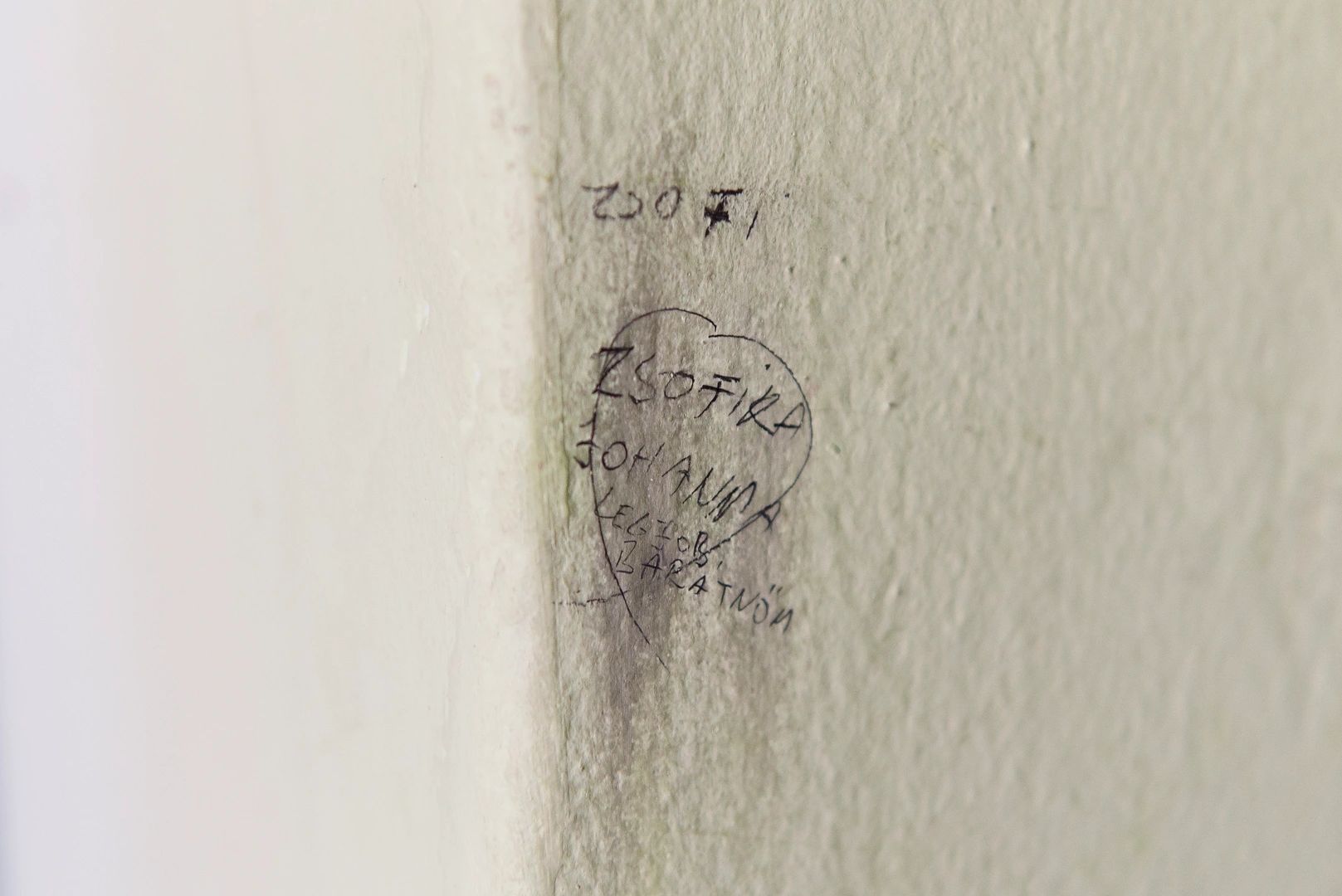
JOZSI'S HOME
Sivák Zsófia

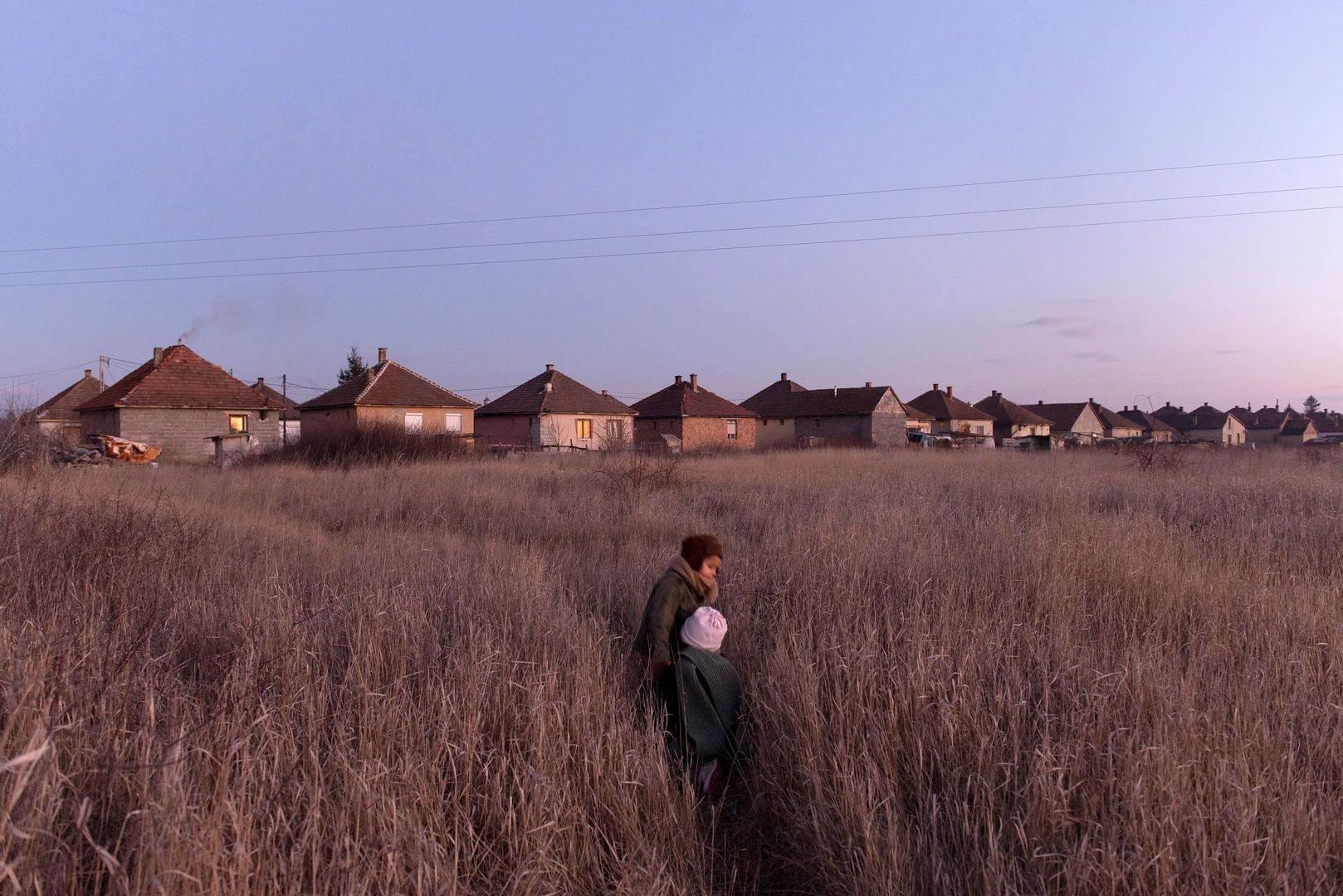
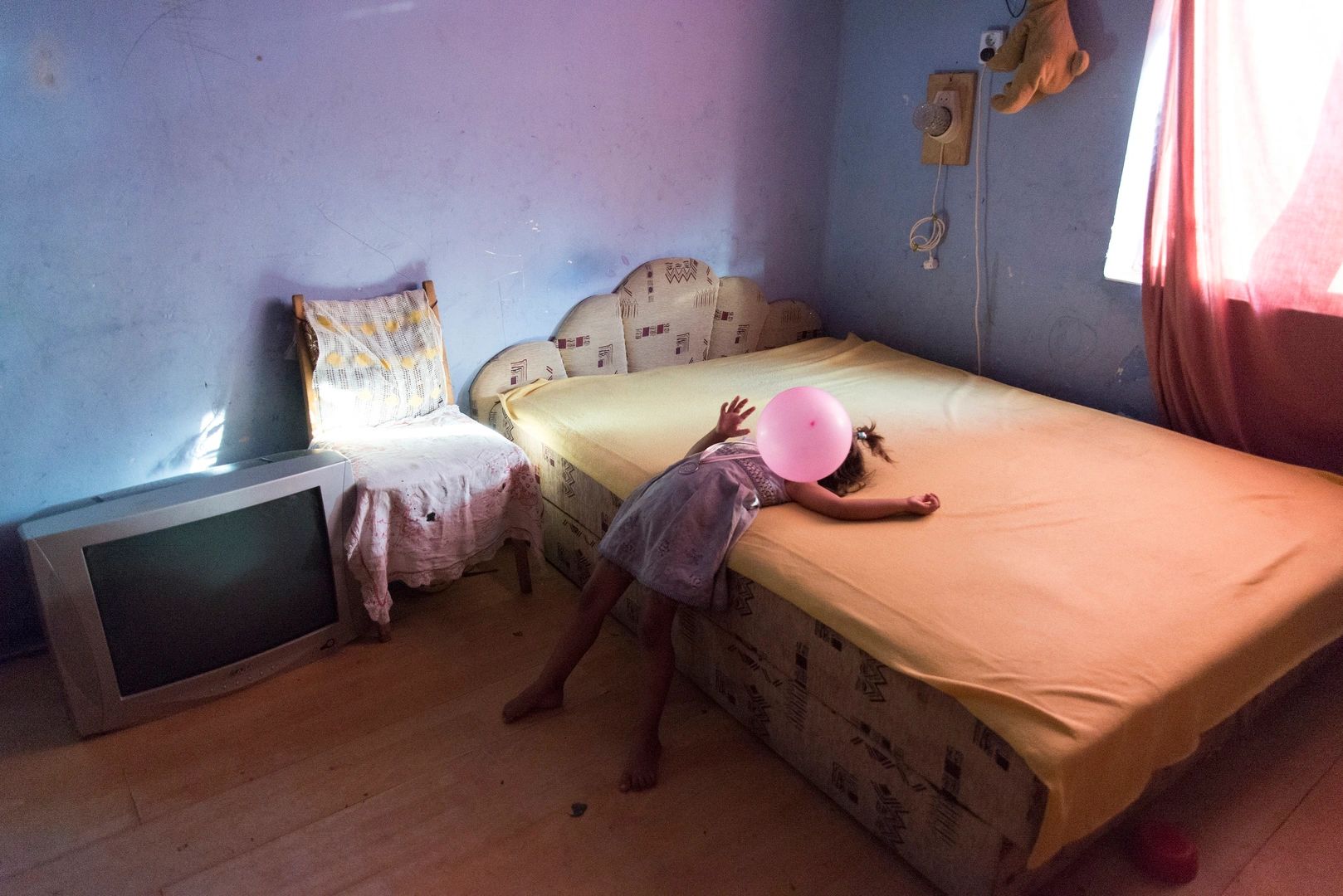
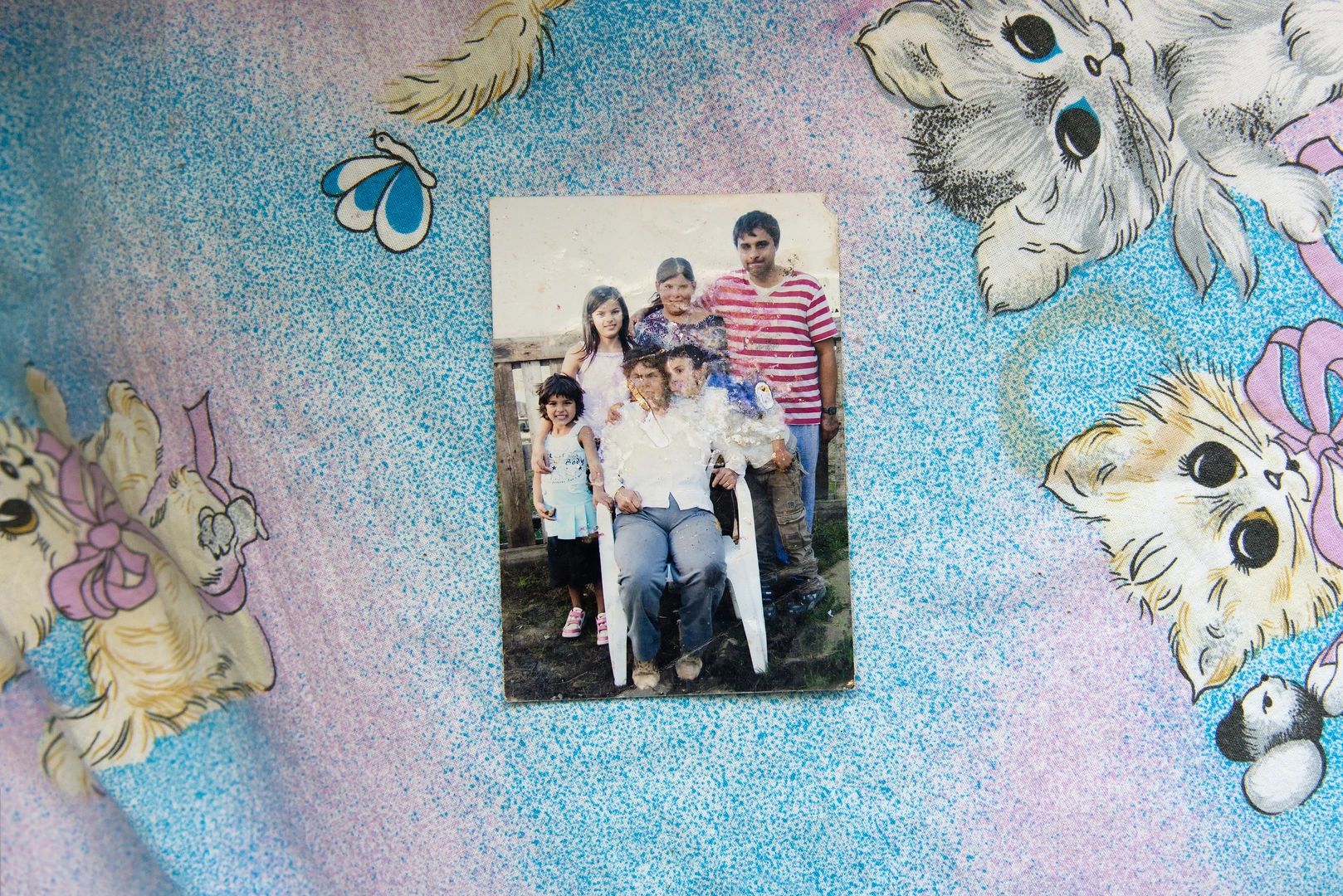
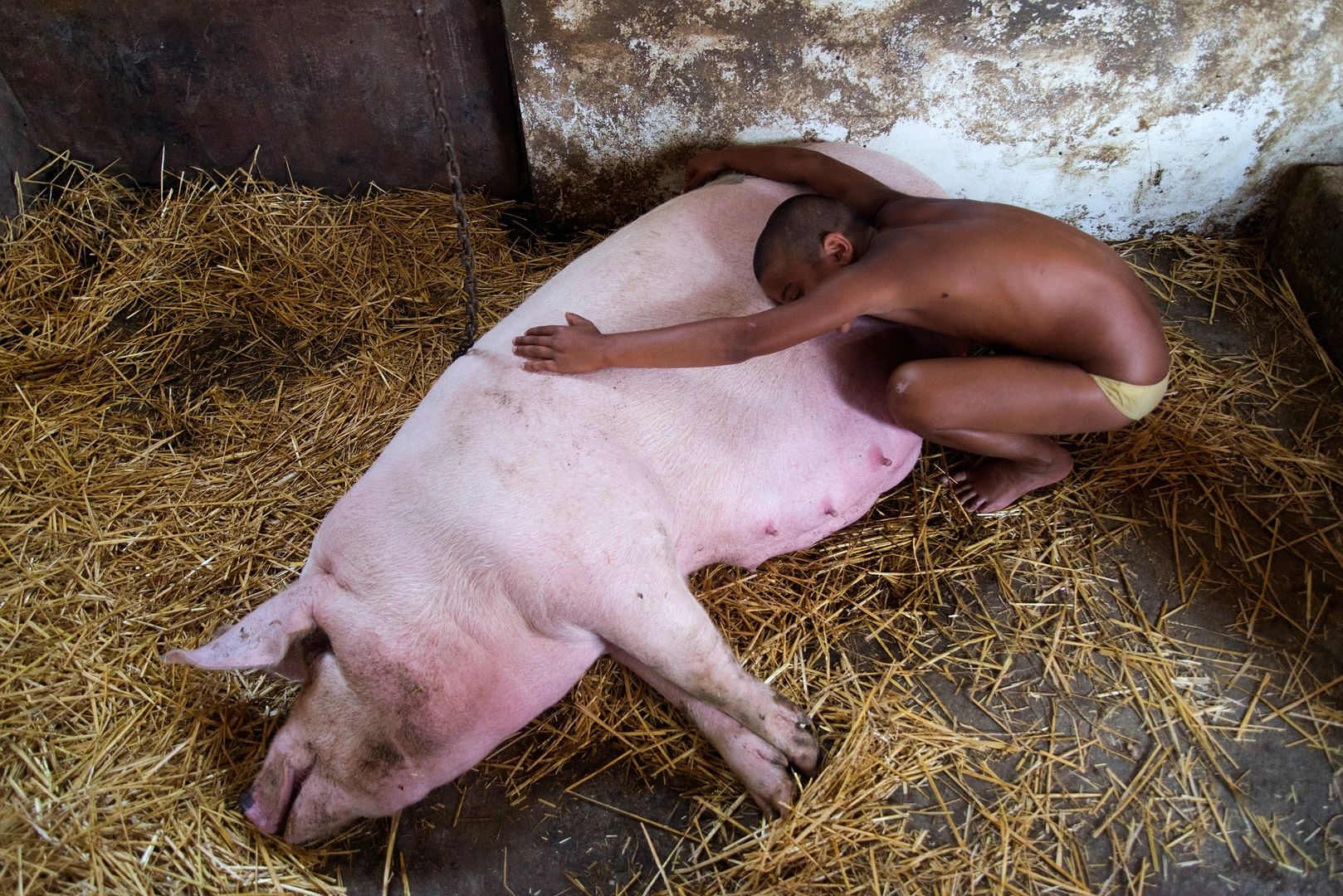
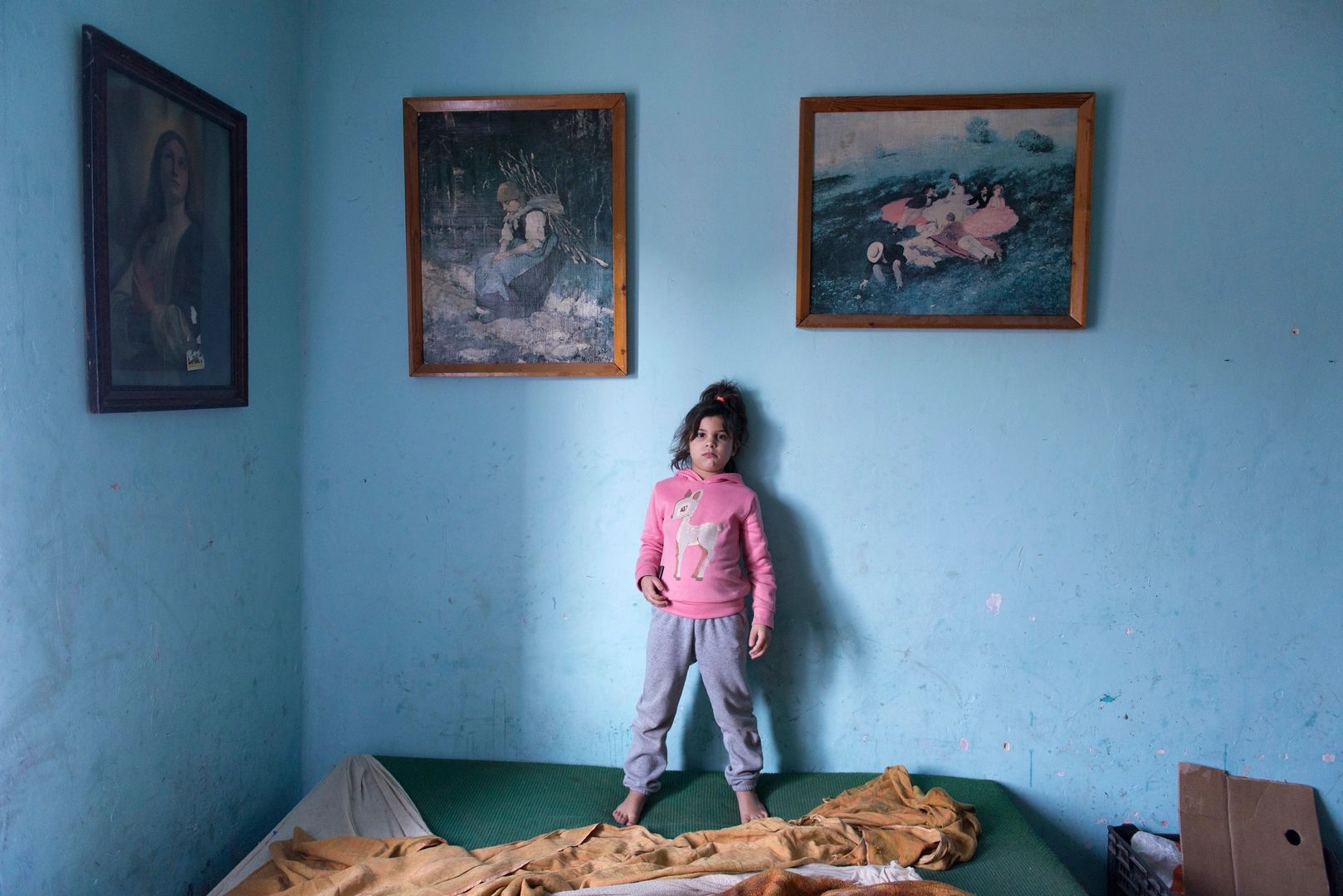
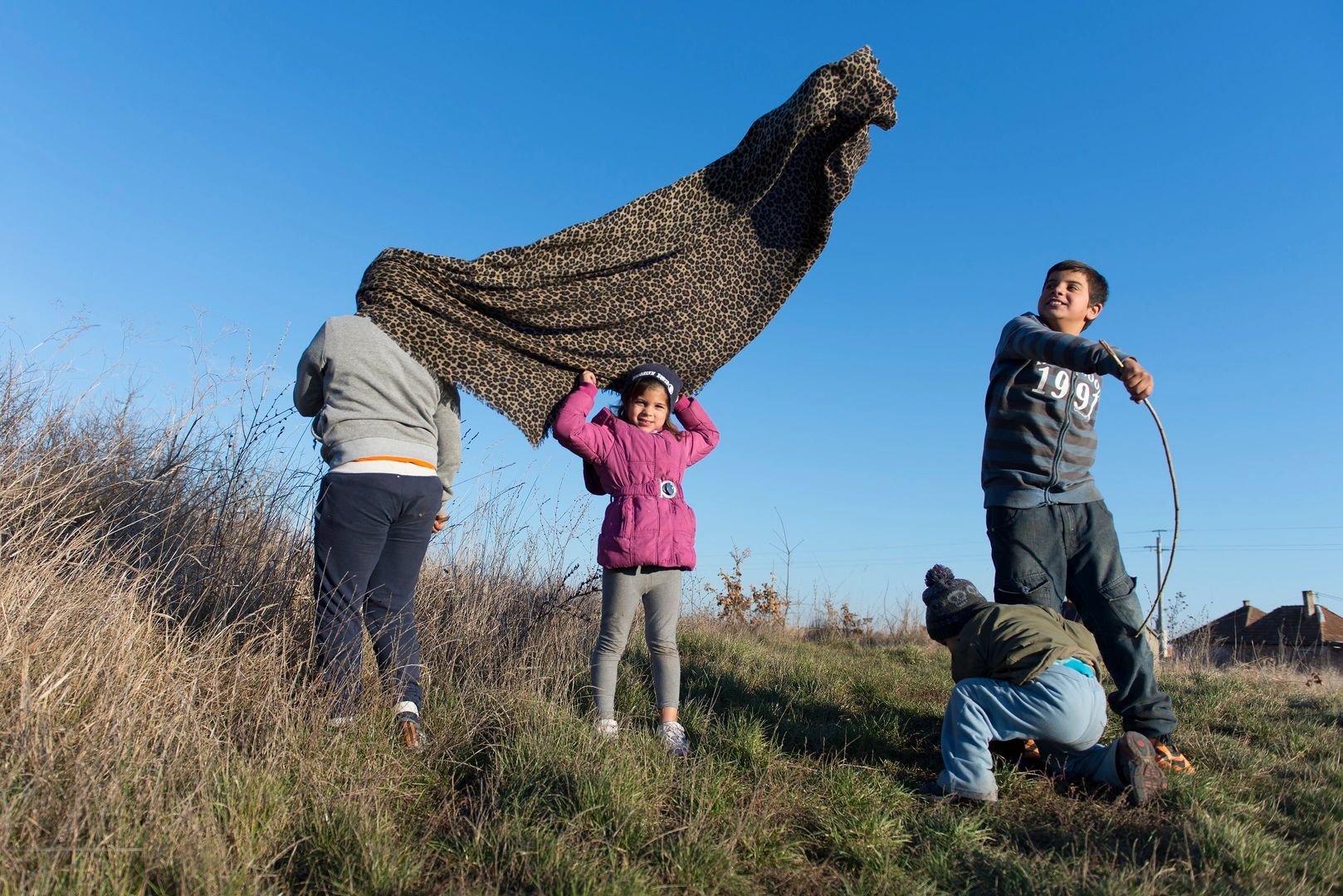
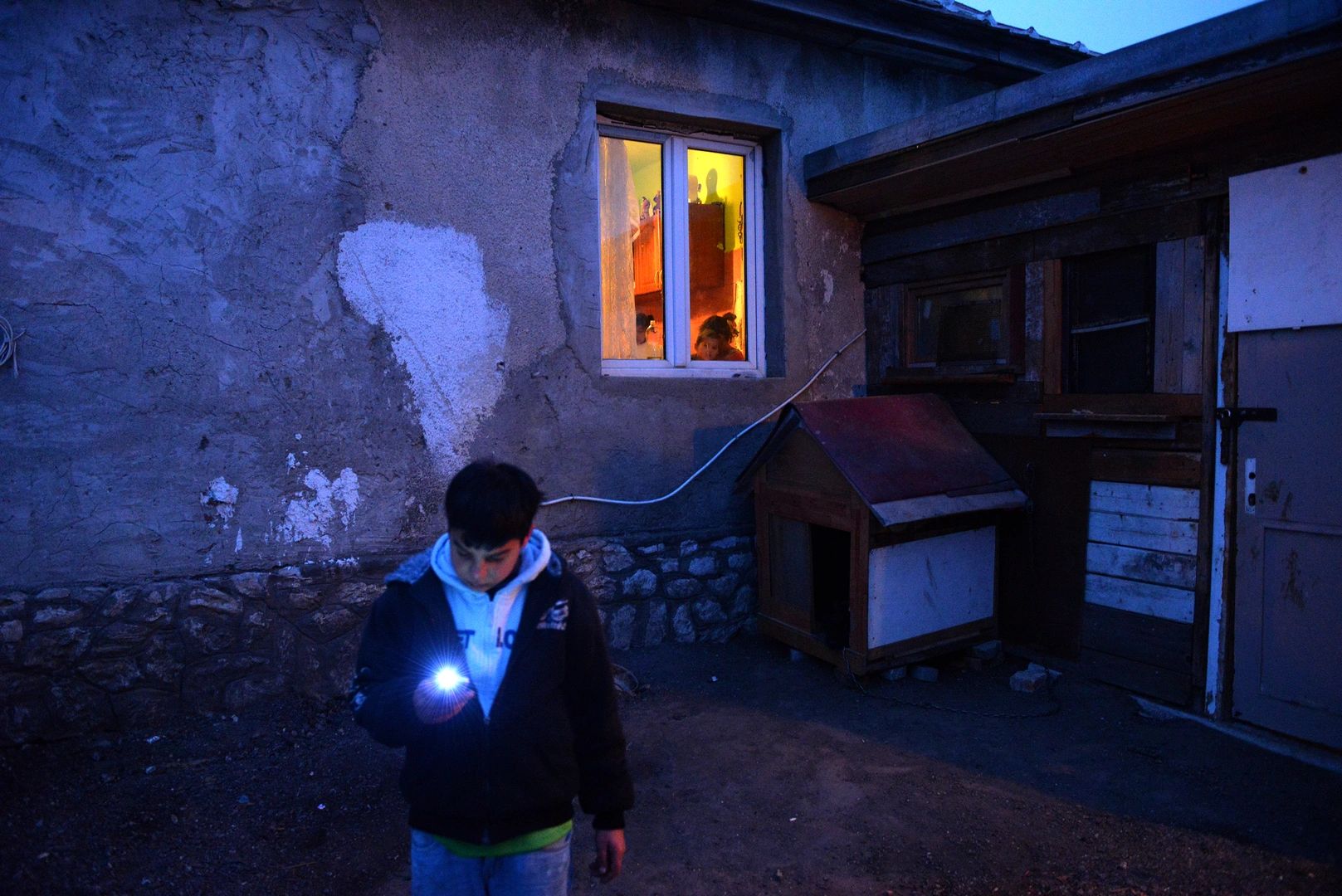
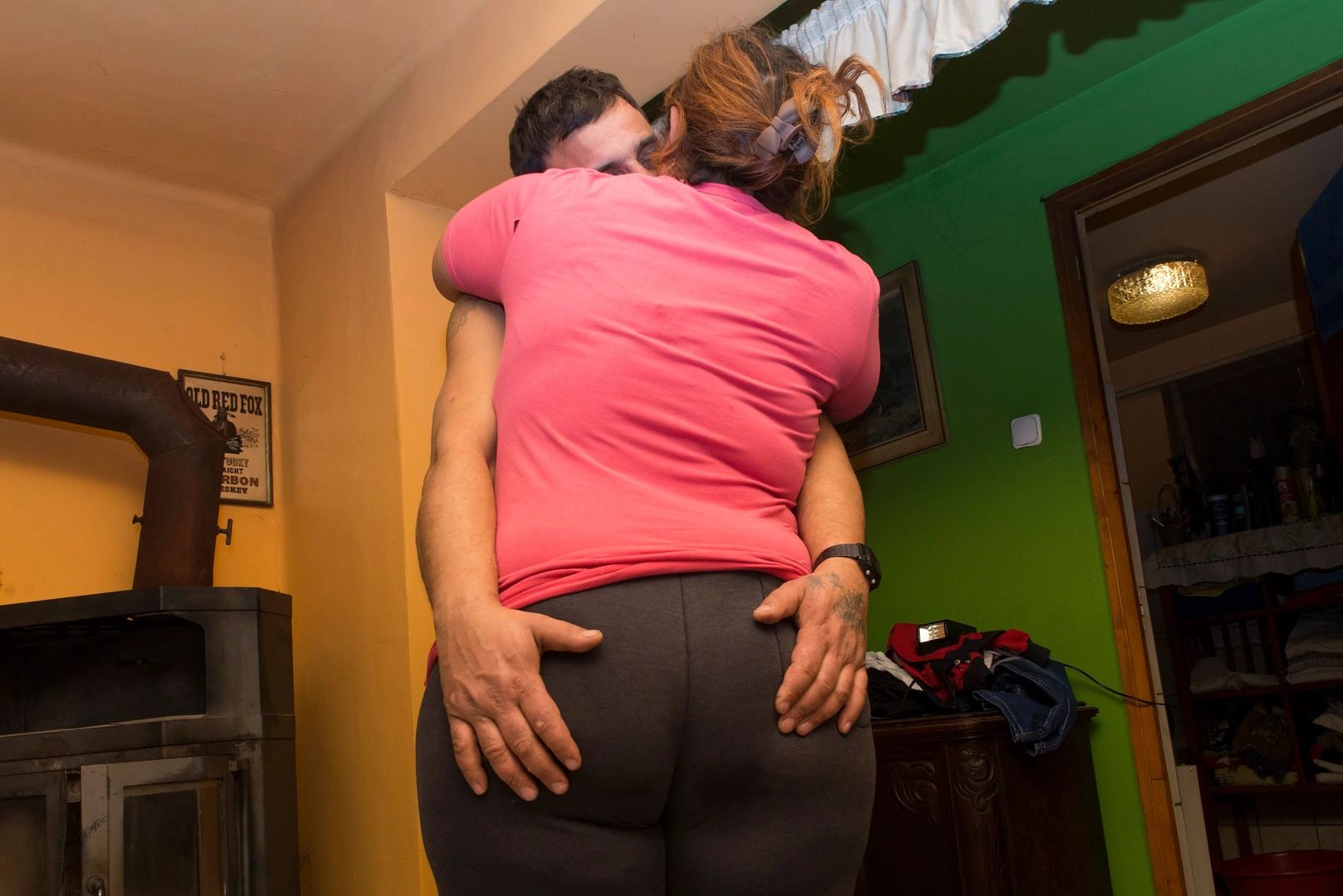
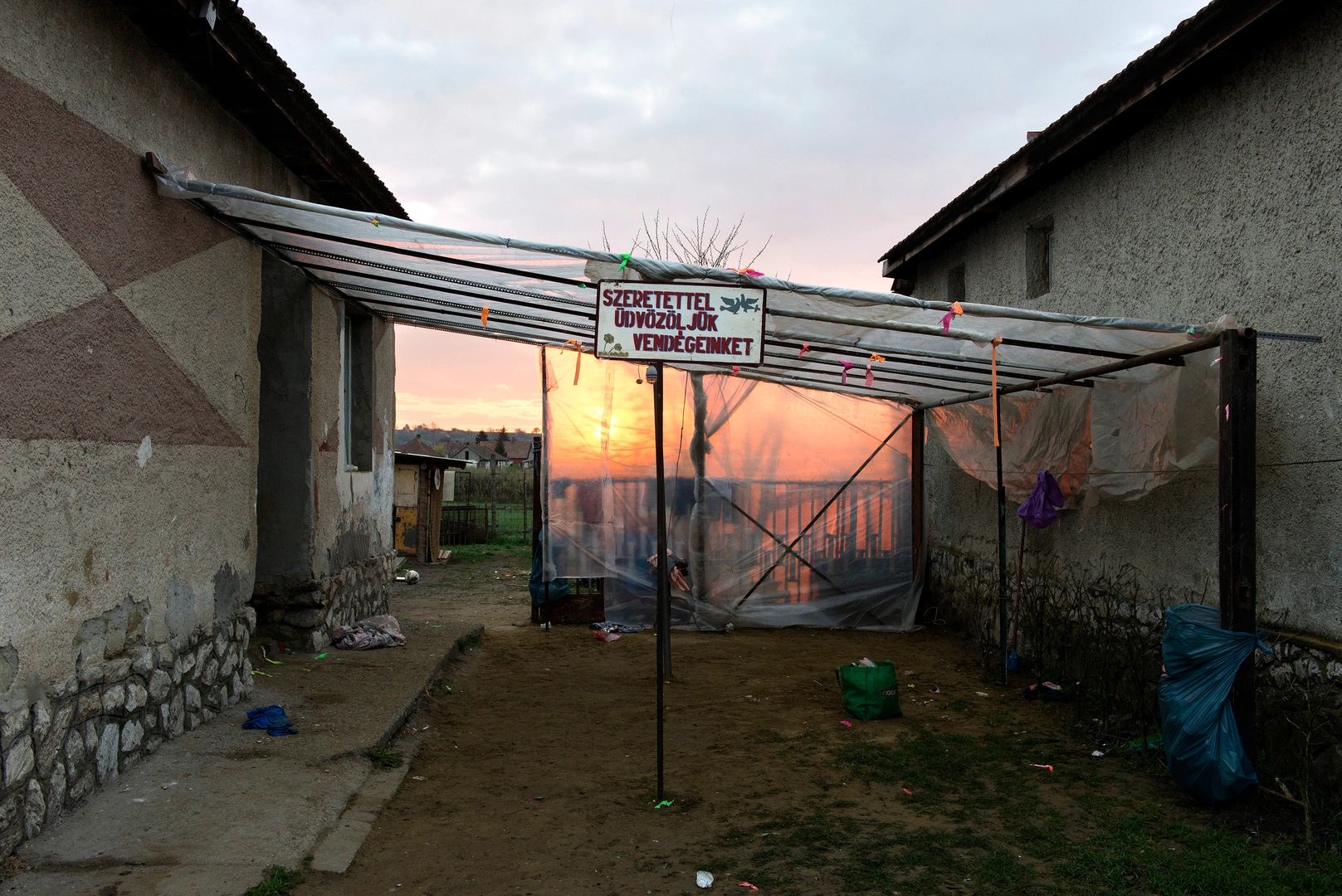
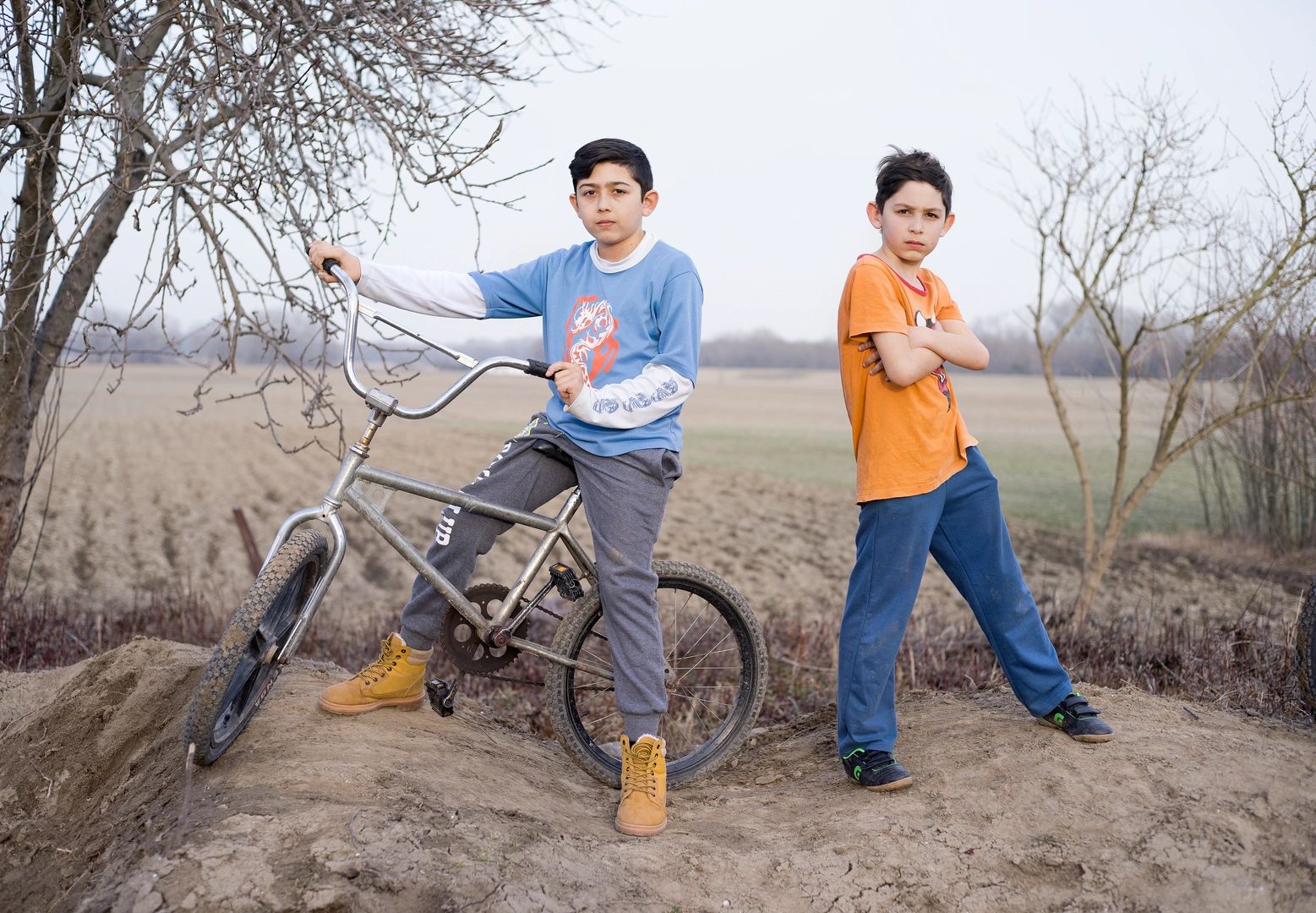
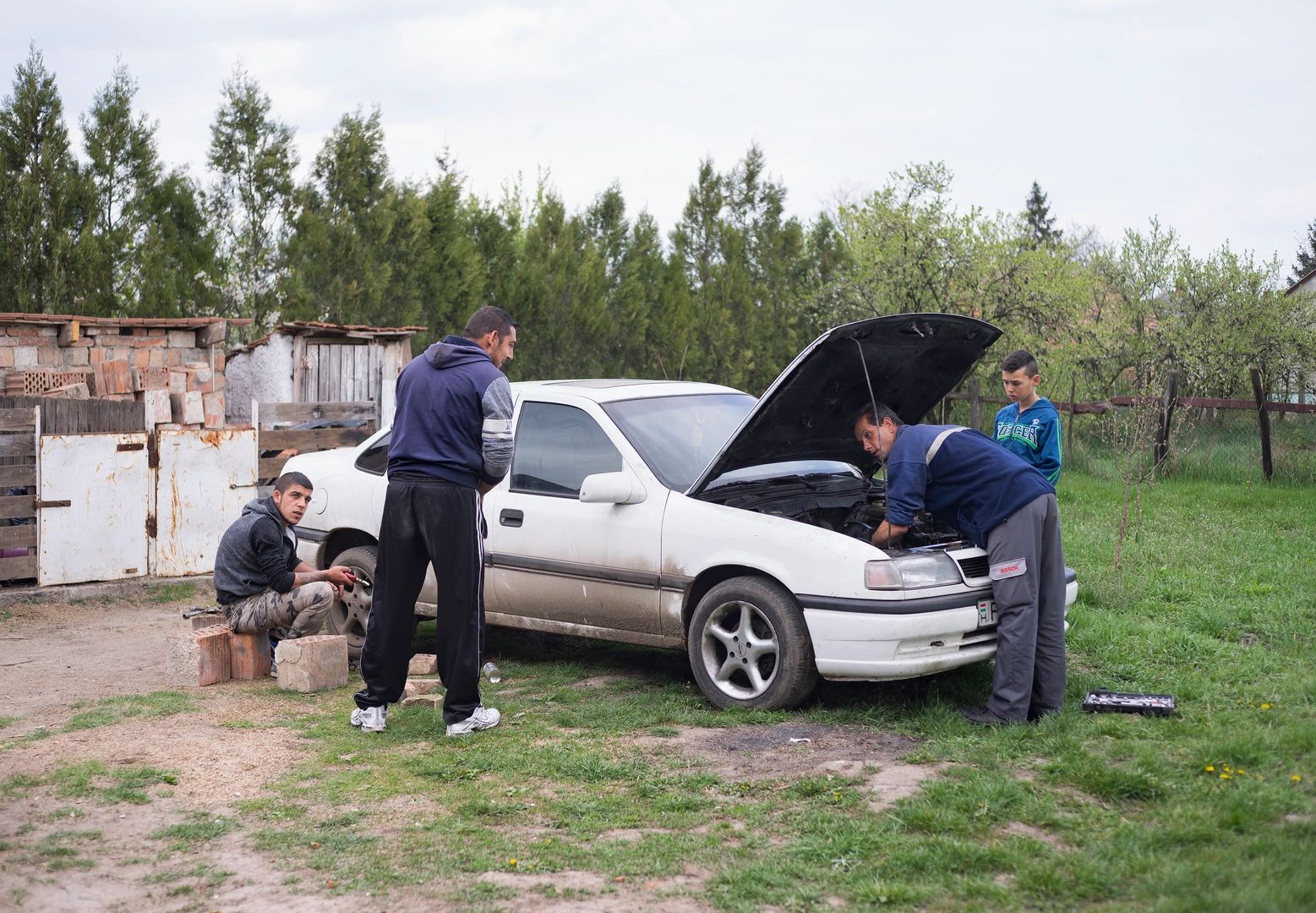
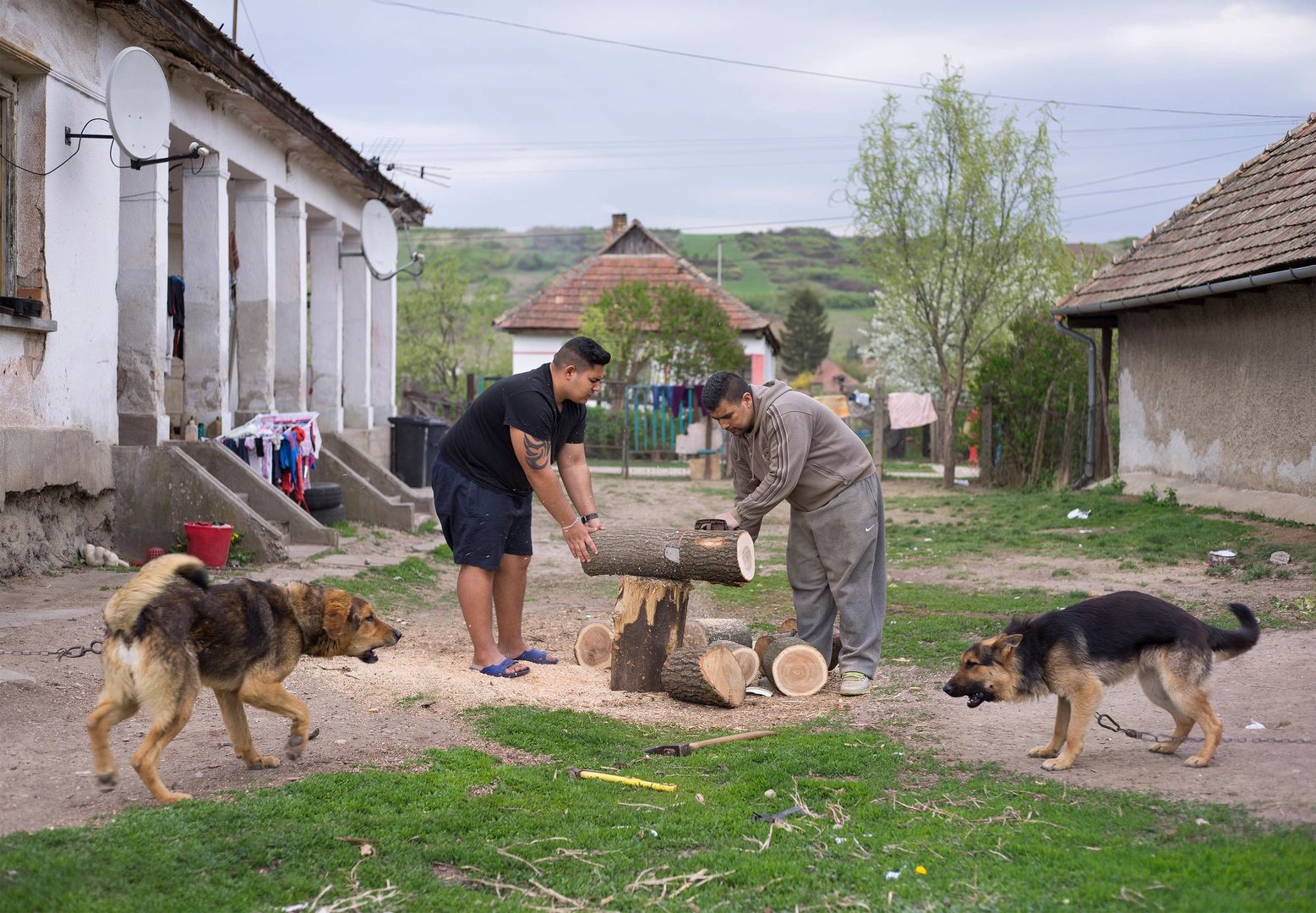
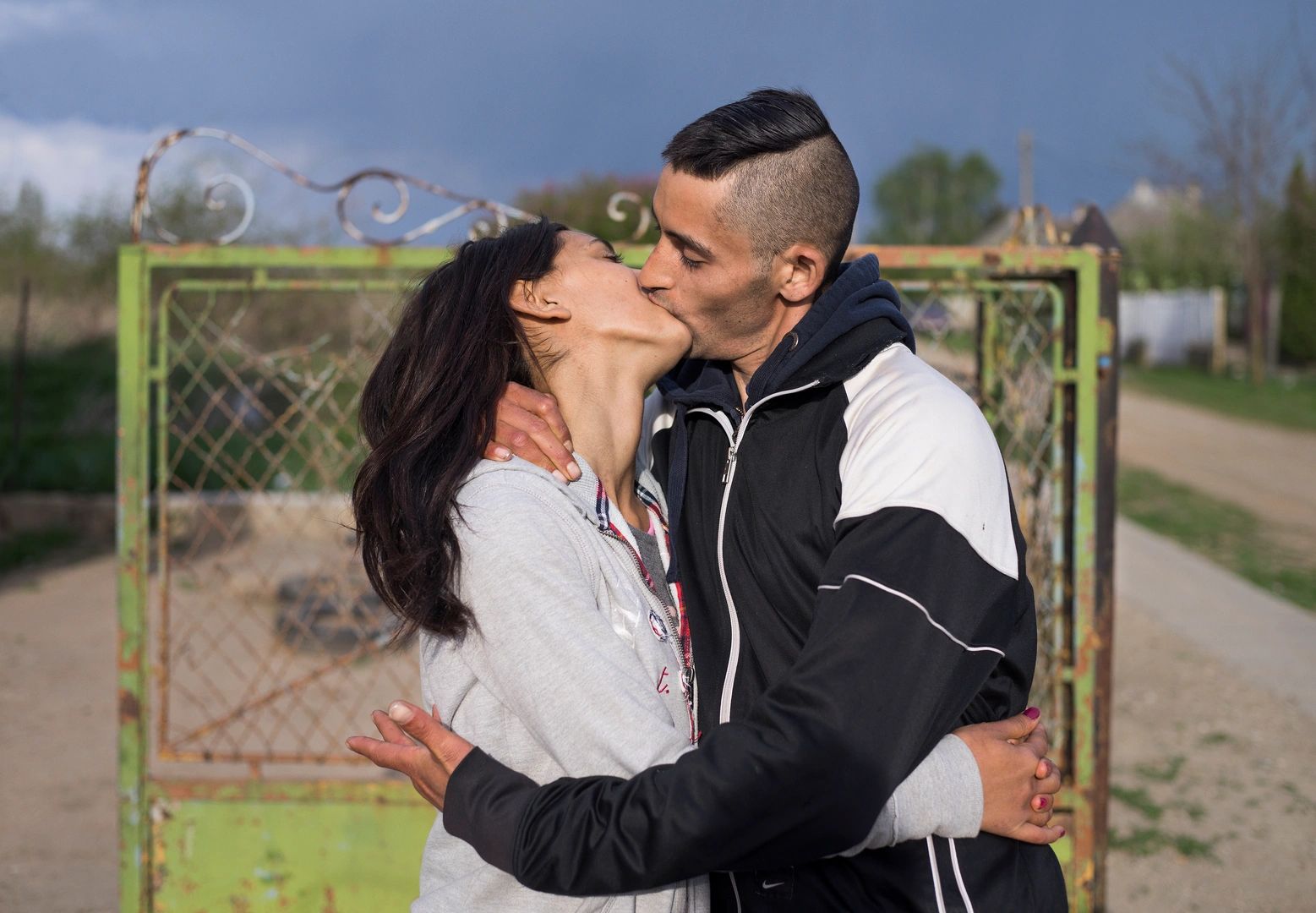
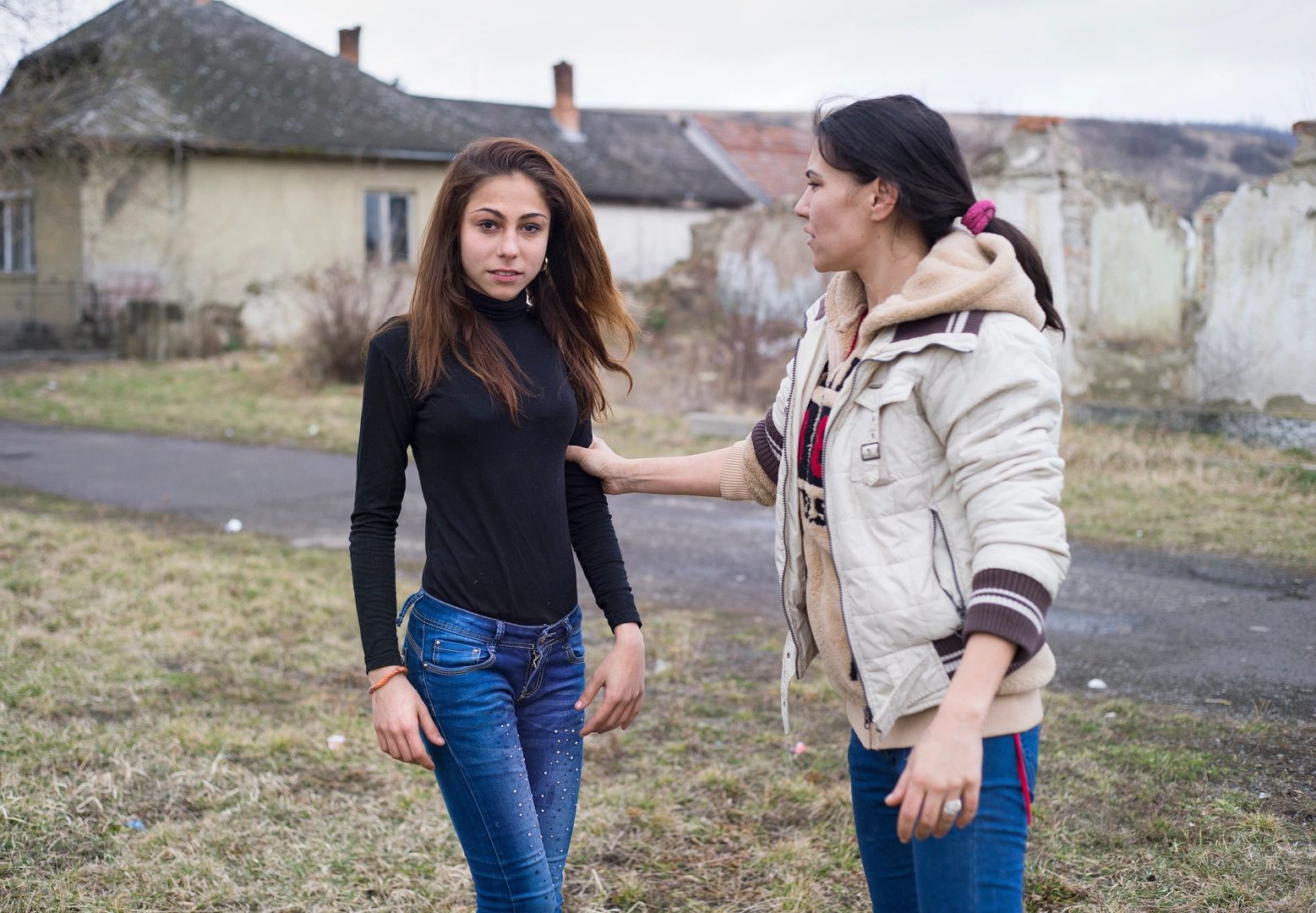
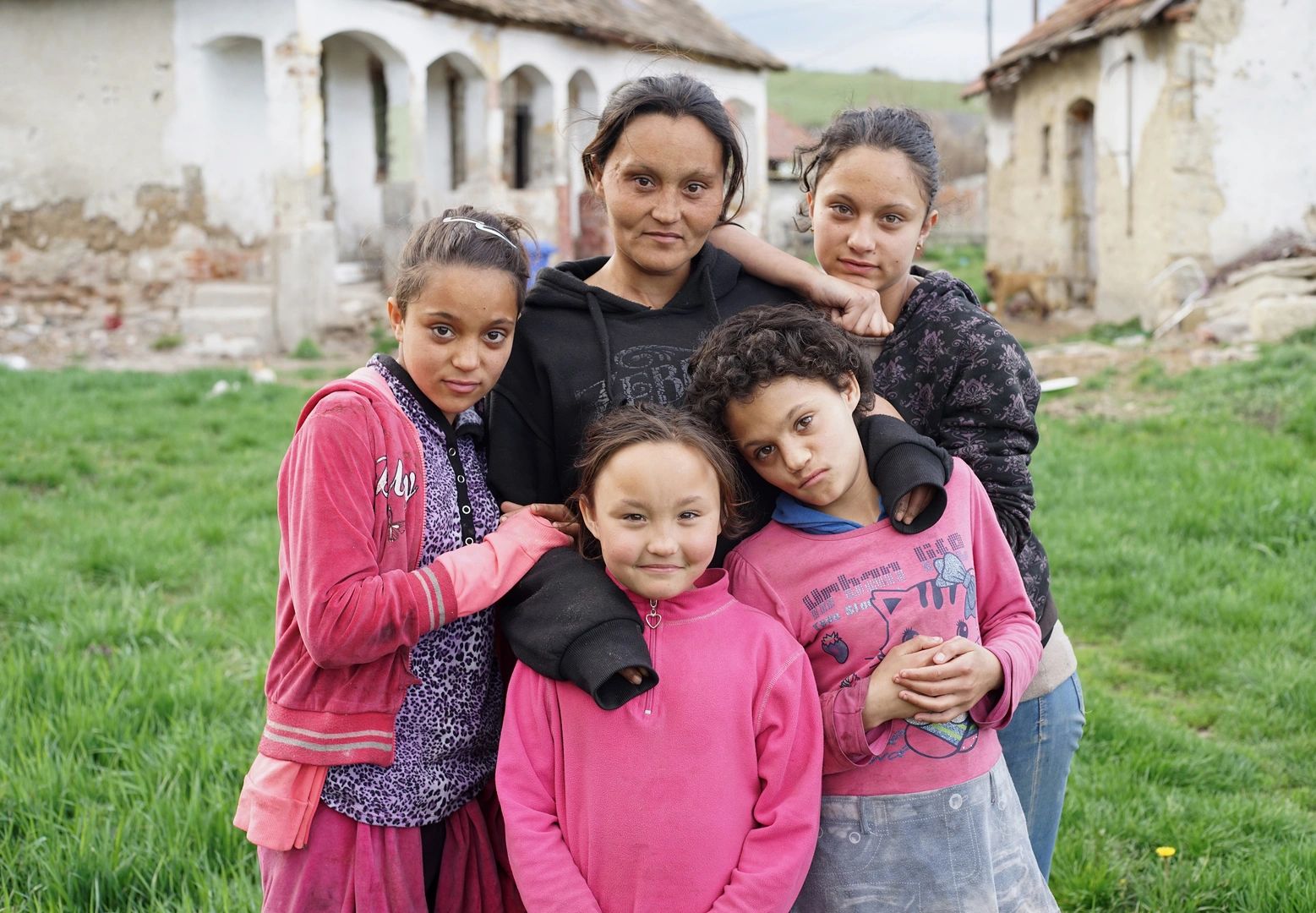
I grew up in Kerecsend, in a small north-east village in Hungary, with a number of 2400 inhabitants. . . . Many of the villagers live in deep poverty and around 40% of the inhabitants are Roma people. I had been living in Budapest when I first visited the Roma quarter of the village for the first time. The gap between them and the Hungarian villagers is wide, full of prejudices on each side so It took some time to break the ice and slowly I built a relationship with them. My attention was drawn to one particular family with five children, and as time went by I was able to look into their everyday life and slowly started to live through the days with them. . . . After all the initial difficulties on the New Year’s night of 2014 they actually announced that I now had belonged to the family. Since then our relationship has never stopped, them and the Roma quarter of the village is part of my life as much as my Budapest life. My aim is not to create a series of documents of their life, it’s more like the visual outcome of my own experiences with them, in Dankó street. I’m interested in showing or creating an atmosphere which is though based on reality its main focus is on the characters very personal, intimate lives which sometimes can even come across as romanticised. When I am taking my pictures I also want to know how these people appear in the environment, so that means that for me the surrounding space and objects are just as important as the people. The next series would continue to follow the life of Jozsi and his family throughout a year. His wife Johanna is expecting their 6 th child, and their eldest daughter, also Johanna is finishing secondary school this year. As their life is quite full of unexpected events, my series would simply follow these and adapt to these. Beside of documenting these unexpected events I also would like to examine other areas and questions: what is family and integrity? How a religious belief or faith is is part of the everyday life? What brings happiness or challenges in their lives? What are the male and female roles in a small closed group? What chances or opportunities can their children have? How is their own traditions and believes are intertwined with the modern age and with the rest of the society? Beside Józsi’s family I also would like to examine the above questions in a wider arrangement and I would like to connect with other families in similar situation at the Roma quarter. This would allow me to create a more nuanced picture of the lives of these people in Dankó street. One of the most important aspect of my new series would be to build a very personal relation with the people involved and to the extent where they can influence the progress of the series. My plan is to commute between Budapest and Kerecsend. The weekends that I am there I would continue to participate actively in Jozsis’s family’s life and land a helping hand to those in the Roma quarter. In my absence, while I'm away in Budapest I would keep in touch with the locals through Skype calls, furthermore I would organize team building programmes for the community such as cooking together, karaoke clubs, dancing and singing occasions, forums to discuss the local news and agenda, which could help to create and develop a sense of trust and effective communication within the residents. I would use the grant to cover my travels, and to help the families with some infrastructural development, such as Internet connection, buy some technical instruments and I also would like to make a book about the experience when my series is fully complete. (*the Hungarian synopsis is more accurate in some places)
Sivák Zsófia Kata, 1993 Education 2017 - Moholy-Nagy University of Art and Design, Photography MA, Budapest, HU 2014-2017 Moholy-Nagy University of Art and Design, Photography BA, Budapest, HU 2013-2014 Novus Art School, Photography Budapest, HU 2008-2013 Eventus High School, Eger, HU Prizes 2017 Budapest Photo Festival, Portfolio Review, 1. prize 2017 35. Hungarian Press Photo Competition, Social representation (series), 1. prize 2017 35. Hungarian Press Photo Competition, Best photographer under 30, special award Exhibitions 2017 T’aves baxtalo, Freilich Open Arts, Budapest, solo exhibiton 2017 A Matter of Perspective, HybridArt, Budapest, group exhibition 2017 35. Hungarian Press Photo Exhibition, Capa Center, Budapest, group exhibition 2017 II. Photostreet Festival, Capa Center, Budapest, group exhibition 2017 Képző, A38, Budapest, csoportos kiállítás 2016 FotoDok, online group exhibition 2016 Random:15, kArton Gallery, Budapest, group exhibition 2014 Templom Gallery, Eger, group exhibition
I grew up in Kerecsend, in a small north-east village in Hungary, with a number of 2400 inhabitants. Many of the villagers live in deep poverty and around 40% of the inhabitants are Roma people. I had been living in Budapest when I first visited the Roma quarter of the village for the first time. The gap between them and the Hungarian villagers is wide, full of prejudices on each side so It took some time to break the ice and slowly I built a relationship with them. My attention was drawn to one particular family with five children, and as time went by I was able to look into their everyday life and slowly started to live through the days with them.
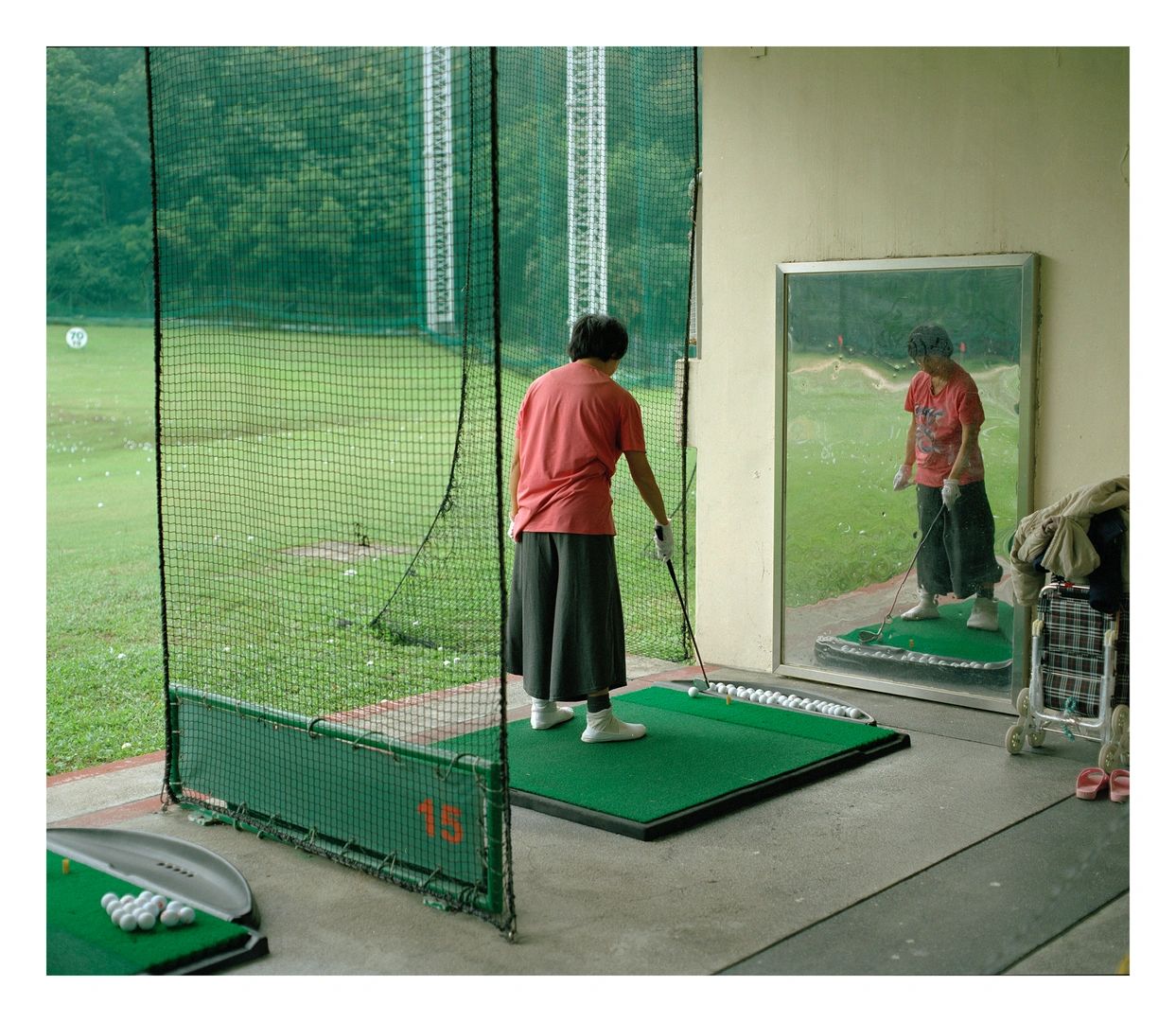
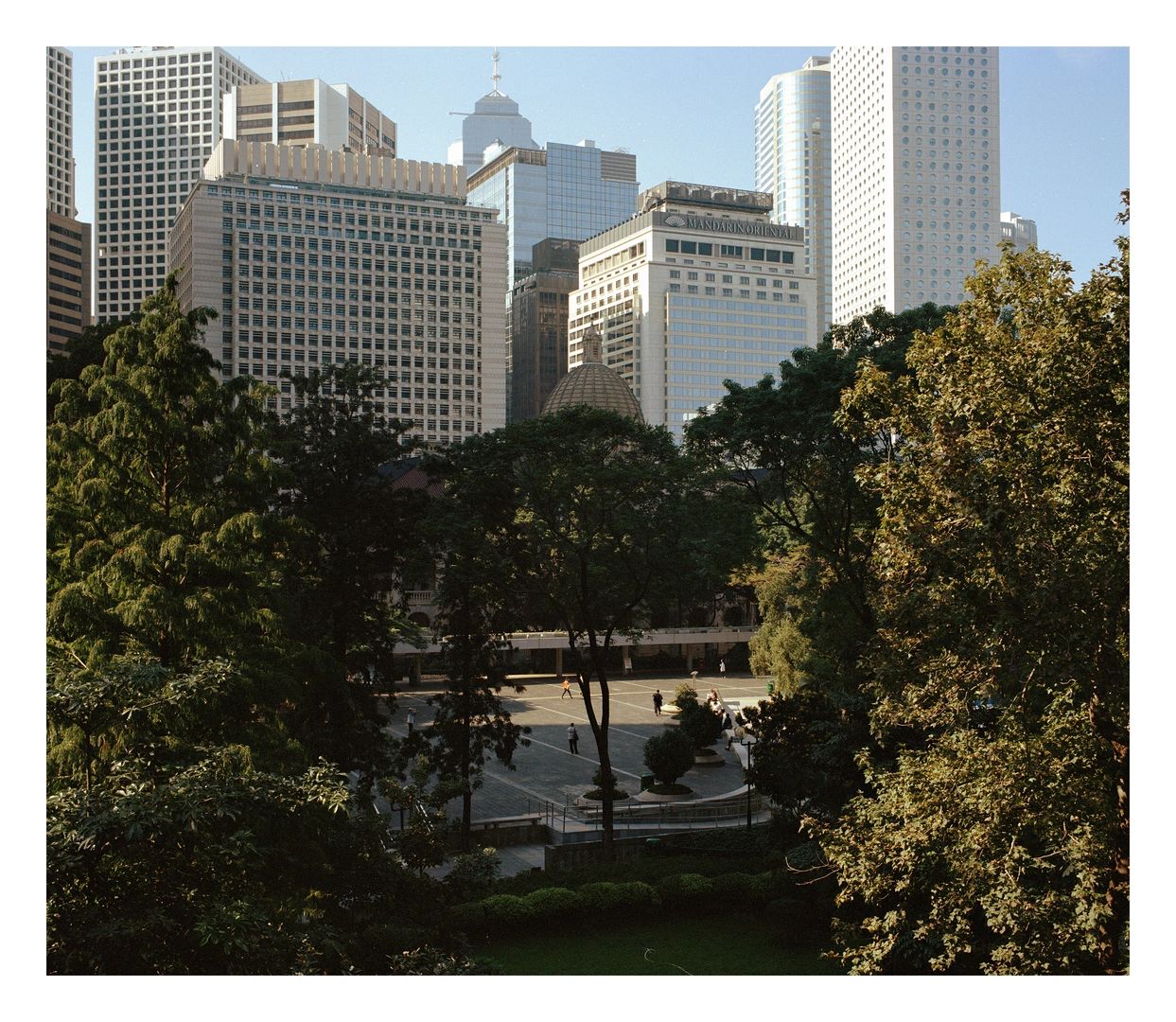
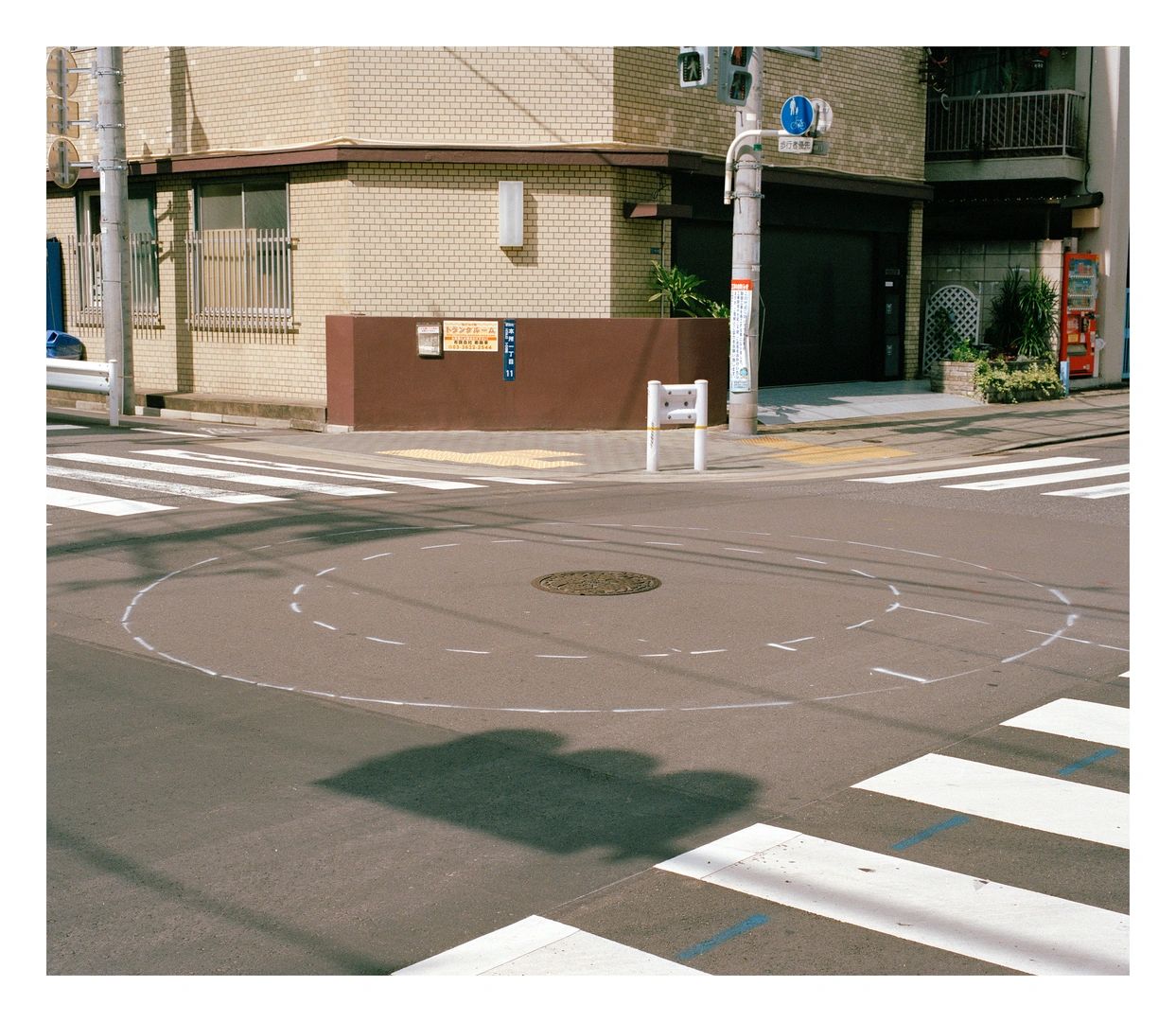
FOUR TIGERS 2016-
Fromm Balázs

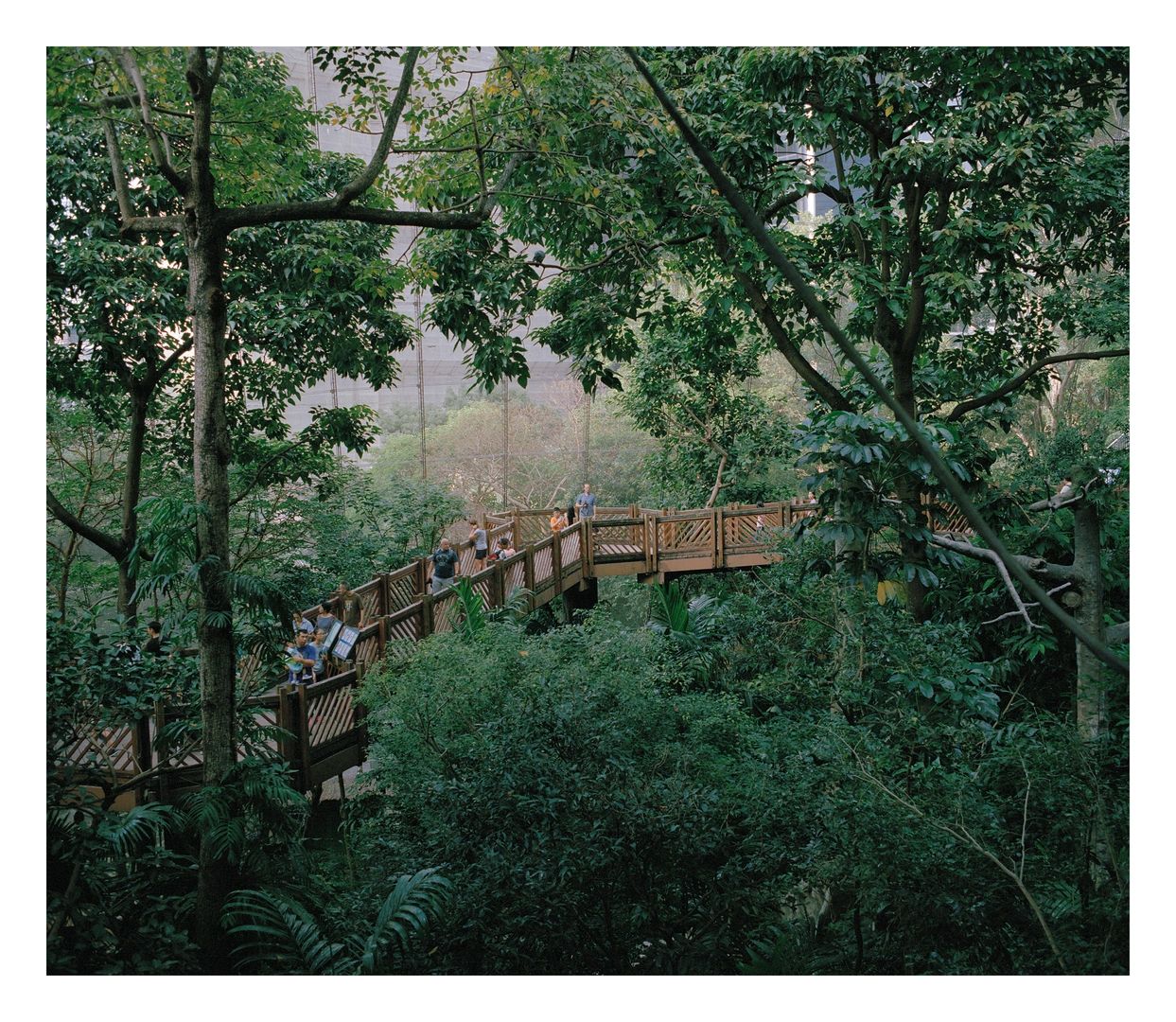
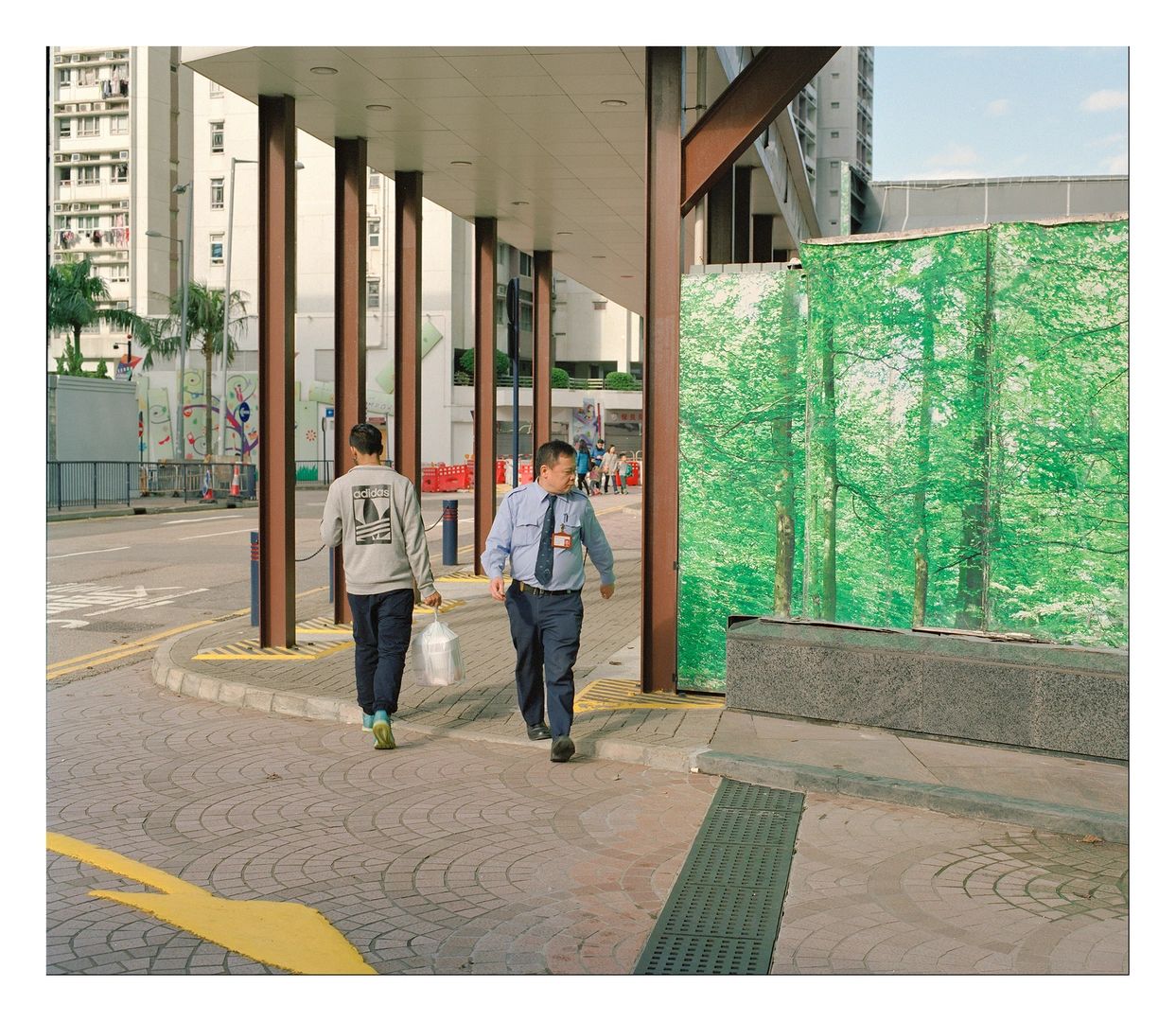
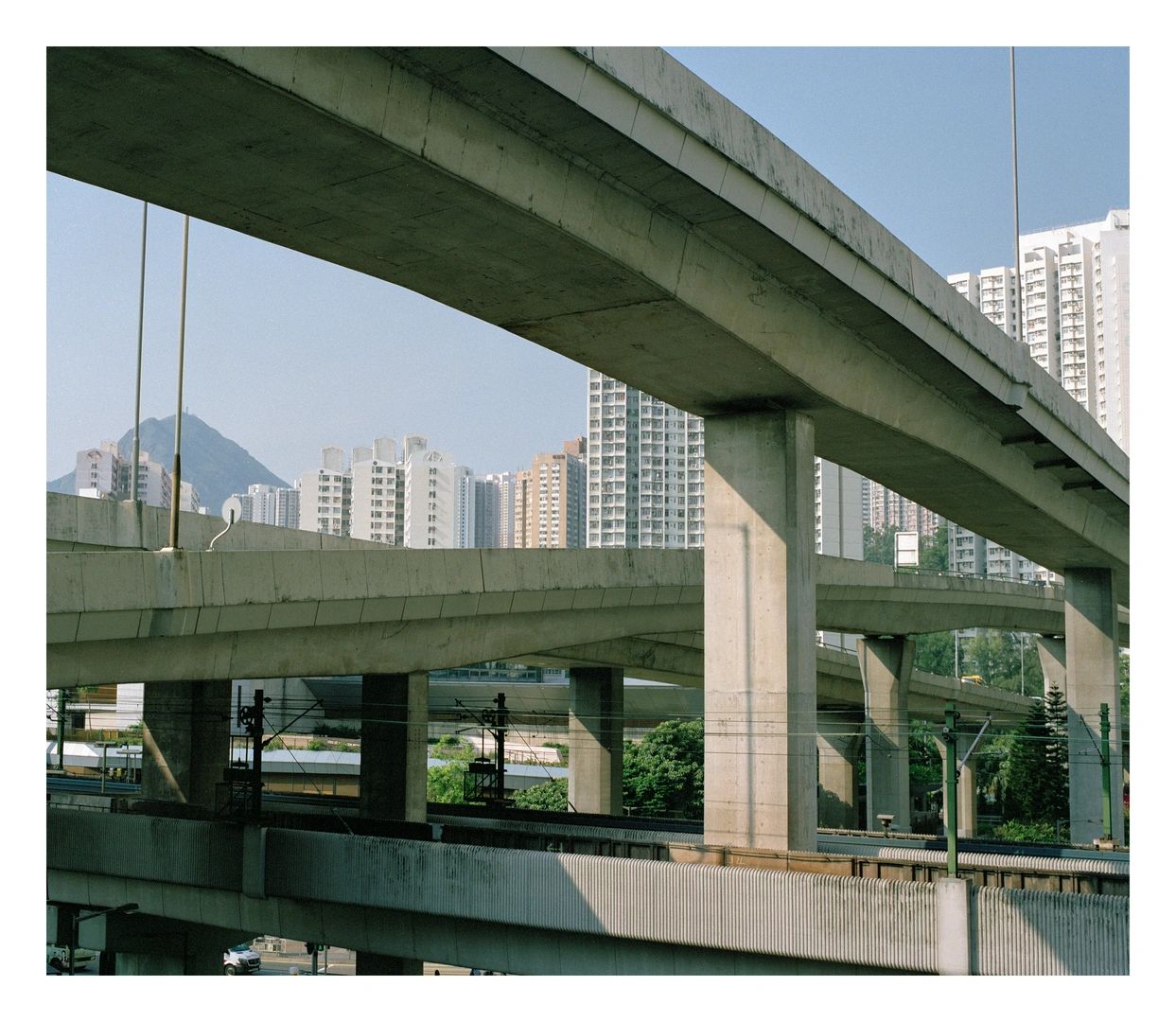
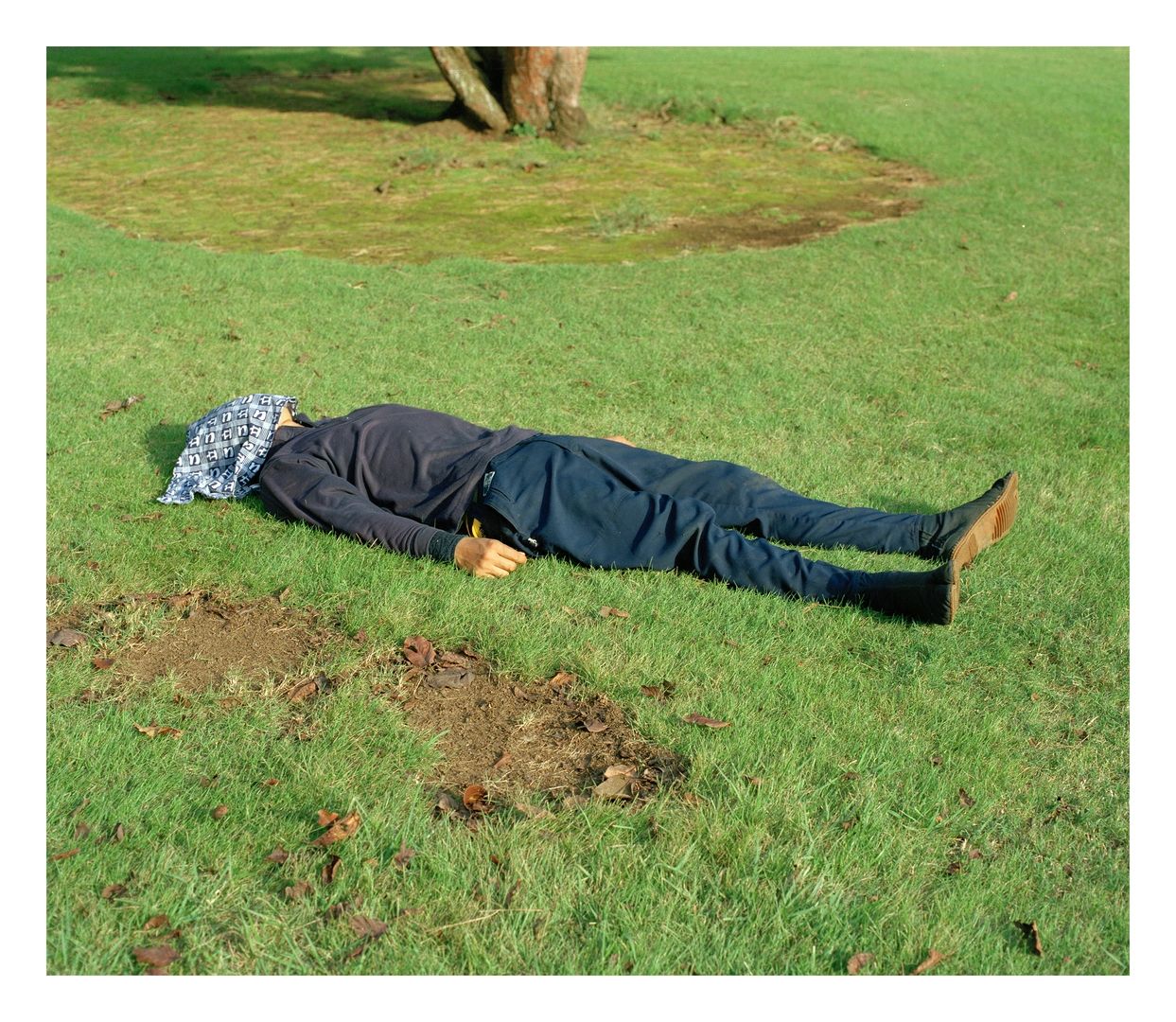
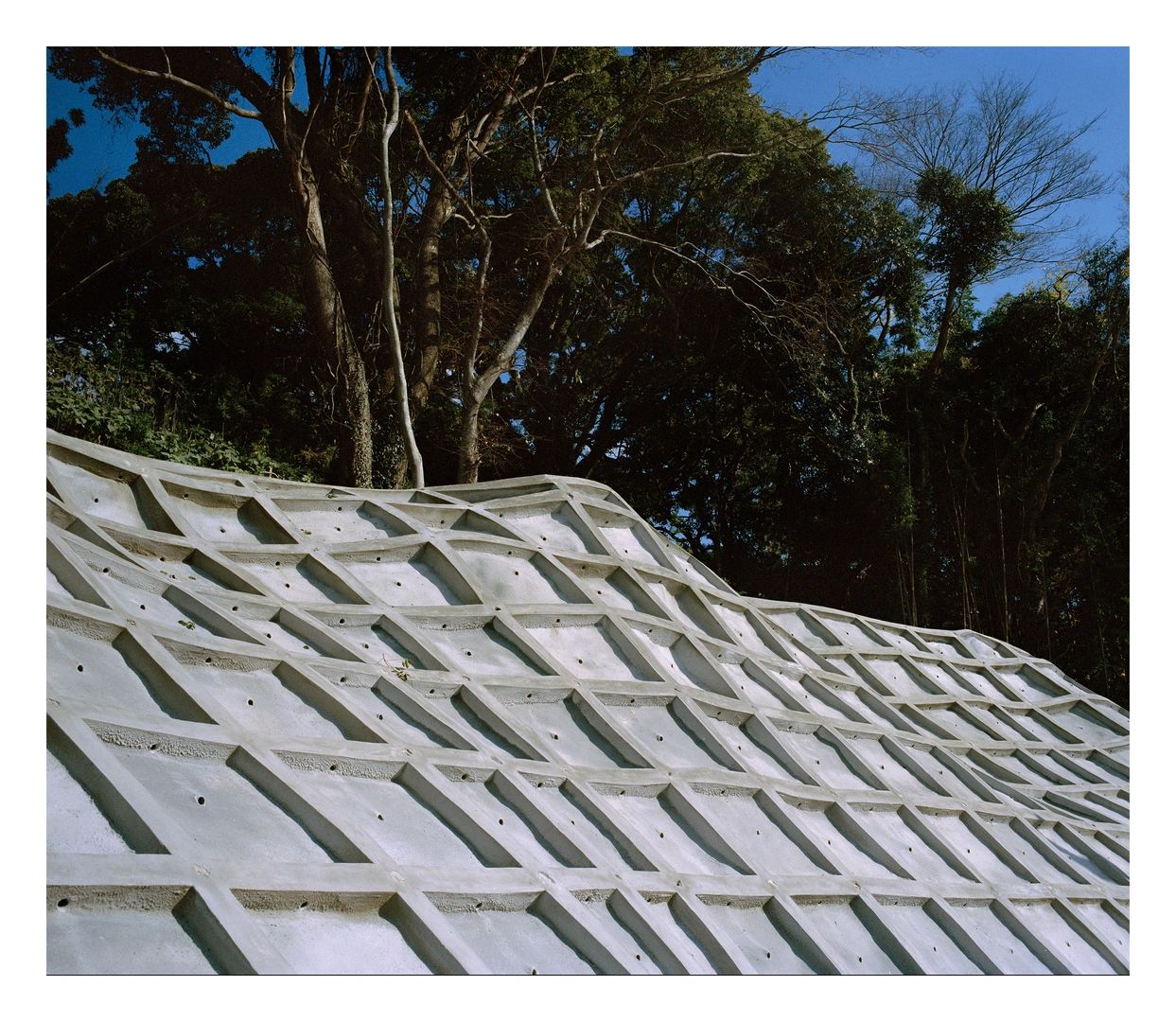
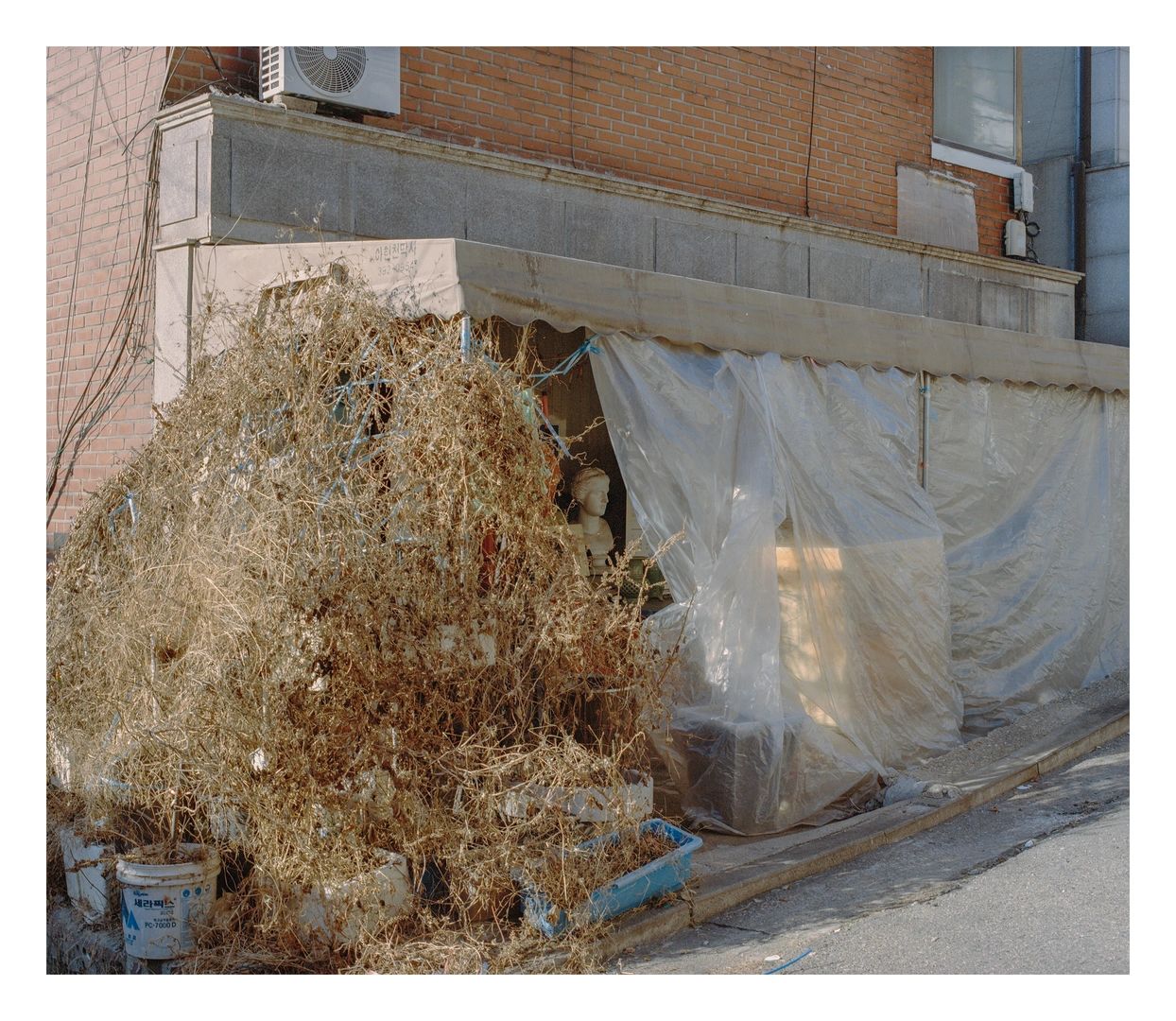
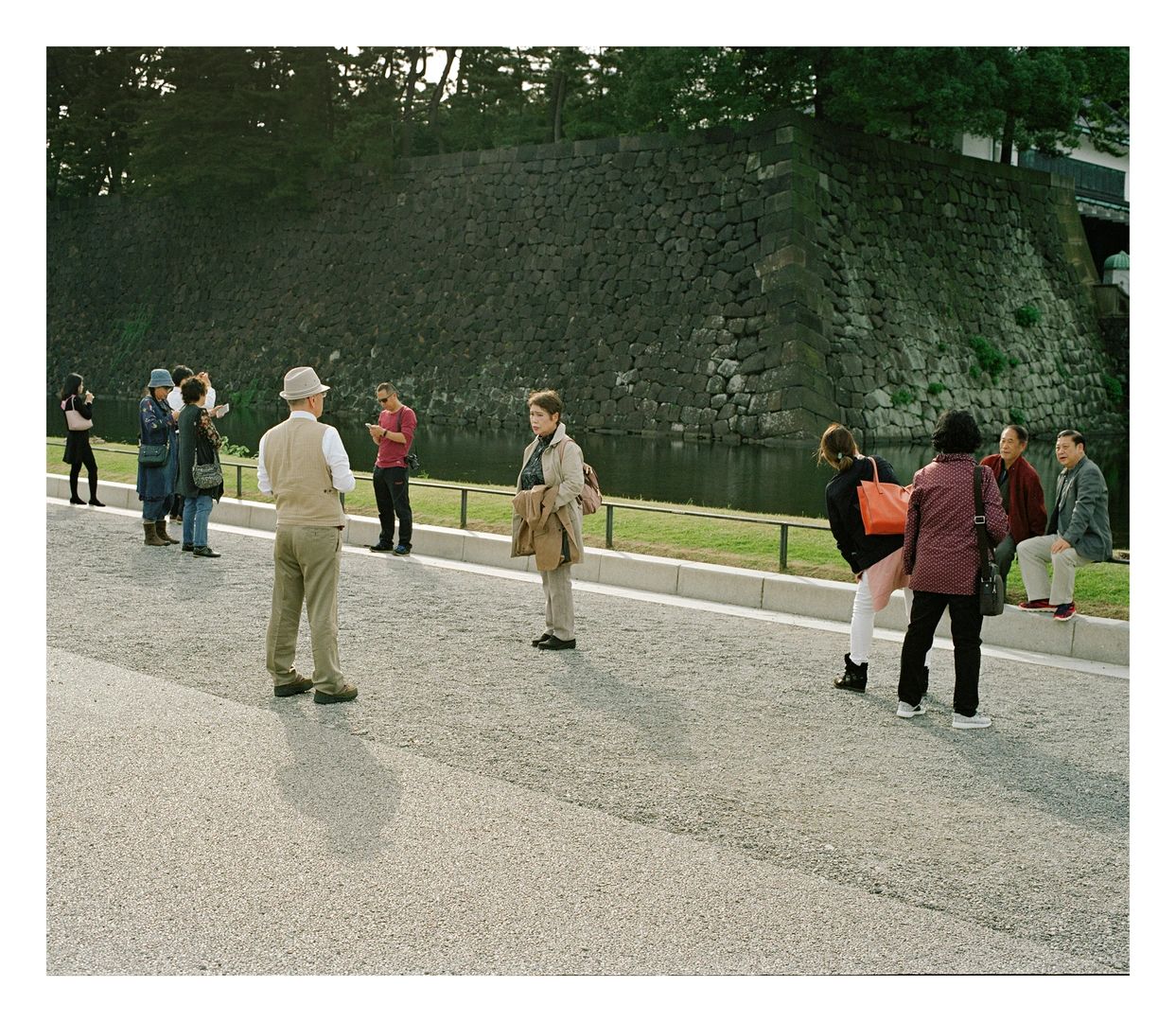
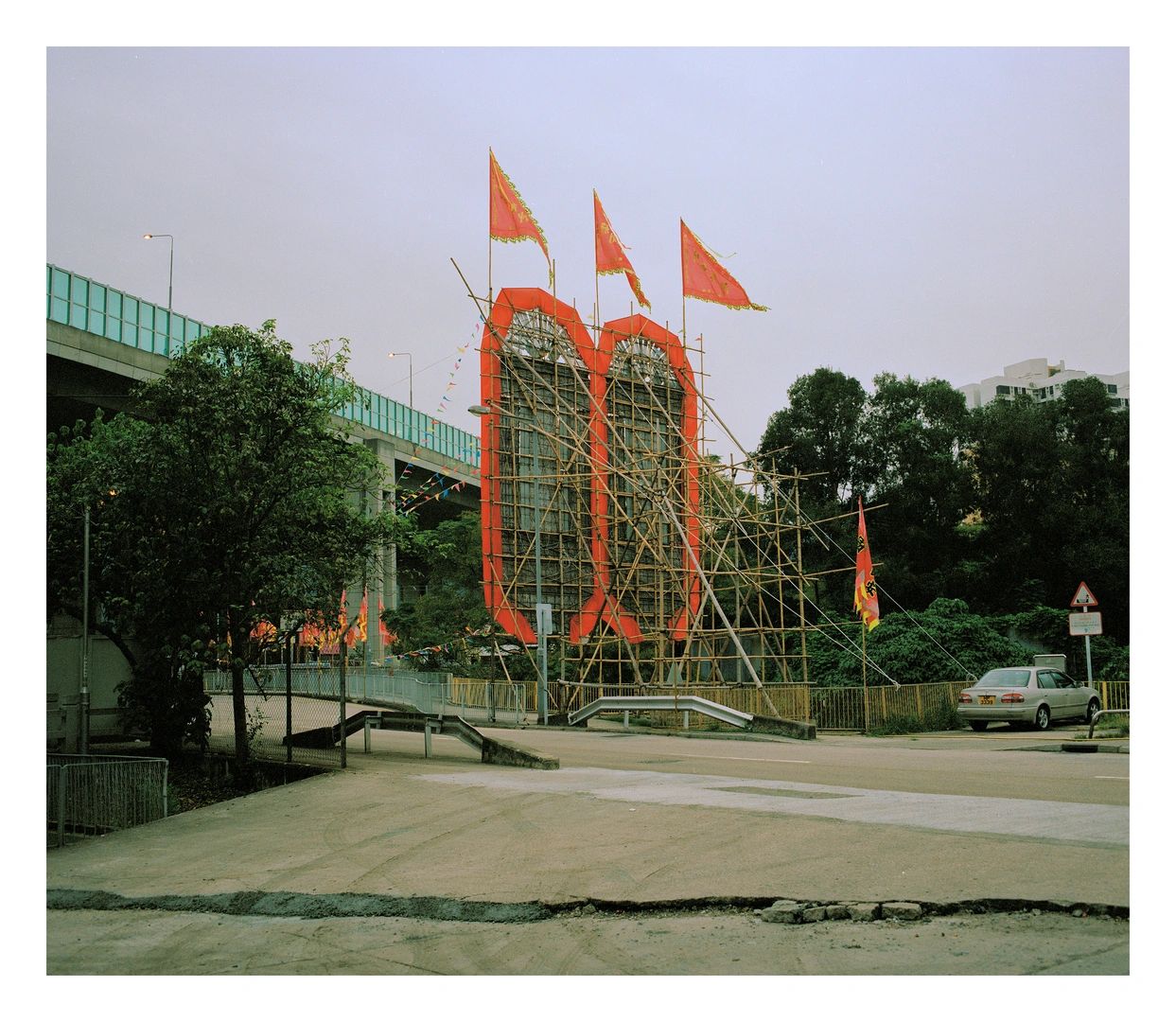
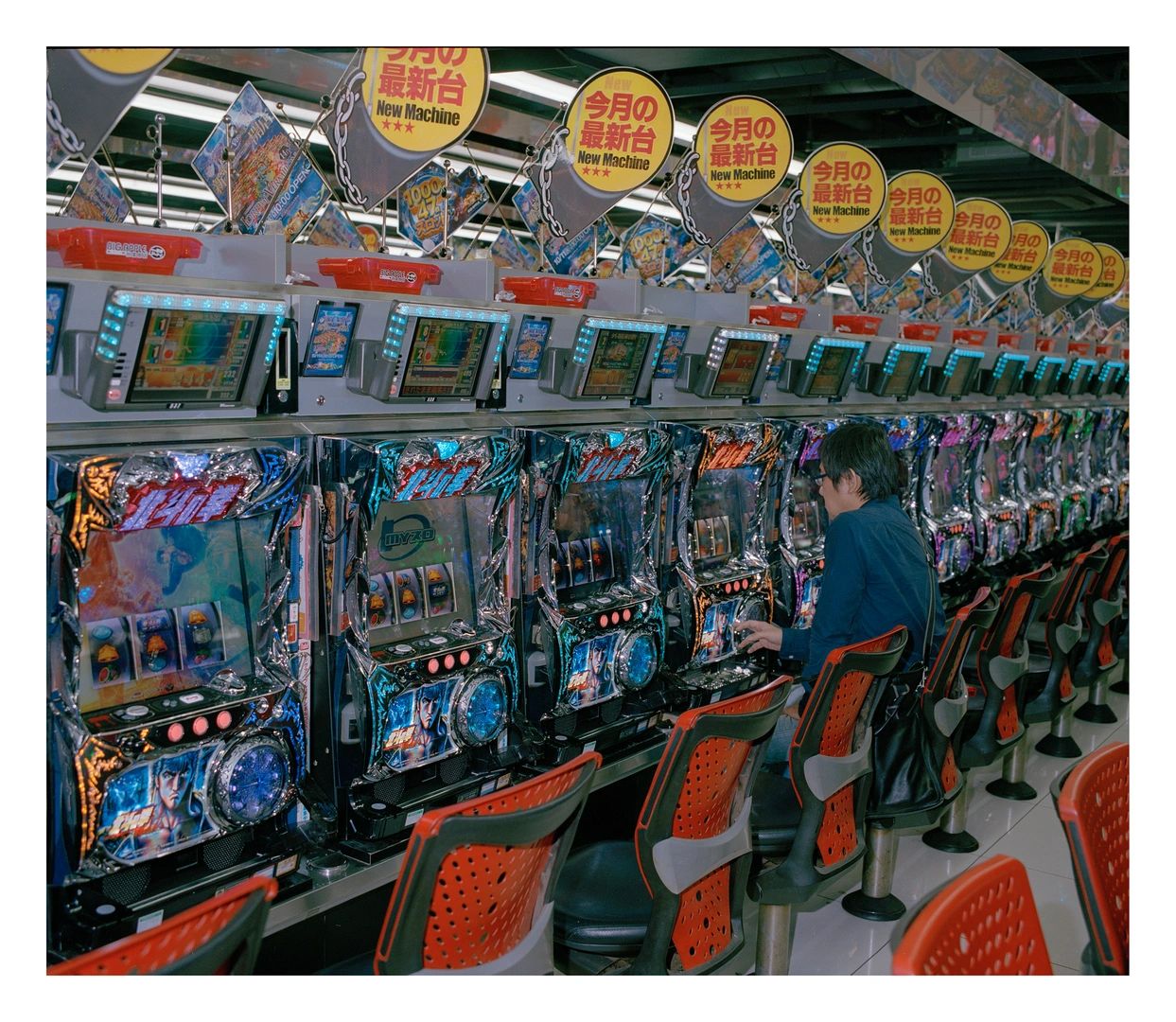
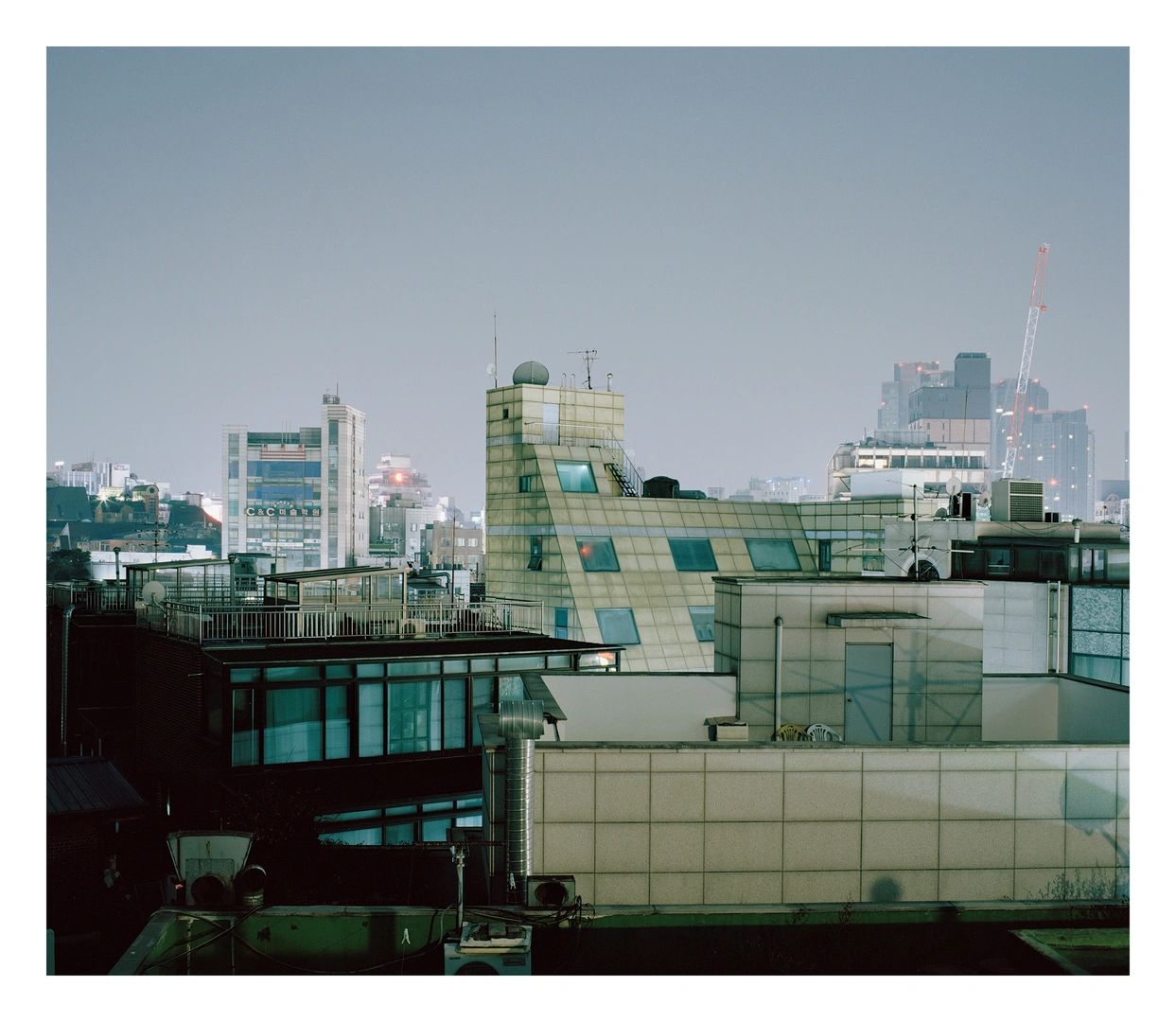
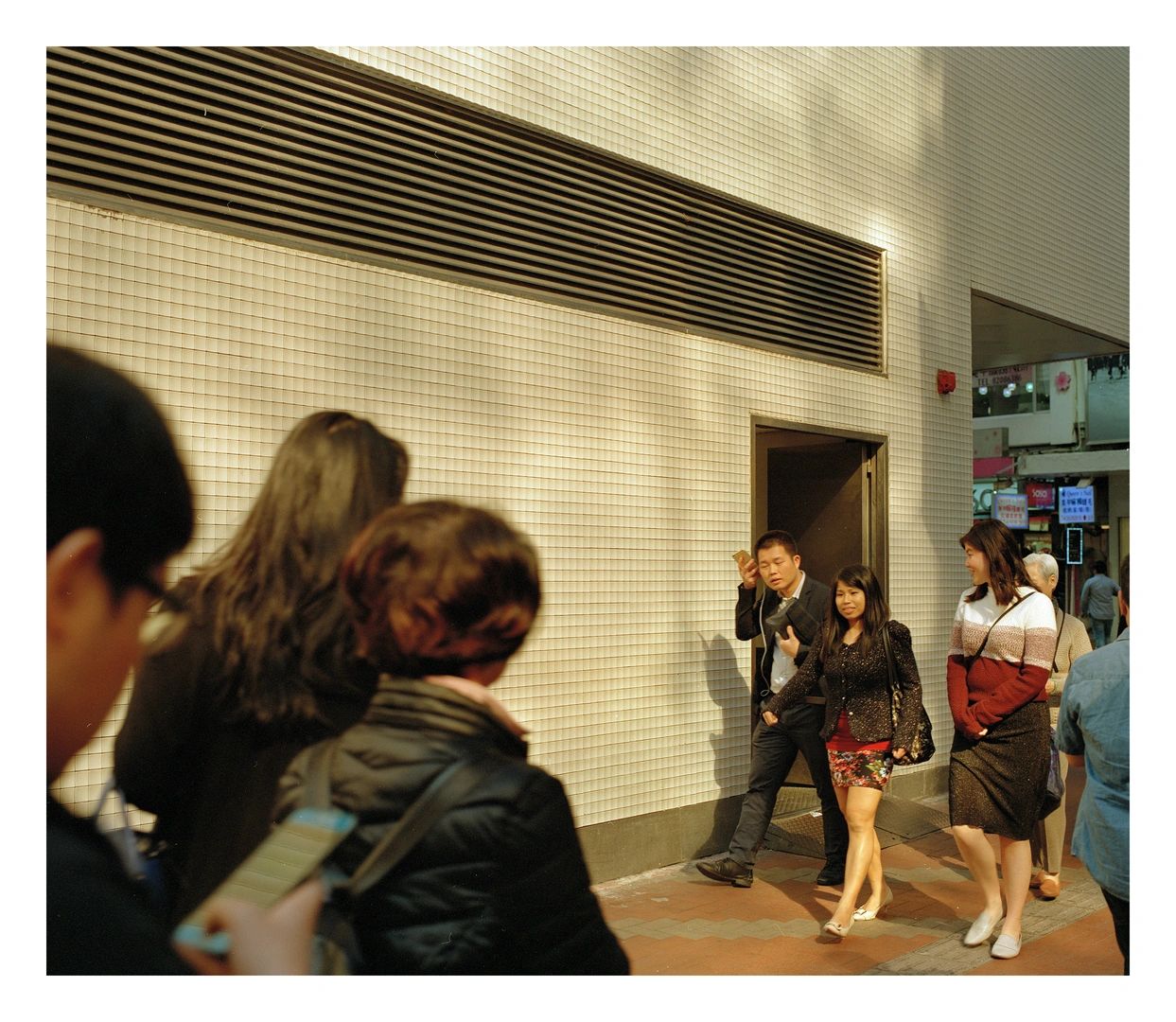
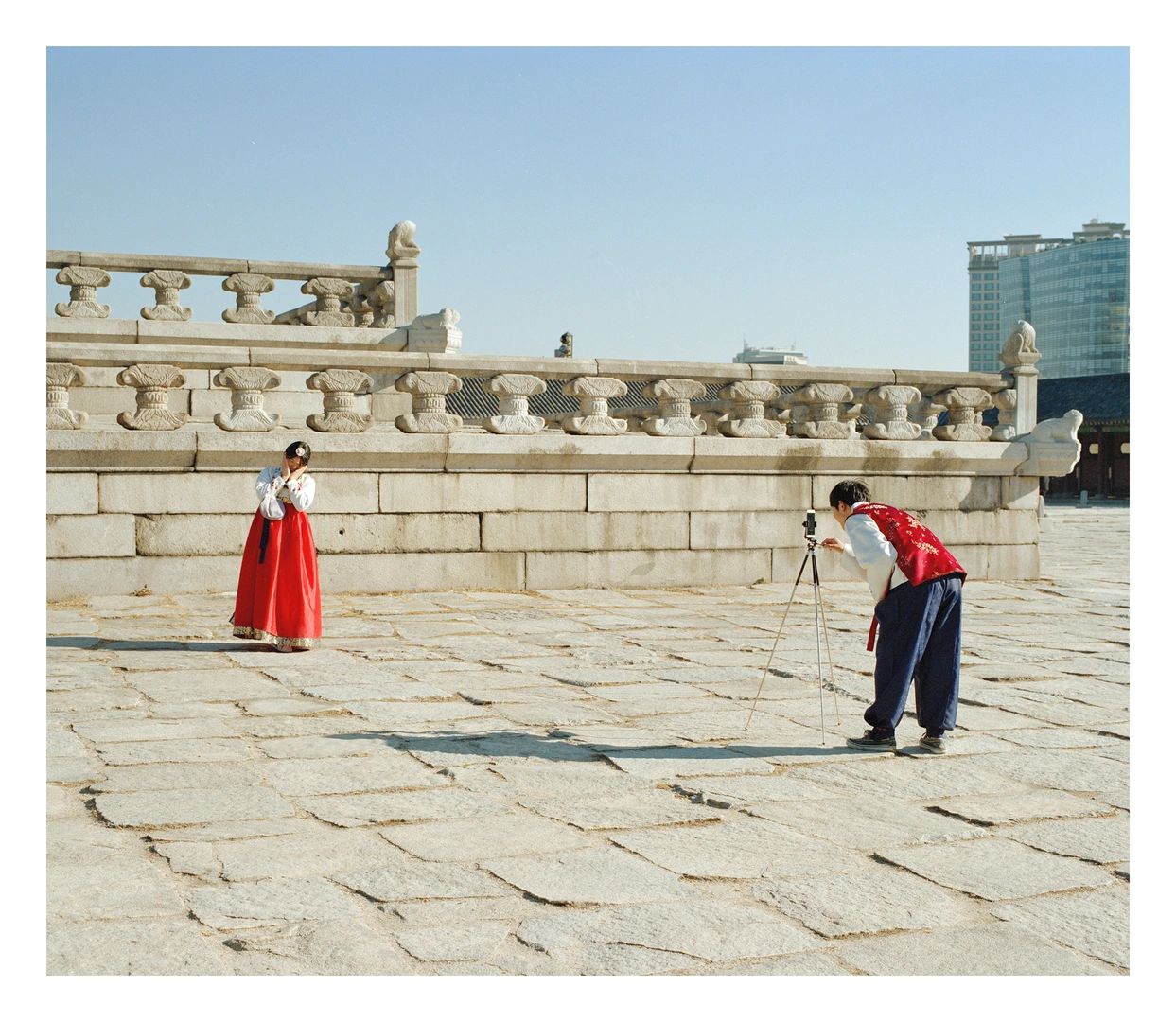
Synopsis Four Tigers is a so called economic term of a model, which expression was formed by after the 2nd. world war for the massively developing, and later hyperglobalized countries, and city states, involving South-Korea, Hong-Kong, Singapore and Taiwan. During my stay and observation, I was interested in the cityscapes, and the effects on it’s inhabitants, which were formed and shaped during the economic boom in the region. The urban landscape, or lets say, "landscape" built by its civilians, is getting far away by each day from the average human characteristics, and keeps failing to serve their citizens interest’s in East-Asia. The phenomenon’s, such as overpopulation, loneliness, and financial and cultural alienation are the biggest challenges right now of the regions main countries. During my photographic research, I was interested in the visual representation of the urban landscape, including the imprints of the human modulus. Schedule As If I would win the Capa Prize Scholarship Award, Then I would definitely like to extend the series, as a whole. To fully engage the project, in the spring of 2018, I would go back to East-Asia. However, before the main trip I would like to make a possible location casting, according to my final project plan, and also, eager to create a visual collection and a sketchbook by the end of January, of 2018. I would like the enhance my focus on local, communal problems as the final projects goes onwards. The long-distance keeping photographical modus should change to a personal viewpoint. In the possible, and most ideal final project there should be an empowered emphasis on portraits and many more still-lifes. On the other hand, I would like to keep the dynamics of the landscape photographs. During the project, I will use a large and medium format camera, for landscapes and portraits as well. The technical approaches will determine the final outcome of the exhibition. However, during the intense 1 month photographic work, I would later on interested in the globalised Asian countries, and their few facing problems. In the summer, I would do the developing, contact sheeting. Until June, the final plan of the exhibition shall be finished with book dummy as well. If the spring "expedition" fails, somehow, there is still time to finish the series in June, and make the preparations in August. Possible plans to go on with. 1-Question and problems of tourism from the Chinese side. Tracking down Chinese tourists popular routes, like in Hong-Kong or in Seoul. The problem of Chinese tourism in terms of speaking of manners and cultural differences. Documenting the vast amount of Chinese tourists in the region through the landscapes. 2. Hong-Kong and Korean cinema, and its golden age, globalisation and cinema in the metropolises. 3.North Korean threat in the region. Projecting the different political systems, and showing their own beliefs on space on urban planning. 4.A project on the employees of the financial sector. Hong-Kong and Singapore, as these two states are the main gears of the region. Cryptocurrency and bitcoin as the new "cash", and how it affects economy or communities. The exhibition At the exhibition, the images shall be printed or enlarged on photographic paper, in large format (over 70x110 cm). Use of 4x5 and 120mm scans or enlargements. Until the exhibition, I would like to handcraft a book-dummy, which I would like to produce If the final prize goes to my dedicated project.
Balázs Fromm is a 25 year old artist/photographer, currently living and working in Budapest and Berlin. He studied photography at Moholy-Nagy University of Art and Design and New Media at the City-University of Hong-Kong. He received his BA(HONS) degree in 2017. His field of work contains the classical image structure of documentary photography, mixed with new ways of understanding the possibilities of the medium. Yet, he also works with many staged and fabricated elements, balancing through the fictional components in his projects, as trying to pushing out the borders of contemporary photography. Education Photography BA, MOME-Moholy Nagy University of Art and Design, Budapest, Hungary, 2014-17 New-Media BA, City-University of Hong-Kong, Hong-Kong, 2016-17 Art-History BA, Eötvös Loránd University, Budapest, Hungary, 2011-2015 Exhibitions 2014-R.E.M., Casati Art Corner Gallery, Group Show, Budapest 2015-Hungarian Month of Photography, Casati Art Corner Gallery, Group Show 2015-MUSZI, Group Show of Hungarian Youth Photographers, Budapest 2016-Group Show of MOME, Organized by Robert Capa Contemporary Photography Center, Budapest 2017-Group Show of graduating students of MOME, Hybridart Gallery, Budapest 2017-Der Greif-CO-OP project at UNSEEN festival, Amsterdam 2017-Group Show, Art Moments festival,Budapest (TBA) Balázs Fromm is a member of Studio of Young Photographers, Budapest.He is currently part of the team at Flashback Photo Studio, Budapest.
Four Tigers is a so called economic term of a model, which expression was formed by after the 2nd. world war for the massively developing, and later hyperglobalized countries, and city states, involving South-Korea, Hong-Kong, Singapore and Taiwan. During my stay and observation, I was interested in the cityscapes, and the effects on it’s inhabitants, which were formed and shaped during the economic boom in the region. The urban landscape, or lets say, “landscape” built by its civilians, is getting far away by each day from the average human characteristics, and keeps failing to serve their citizens interest’s in East-Asia. The phenomenon’s, such as overpopulation, loneliness, and financial and cultural alienation are the biggest challenges right now of the regions main countries. During my photographic research, I was interested in the visual representation of the urban landscape, including the imprints of the human modulus.
HALLGATÓ (THE ENGLISH MEANING IS LISTENER)
Balázs Turós

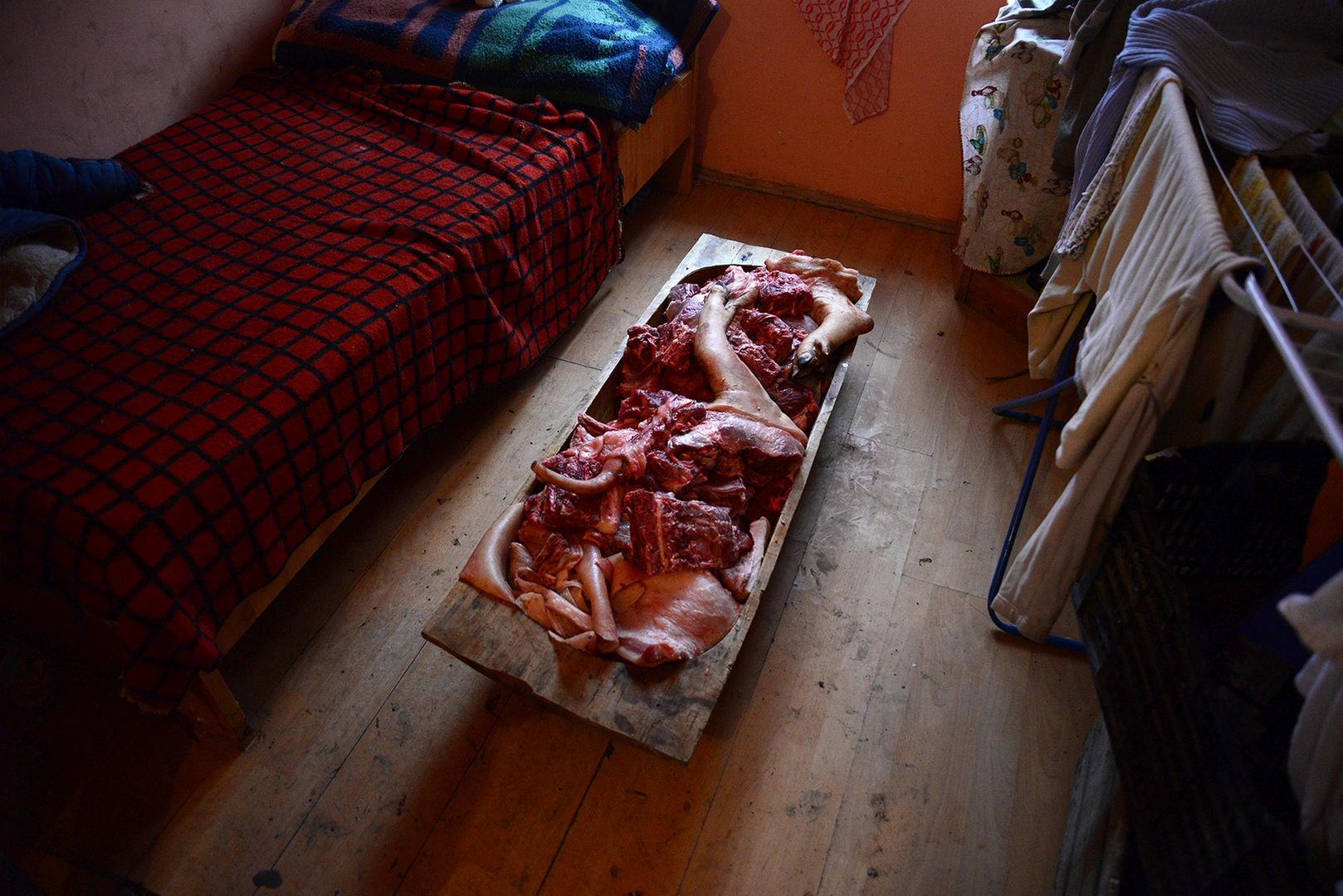
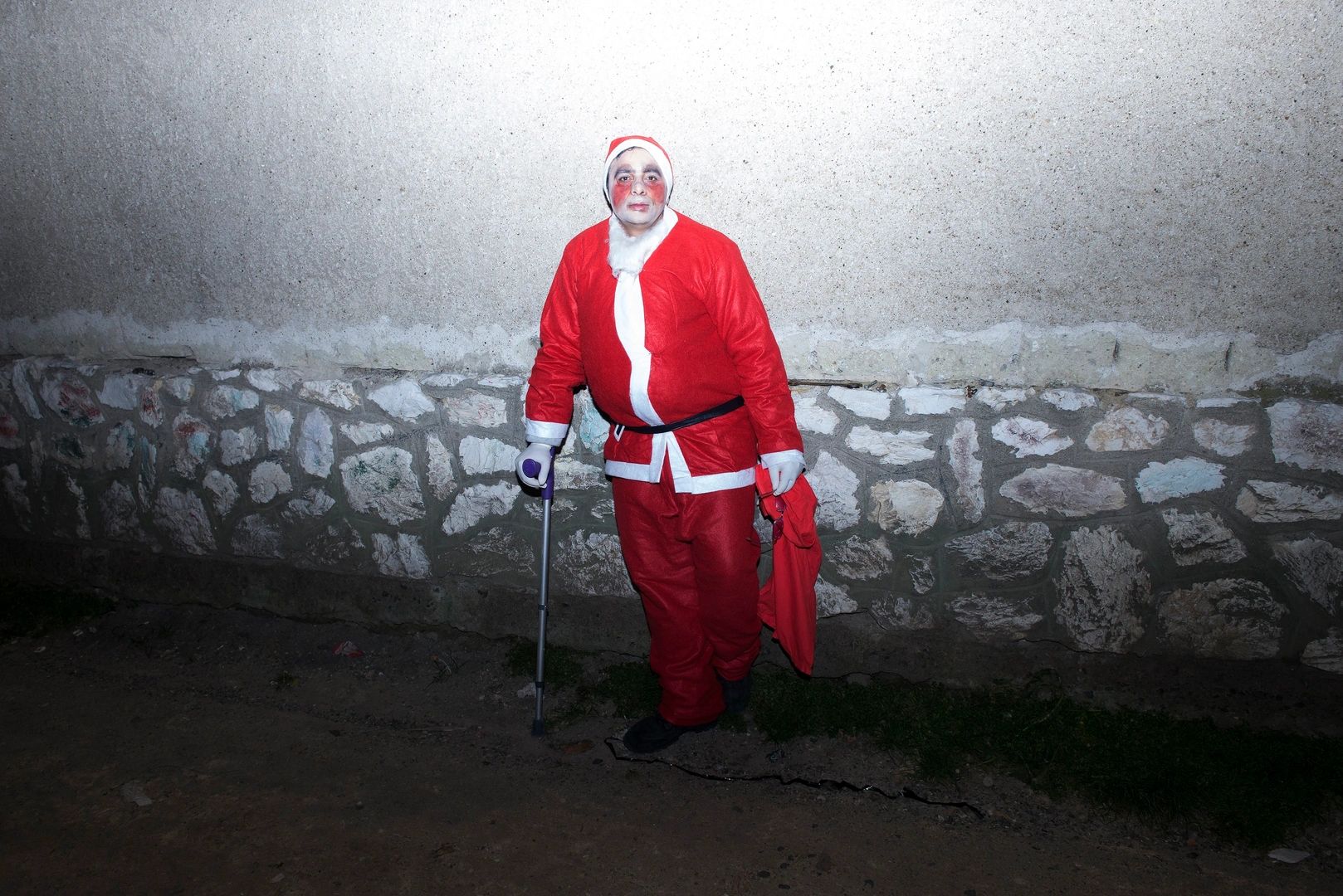
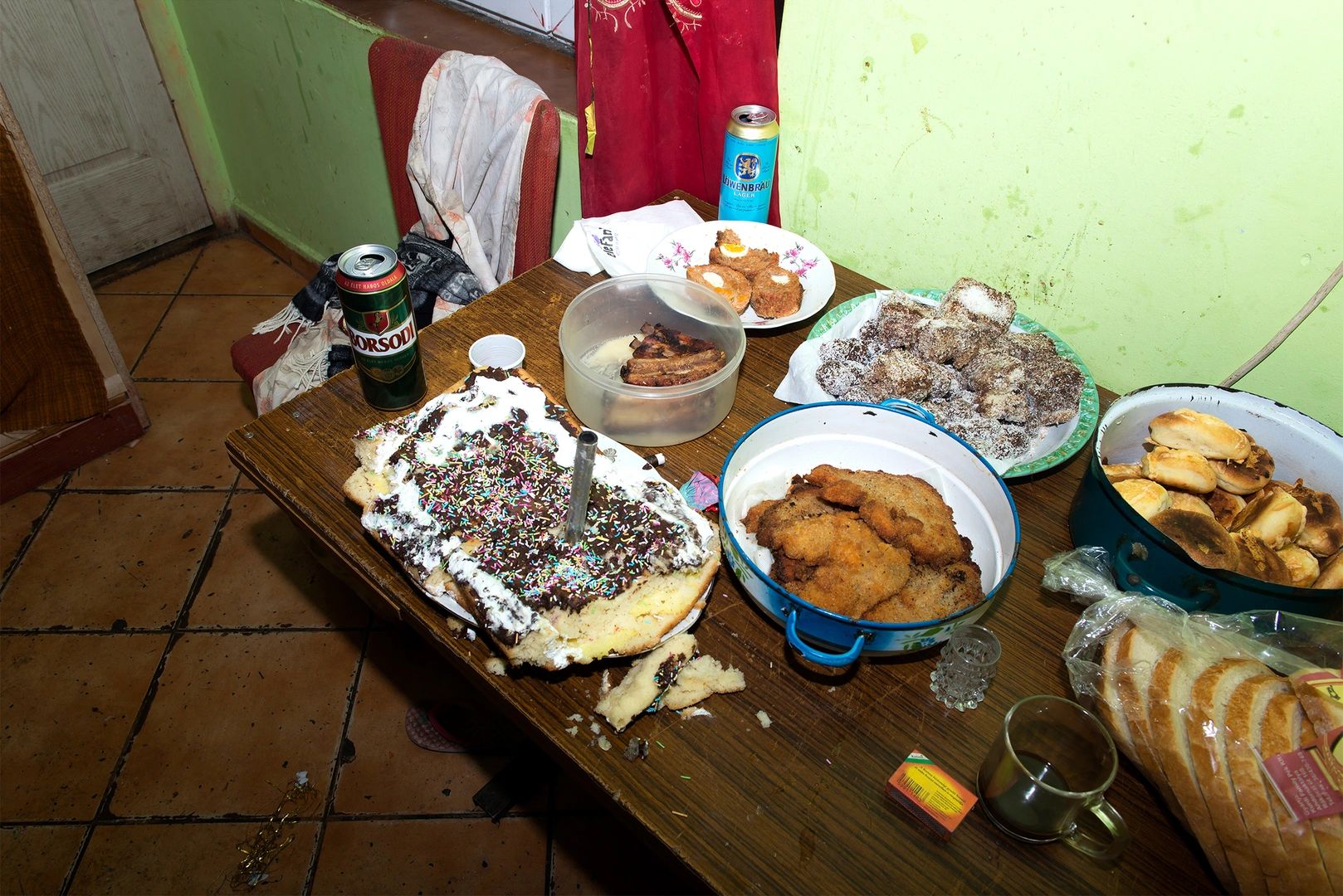
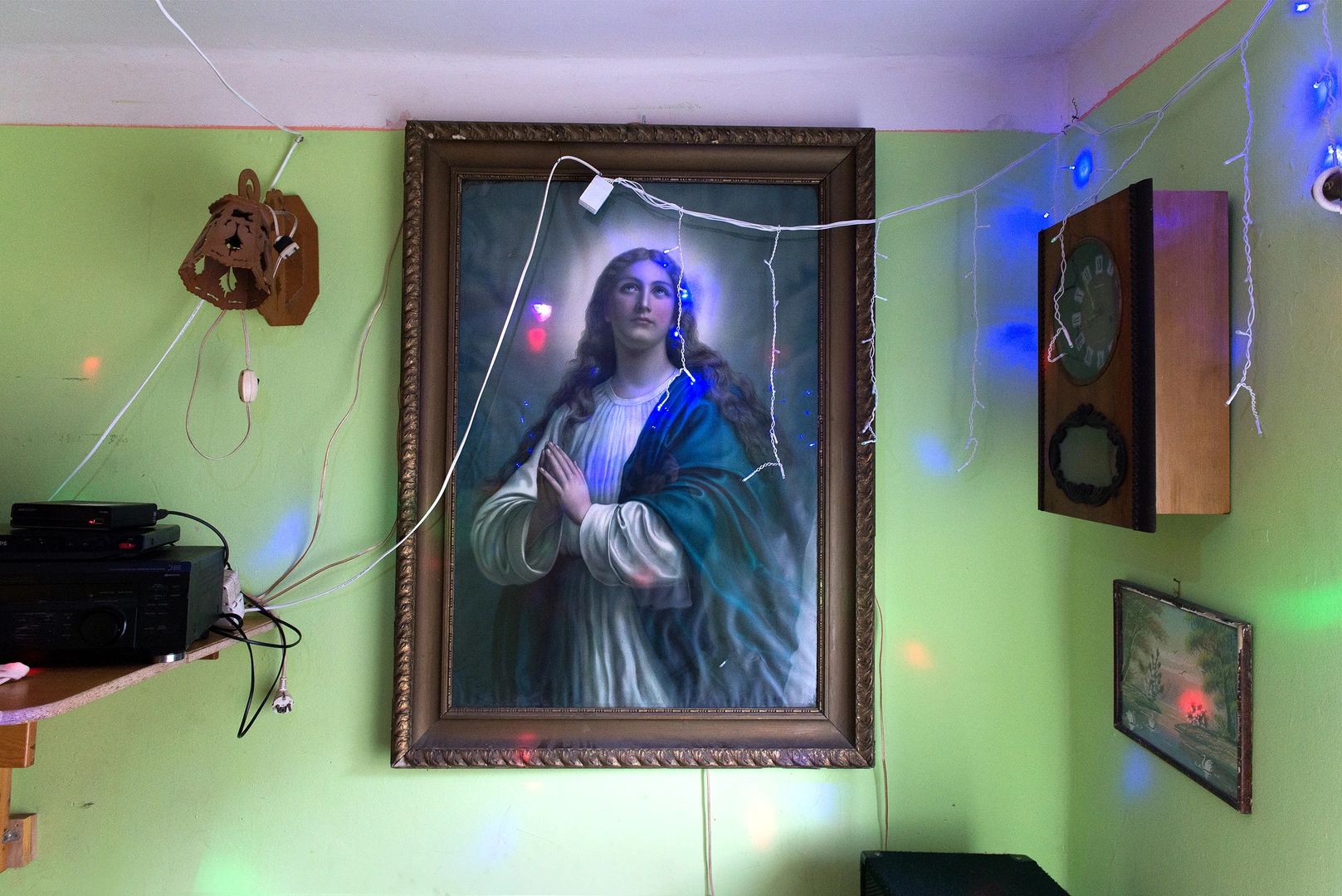
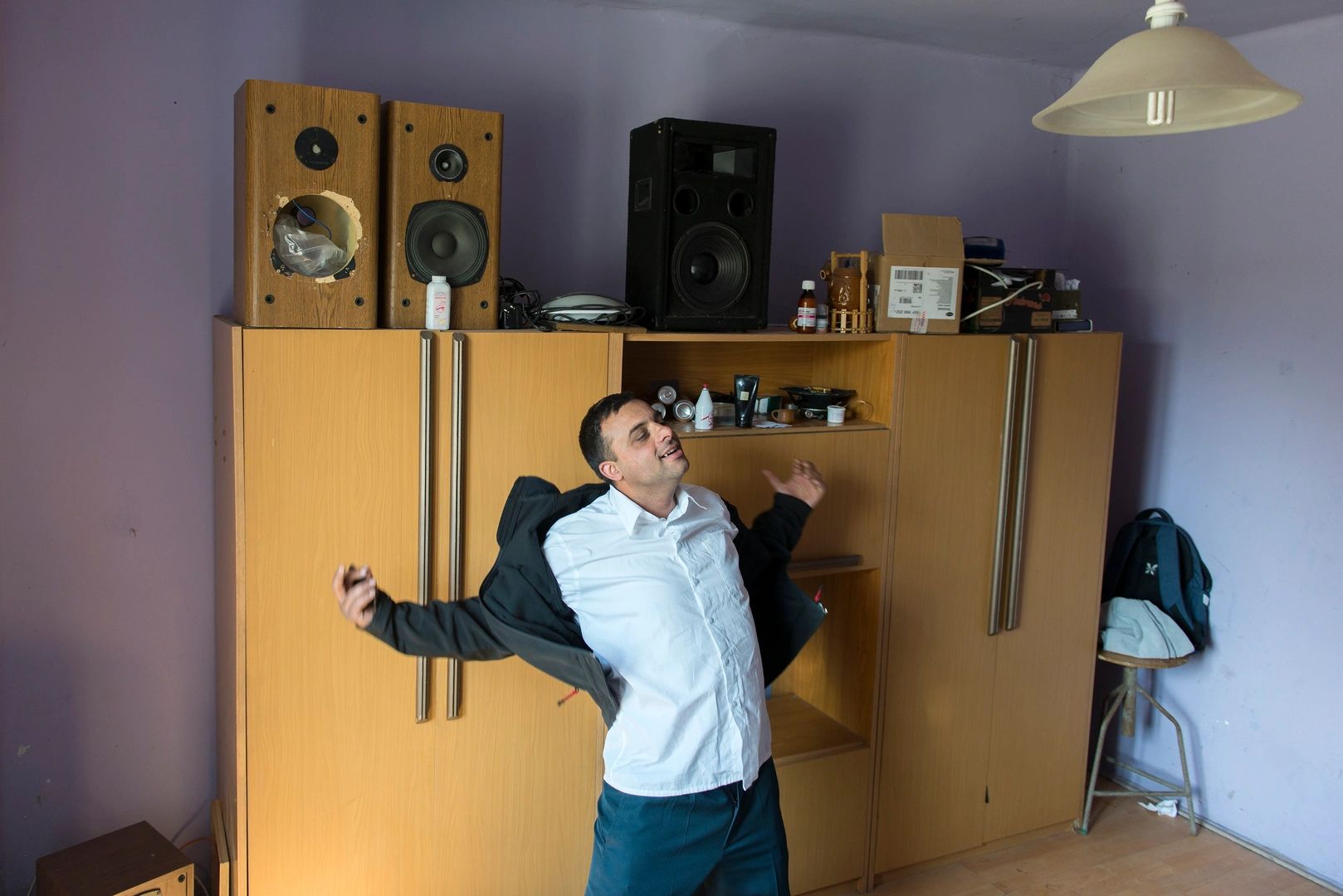
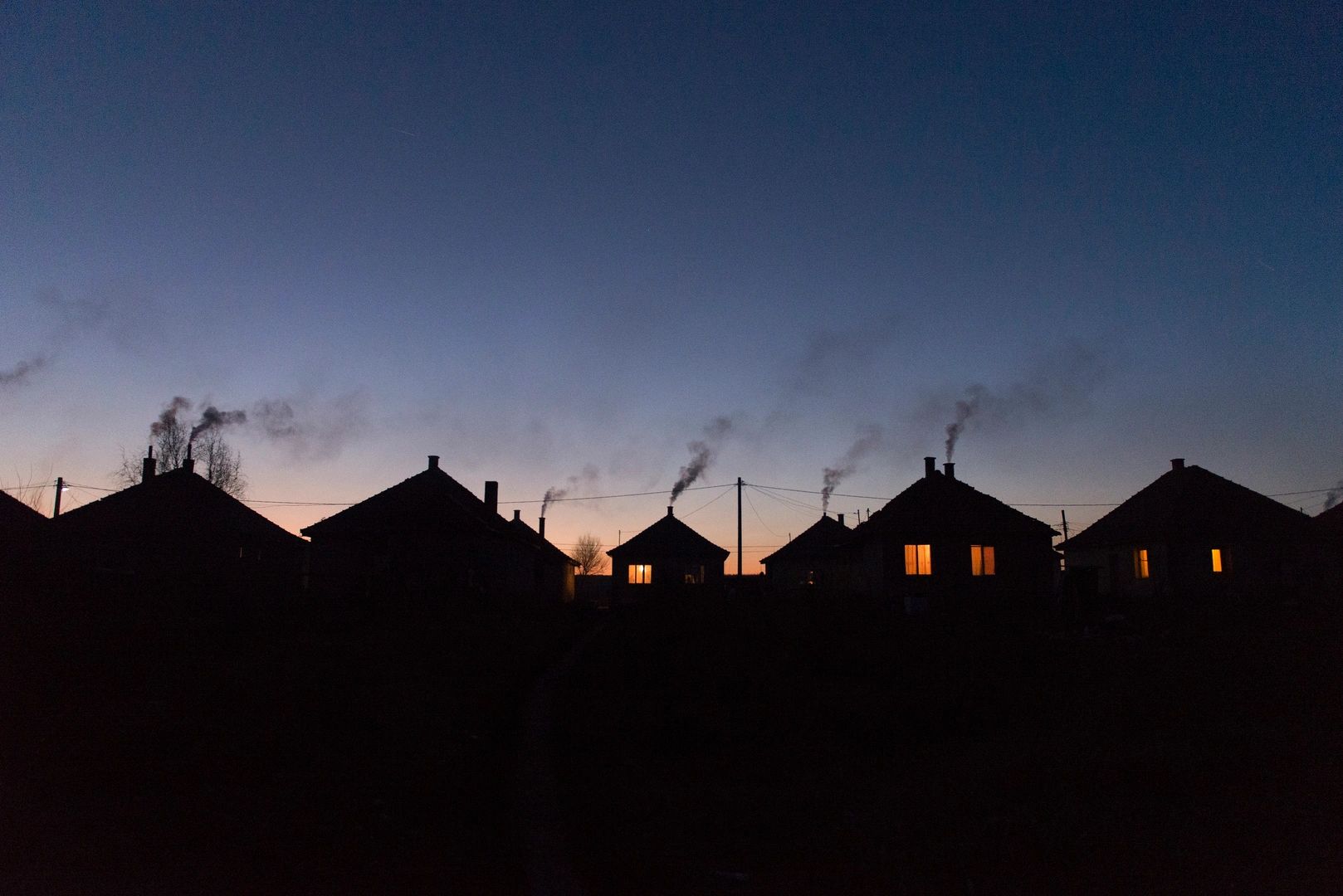
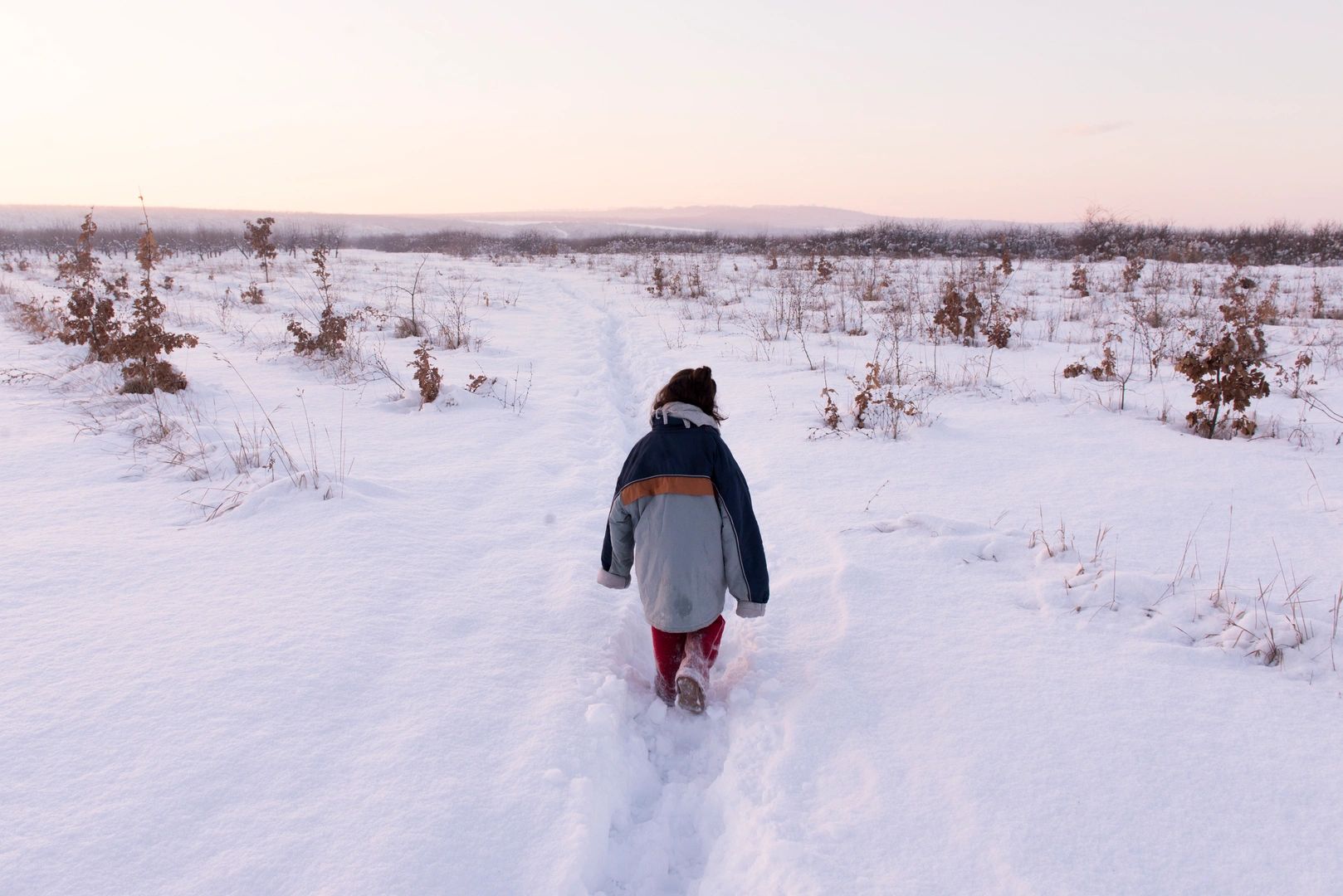
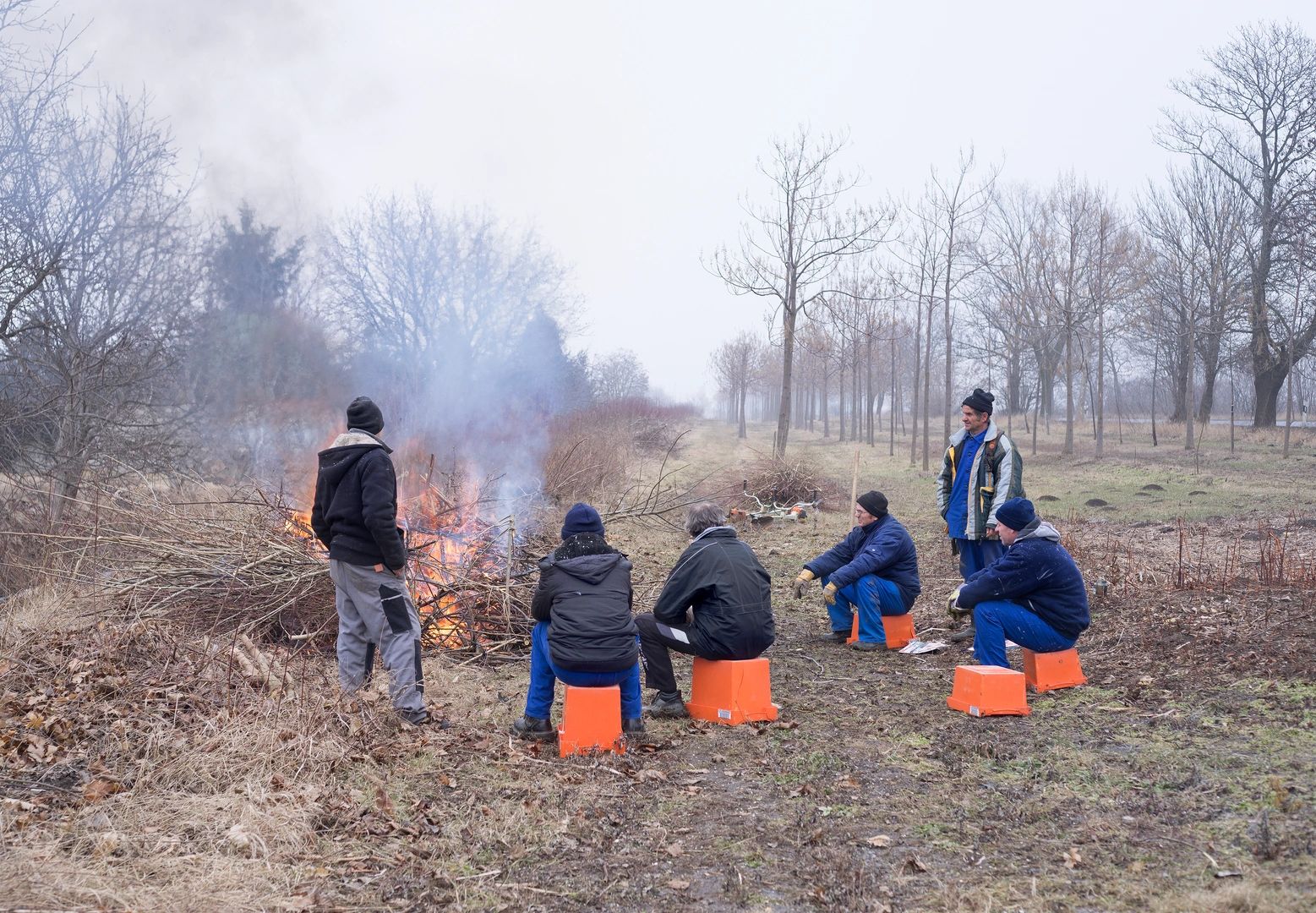
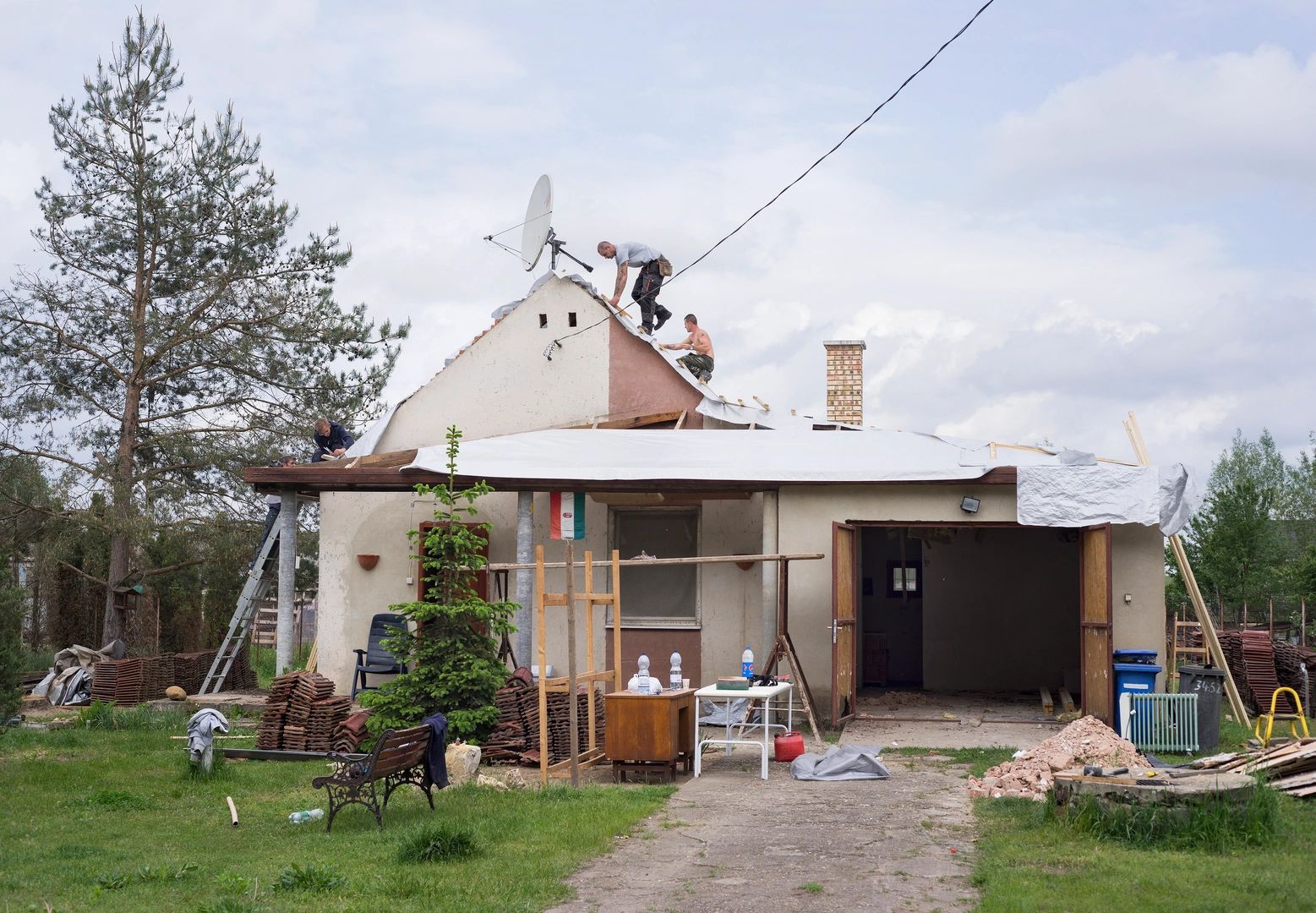
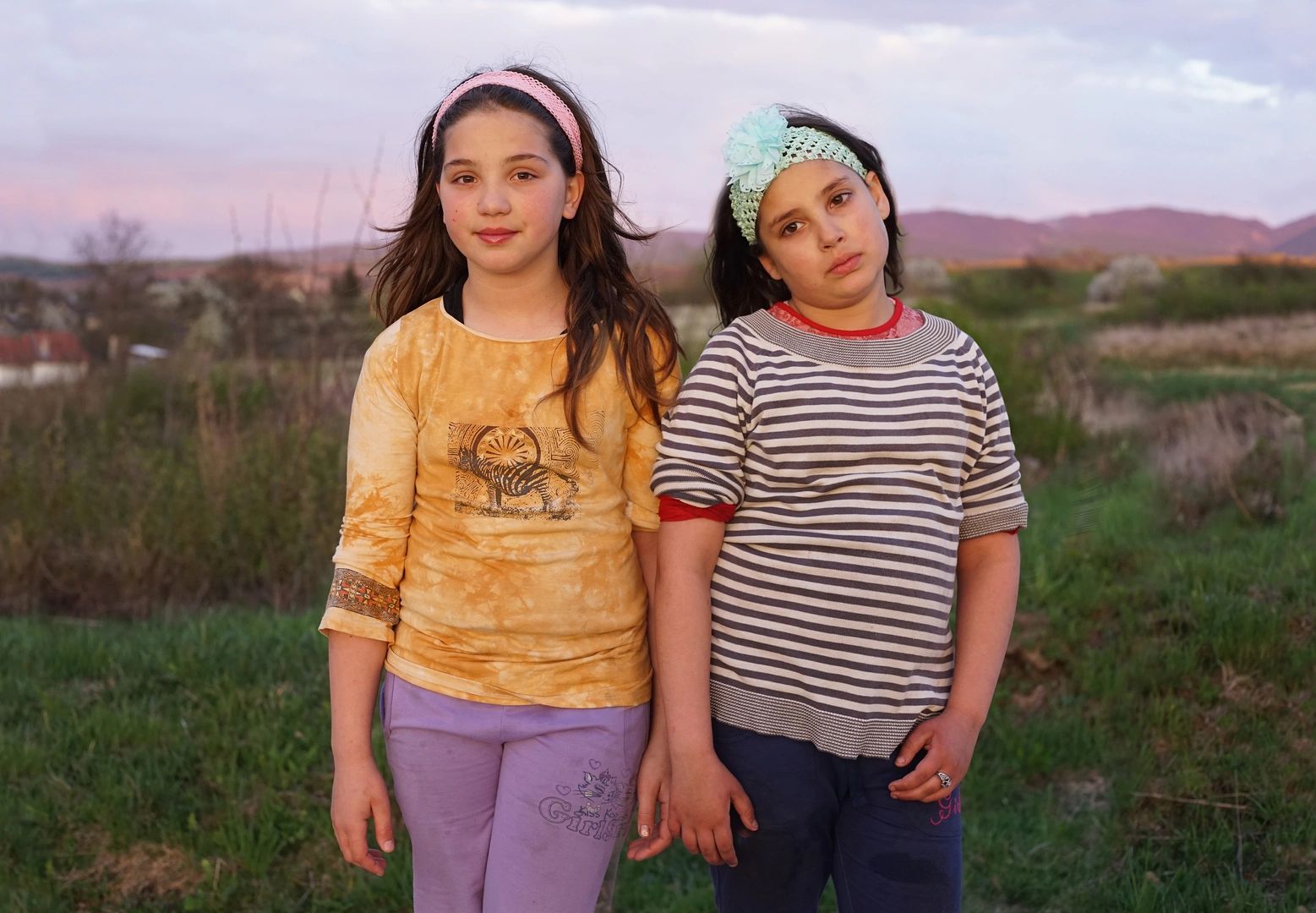
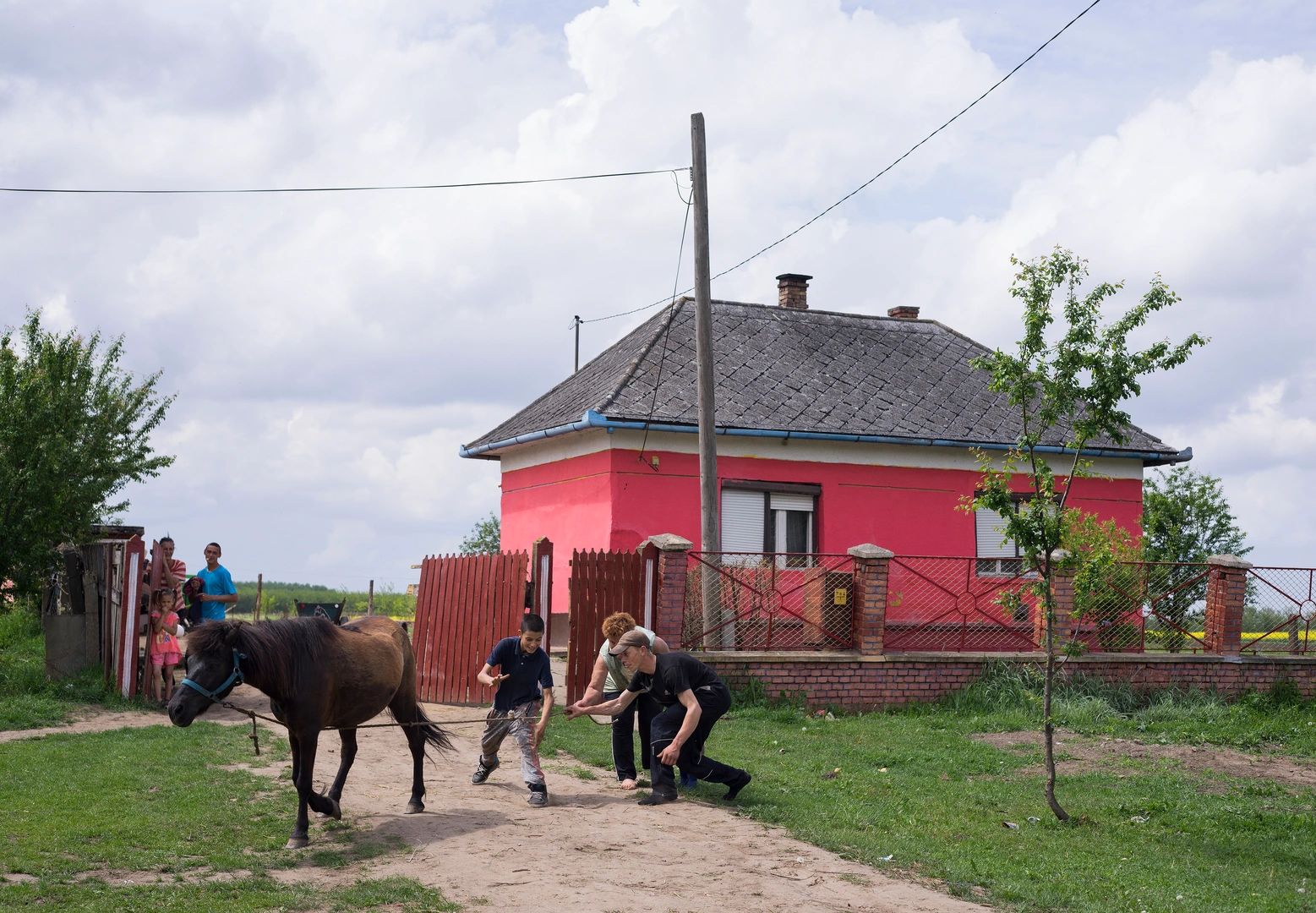
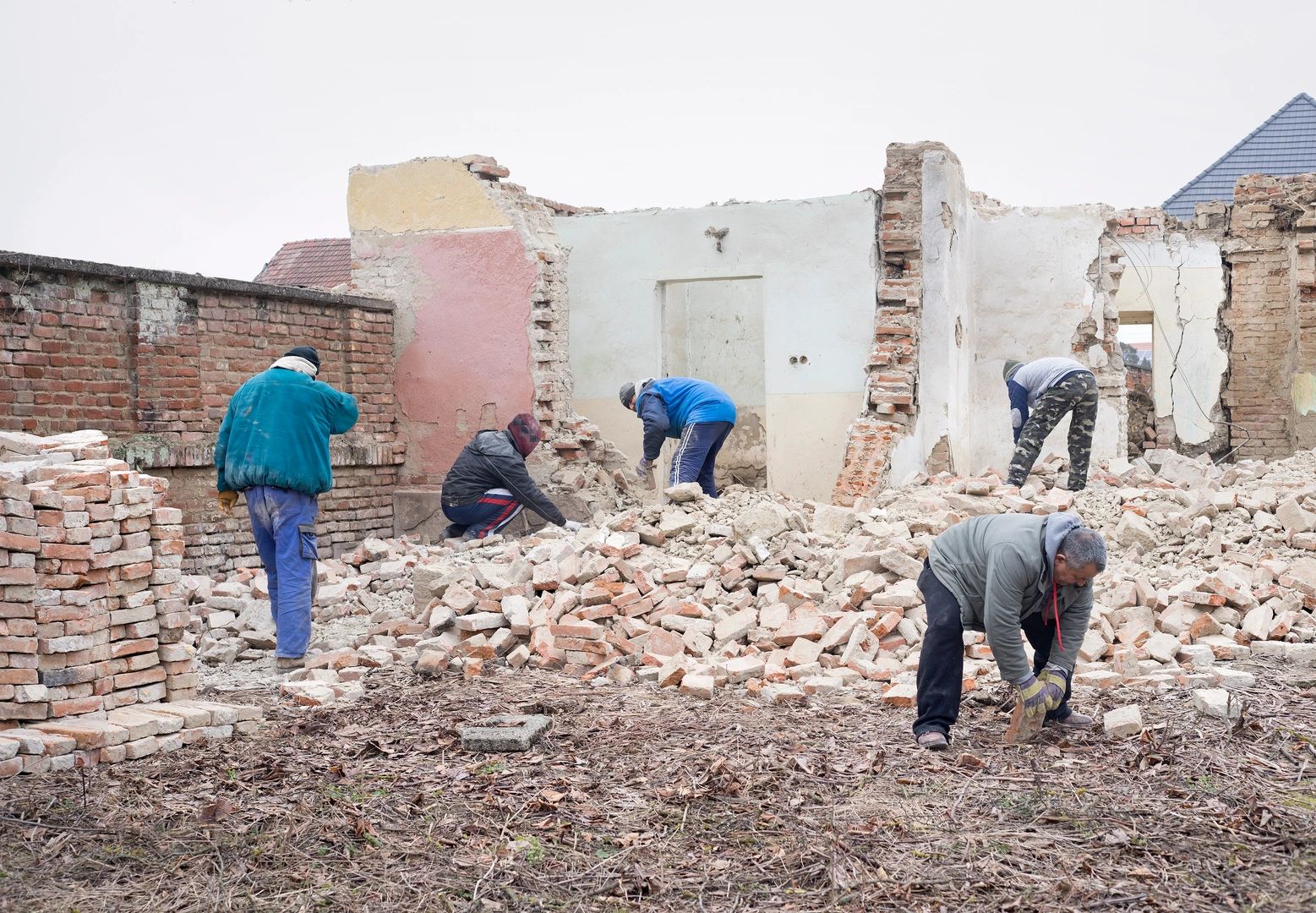
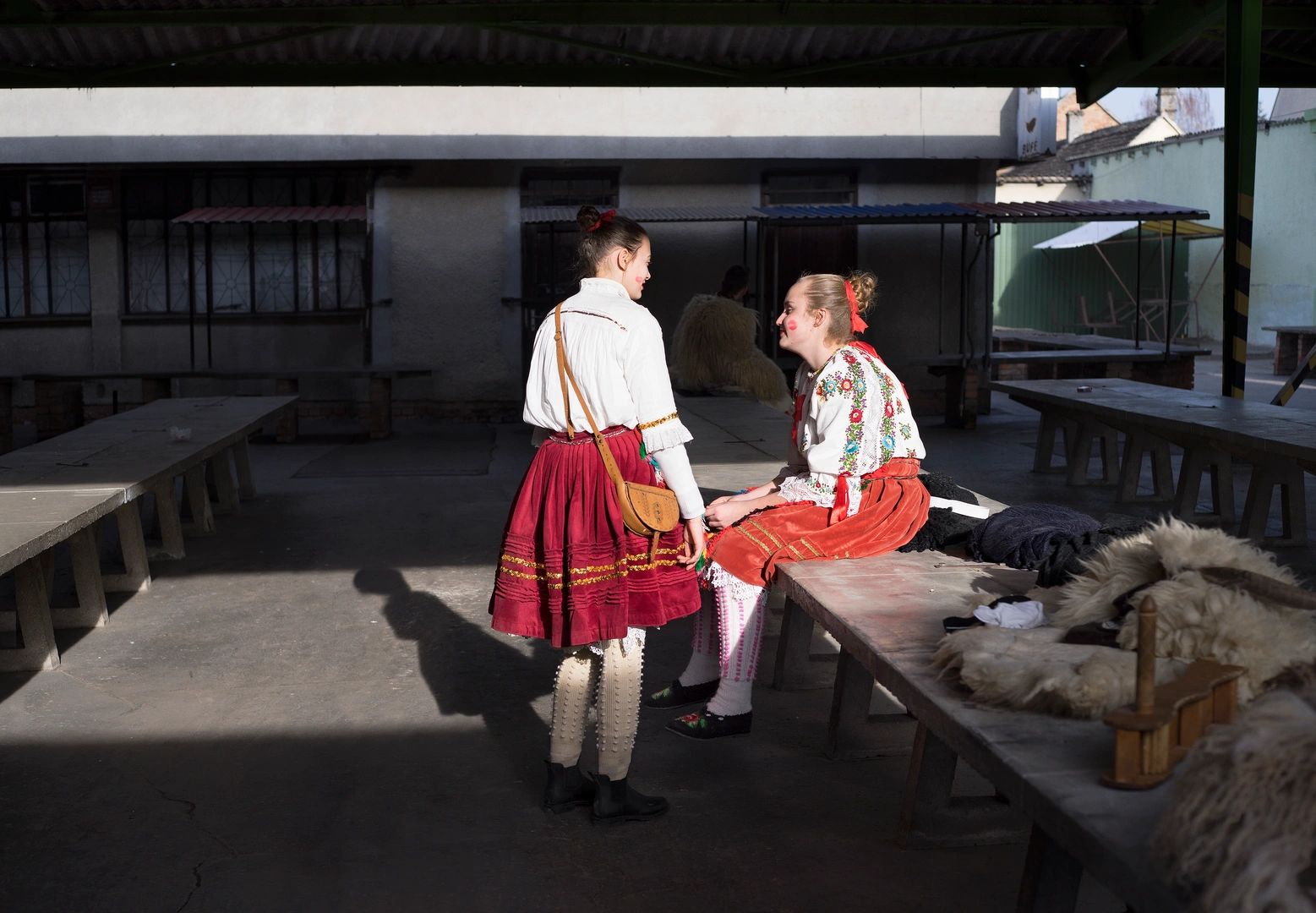
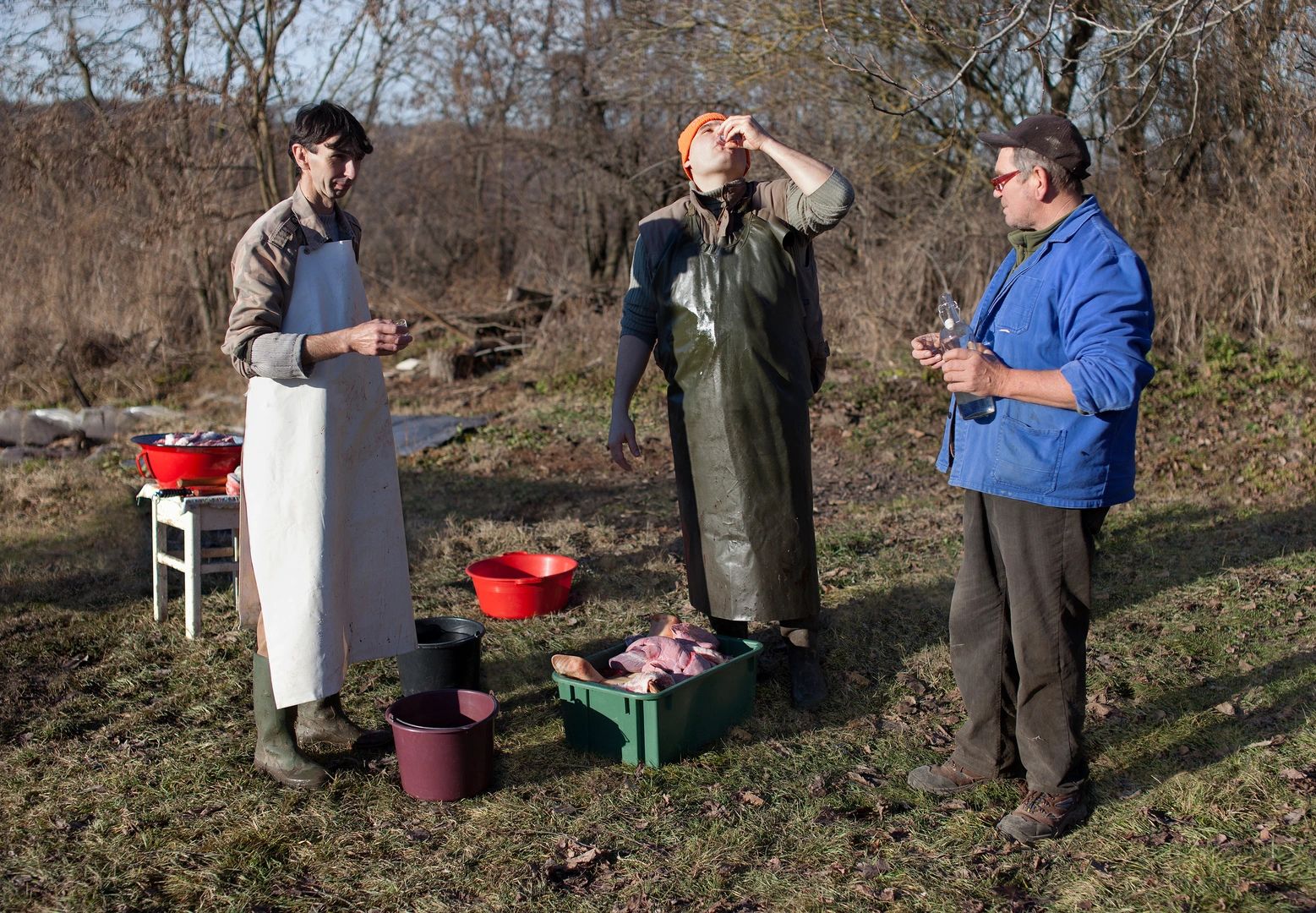
I have spent many summers countryside at my relatives. These idealized images of my childhood have been significantly distorted by the reality I came to witness over the past few years. My family and their friends have been attacked once during a pig slaughtering event, and my relatives from the village often have to endure similar conflicts. I have no reference point to compare the evolution of other regions, but the current situation is extremely gloomy and provides reason to worry. One thing is certain: some regions are seriously marginalized and there is hardly any light at the end of the tunnel; a solution to help reverse these negative trends. Beyond the difficult economic situation in Hungary the problem of the Roma and the burning tension directed at them is a serious social problem. According to the Hungarian Central Statistical Office the proportion of the Roma people in risk of poverty or social exclusion is 82.8%. Furthermore, conflicts between the two sides are becoming more and more radical, and in some cases resulted in insane killings such as the Roma attack in Olaszliszka in 2006 or the manslaughter committed against the Roma by their “opponents” between 2008 and 2009. During the photoshoots I witnessed more than once aggressive behavioral traits among the disadvantaged people. It was very challenging to respond to these outbursts adequately. I often felt that when the wounds are too deep and the cruelty of the environment has encrypted cruel reactions, an effort to connect may be in vain. The problem of marginalized territories cannot be treated separately from the unfair situation of the Roma people in Hungary. However, I believe focusing solely on this ethnic group would visually further deepen the segregation. In my photography, I want to take a “neutral”, analytical approach towards everybody. I’m interested in the changes taking place across the country in Hungary and in understanding their prospects for the future. I’m especially curious to learn more about those territories where the young generation has hardly any other prospect in life but to become public workers. Naturally, in a place where 25 out of 30 children in a kindergarten say they want to become public workers (true story), the idea of “future prospect” carries a very different meaning. My photographs do not aim to documenting poverty, but to find symbols to demonstrate the milieu of marginalized places, while aiming to create portraits that dig deep to capture the future prospects of my photo subjects. Recently I have taken an interest in folklore music and look for opportunities to play music with the locals during photoshoots. On many occasions after playing a few songs with the Roma they asked me if I knew any “hallgató” songs. First I didn’t know what they meant. When I asked what it was my ignorance surprised them and they grinned at me as if I was playing jokes. It took a long time until I found out what hallgató really was: the name comes from the Hungarian word “to listen” and it is a kind of gypsy music that delivers deep sorrow. It is fruit for thought how this music plays such an important role in the Roma culture, while the rest of the society has not even heard of it. In the town of Csernely I have once been told that it is impossible to learn how to sing the hallgató because it delivers such deep emotions and with such sorrow. I find that this painful presentation of the hallgató music is in parallel with the atmosphere of the North-East part of Hungary. Therefore, this type of music in itself carries a symbolic meaning. It symbolizes the distance between those living in a safe, comfortable world and the day to day reality of the extremely poor. This photo series started to come into shape after a year and a half; the attached photos were taken during the last couple of occasions only when I finally started seeing which pictures matched and what exactly was that I looked for. The scholarship would provide a framework to begin to work more intensively by organizing photoshoots in a structured manner for a few days every couple of weeks. My work method refined over the past couple of years would allow for an efficient project execution. I would like to focus more on taking similar portraits to the existing ones as well as to explore possibilities of capturing these communities in different seasons, for example by including winter images in the series. I would also like to find new places besides returning to the towns I have already visited, such as Mátraverebély, Csernely, Megyaszó, Prügy, Kölked, Halmaj, Kázsmárk and Ozora. The final series of approx. 30-35 images for a photo exhibition could eventually be published as a book as well once sufficient photo material is produced. Moreover, I would like to take a closer look at other possible media channels as part of the photo exhibition, such as videos and recordings of the hallgató music, however using hallgató songs as background music for the images might not create the desired effect. Exploring this concept will certainly be an important part of the creative process. Sincerely, Balázs Turós
Balázs was born in 1990, in Budapest. He started practicing photography at a young age. Initially, being interested in nature photography, he won the award of "Best Youth Nature Photographer of the Year 2008" in Hungary. In the same year he turned his attention as a photographer toward social issues. As a student at Moholy-Nagy University of Art and Design he was Head of Student Union for 2 years. In 2009, Balázs joined the team of Design and Health Model where he has been playing a key role ever since. DEMO is a unique initiative to provide healthy lifestyle education using design elements. In 2012, he begun collaboration with Foto Now, a non-profit civil organization in South West England with a unique and innovative approach to bridge the distance between photography and the average viewer. The following year Balázs worked closely with Foto Now for 9 months. During this period he worked on numerous socially involved projects which gave new momentum to his career as a photographer. Moreover, this opportunity allowed him to leverage his experience gained while working with DEMO in other educational programs as a speaker as well as workshop leader. Following his experience living in England he has spent 6 months in Asia where he mainly worked on video projects. Upon his return to Hungary he has obtained a Master’s degree in Photography at Moholy-Nagy University of Art and Design. Currently he focuses on video projects as a freelance videographer.
The main focus of my photography series is the heavily marginalized regions in Hungary. I wanted to understand how these regions are evolving and what prospects for the future their habitants have. My reference point is a recollection of childhood memories from these regions, as well as my working experience in the North-East part of Hungary over the past two years where I witnessed the sinister statistical data in plane reality. The sad reality in which young people who can leave will do so, while the only alternative for those who stay behind is to wait until they reach the age limit and begin public works. Despite the severity of the situation, these marginalized regions are not given much political nor social attention. My aim with this project is to raise awareness.